
 Need help?
Do you have a question about the Sime METRO and is the answer not in the manual?
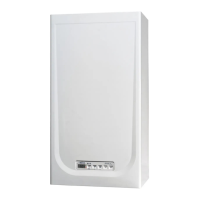
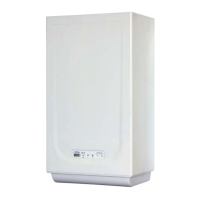
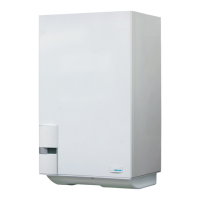
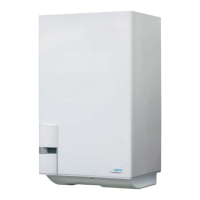
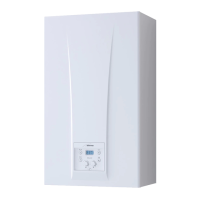
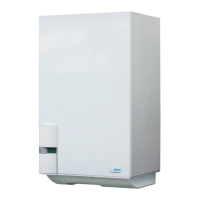
The Metrò boiler is a gas-fired thermal appliance designed for central heating and domestic hot water production, suitable for both multiple dwelling and modern plant requirements. It complies with European directives 90/396/CEE, 89/336/CEE, 73/23/CEE, 92/42/CEE, and European specifications EN 297 - EN 483. The boiler can be powered by natural gas (methane), butane gas (G30), or propane gas (G31). This manual provides instructions for the "Metrò 25 OF" (open combustion chamber, natural draught, with electronic ignition and modulation) and "Metrò 25 BF" (room-sealed, forced-draught, with electronic ignition and modulation) models. Proper installation and operation are ensured by following the instructions in this manual.
The Metrò 25 OF and 25 BF models share several key technical specifications. Both have a nominal heating output of 23.3 kW (20,000 kcal/h) and a minimum heating output of 9.3 kW (8,000 kcal/h). The nominal domestic hot water (D.H.W.) output is also 23.3 kW. The nominal heat input for both models is 25.8 kW, with a minimum of 10.8 kW. The water content is 2.4 liters for the 25 OF and 3.4 liters for the 25 BF.
Electrical power consumption differs, with the 25 OF drawing 105 W and the 25 BF drawing 150 W. Both models have an electrical protection grade of IP X4D. The maximum operating pressure is 3 bar, and the maximum temperature is 85°C. Both models are equipped with a 7-liter expansion vessel with a preloading pressure of 1 bar. The central heating (C.H.) temperature setting range is 40-80°C, and the D.H.W. setting range is 30-60°C.
Continuous D.H.W. flow rate at 30°C is 11.1 l/min for both, with a specific D.H.W. flow rate (EN 625) of 10.5 l/min and a minimum D.H.W. flow rate of 2 l/min. D.H.W. pressure ranges from 0.5 bar (minimum) to 7 bar (maximum). Smoke temperatures are 119°C for the 25 OF and 135°C for the 25 BF, with smoke flow rates of 21.0 gr/s and 19.0 gr/s, respectively. Both are Category II2H3+ appliances. The 25 OF is Type B11BS, while the 25 BF is Type B22/C12-C32-C42-C52. The 25 OF weighs 35 kg, and the 25 BF weighs 43 kg. Both models use 13 main burner nozzles, with a diameter of 1.30 mm for methane and 0.75 mm for G30-G31. Gas consumption for methane is 2.72 m³st/h, for butane (G30) is 2.02 kg/h, and for propane (G31) is 1.99 kg/h. Burner gas pressure for methane is 1.4-9.5 mbar, for butane (G30) is 5.1-27.7 mbar, and for propane (G31) is 6.1-35.3 mbar. Gas supply pressure is 20 mbar for methane, 30 mbar for butane (G30), and 37 mbar for propane (G31).
The Metrò boiler features an electronic board that complies with EEC 73/23 low-voltage directives, powered at 230V and supplying 24V to components like the modulator, D.H.W./C.H. sensors, room stat, water flowmeter, and time programmer. An automatic and continuous modulation system adjusts heat output to system requirements, ensuring optimal efficiency. Electronic components are guaranteed to operate within a temperature range of -10 to +60°C.
Boiler Ignition and Operation: To ignite the boiler, open the gas valve and turn the rotary switch to the "summer" position. A green LED indicates electricity supply. In "summer" mode, the boiler starts D.H.W. production at maximum power to reach the selected temperature, with gas pressure automatically varying to maintain constant temperature. In "winter" mode, once the C.H. potentiometer's set temperature is reached, the boiler modulates automatically to supply the required output. The room stat or chronothermostat will stop boiler operation.
Temperature Adjustment: D.H.W. temperature is adjusted via a potentiometer with a range of 30-60°C. C.H. temperature is adjusted via a potentiometer with a range of 40-80°C. For optimal efficiency, a minimum operating temperature of 50°C is recommended.
Boiler Shutdown: To turn off the boiler, set the selector knob to the "OFF" position. For extended periods of non-use, it's advised to turn off electricity, close the gas cock, and drain the boiler and hydraulic system if low temperatures are expected, to prevent freezing damage.
Fault Finding: The electronic board includes fault indicators:
Time Programmer (optional): The programmer allows automatic boiler operation based on set temperatures and time periods.
Installation: Installation must be permanent and performed by specialized and qualified firms, adhering to all instructions in this manual and current standards.
Ventilation of Boiler Room (25 OF): Boilers must be installed in adequately ventilated domestic rooms. Air inlet openings in external walls are required, with a total free section of at least 6 cm² per kW of heat input (minimum 100 cm²), located near floor level, unobstructed, and protected by a grid.
Gas Connection: Before connecting, circulate water through pipes to remove foreign bodies. Hydraulic connections must follow fig. 1. The safety valve discharge pipe must connect to a collector funnel. Gas connection must use seamless steel pipes, galvanized, with threaded joints and gaskets, excluding three-piece connections. Piping passing through walls requires an insulating sleeve. Gas piping must be sized based on volume flow rates and gas density, ensuring sufficient supply and limiting pressure loss (1.0 mbar for natural gas, 2.0 mbar for butane/propane). An adhesive data plate inside the front panel identifies the boiler and gas type.
Gas Pipe Filter: The gas valve comes with an inlet filter, but an additional filter on the gas pipe is recommended to prevent malfunctioning due to impurities.
Feedwater Characteristics: Water for the central heating system must be treated according to UNI-CTI 8065, especially for extensive systems, frequent makeup water additions, or partial/total system emptying.
Flue (25 OF): The flue must be gas-tight, waterproof, thermally insulated, made of resistant materials, vertical, adequately insulated (especially if outside or in unheated rooms), distanced from combustibles, and have a collection chamber beneath the smoke duct (at least 500 mm high) with an air-tight metal door. Internal cross-section must be circular, square, or rectangular with rounded corners. A chimney-pot must be present to prevent back-flow. No mechanical suction means at the top. No overpressure in inhabited rooms.
Connecting up Flue (25 OF): Follow fig. 6 for connecting the boiler to the flue/chimney. Use gas-tight materials resistant to mechanical stress and smoke heat. Smoke temperature must be above dew point. No more than three changes of direction, using curved pipe lengths.
Coaxial Duct (25 BF): The air inlet-smoke outlet assembly Ø 60/100 is supplied in a kit (code 8084805) with mounting instructions. Maximum length of piping should not exceed 3 m with the pipe bend included.
Positioning Outlet Terminals (25 BF): Outlet terminals can be on external perimeter walls. Minimum distances must be observed (Table 1, fig. 8).
Coaxial Duct Outlet on the Roof (25 BF): The roof discharge terminal L. 1284 cannot be shortened. Minimum distance from discharge head to tile is 600 mm (fig. 9). Up to three extensions can be inserted for a maximum rectilinear distance of 3.7 m. If two changes of direction are needed, maximum pipe length is 2 m.
Separate Pipes (25 BF): For direct intake from outside, insulate pipes longer than 1 m to prevent dew formation. For external or cold indoor outlet pipes, insulate to prevent burner failure and provide a condensate collector. For flammable walls, insulate the flue segment with 30 mm thick glass wool.
Electrical Connection: The boiler is supplied with an electric cable. Replacement cables must be from SIME. Power supply must be 230V-50Hz single-phase through a fused main switch with at least 3 mm contact spacing. The device must be connected to an efficient earthing system.
Room Stat Connection: Connect the room stat to terminals 10-11 of the "TA" connector on the circuit board after removing the jumper. The thermostat or timer-thermostat must be Class II (EN 60730.1).
Gas Valve Adjustment: The boiler uses SIT 845 SIGMA/HONEYWELL VK 4105M or WHITE-RODGERS 91B05S gas valves, set at factory for maximum and minimum pressures (Table 4). Adjustment is only permitted for gas conversion and must be done by authorized technical staff.
Adjustment of Heat Output for Heating: To adjust heating output (factory set at approx. 16 kW), use a screwdriver on the C.H. heat output trimmer (1 fig. 19). Turn clockwise to increase pressure, anticlockwise to reduce. Refer to pressure/heat output diagrams for specific gas types (figg. 27-27/a-27/b).
Gas Conversion: A kit is supplied for conversion to butane (G30) or propane (G31).
Disassembly of Expansion Vessel:
Removal of Outer Casing: For easy maintenance, the outer casing can be completely disassembled:
Cleaning and Maintenance:
Chimney Sweep Function: To verify combustion, turn the selector to the position ( ) until the green/orange LED flashes intermittently (fig. 31). The boiler will then operate in heating mode at maximum power (20,000 kcal/h), switching off at 80°C and restarting at 70°C. Ensure radiator valves or zone valves are open. The test can also be done during D.H.W. service by drawing hot water. The boiler operates at maximum power with primary controlled between 80°C and 70°C. Keep hot water taps open during the test. After verification, turn the selector to OFF, then to the desired function. The function automatically deactivates after 15 minutes or when D.H.W. request is fulfilled.


 To Next Page
 General