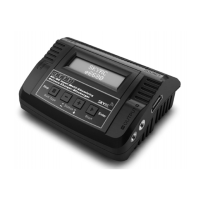
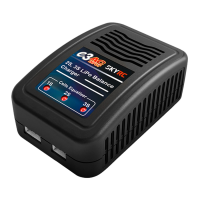
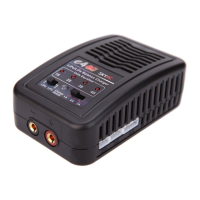
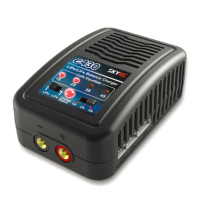
e660 41·e660 · 40
This charger is designed and approved exclusively for use with the types of
battery stated in this Instruction Manual. SkyRC accepts no liability of any
kind if the charger is used for any purpose other than that stated.
We are unable to ensure that you follow the instructions supplied with the
charger, and we have no control over the methods you employ for using,
operating and maintaining the device. For this reason we are obliged to deny
all liability for loss, damage or costs which are incurred due to the
incompetent or incorrect use and operation of our products, or which are
connected with such operation in any way.Unless otherwise prescribed by
law, our obligation to pay compensation, regardless of the legal argument
employed, is limited to the invoice value of those SkyRC products which were
immediately and directly involved in the event in which the damage occurred.
Liability exclusion
Warranty and service
The warranty service is valid in China only.
If you need warranty service overseas, please contact your dealer in the
first instance, who is responsible for processing guarantee claims
overseas. Due to high shipping cost, complicated custom clearance
procedures to send back to China. Please understand SkyRC can't
provide warranty service to overseas end user directly.
If you have any questions which are not mentioned in the manual, please
feel free to send email to info@skyrc.cn
Note:
1.
2.
3.
We guarantee this product to be free of manufacturing and assembly defects
for a period of one year from the time of purchase. The warranty only applies
to material or operational defects, which are present at the time of purchase.
During that period, we will repair or replace free of service charge for
products deemed defective due to those causes.
This warranty is not valid for any damage or subsequent damage arising as a
result of misuse, modification or as a result of failure to observe the
procedures outlined in this manual.
Warranty and Service
Commonly used terms
Final charge voltage: the voltage at which the battery's charge limit
(capacity limit) is reached. The charge process switches from a high current
to a low maintenance rate (trickle charge) at this point. From this point on
further high current charging would cause overheating and eventual terminal
damage to the pack.
Final discharge voltage: the voltage at which the battery's discharge limit is
reached. The chemical composition of the batteries determines the level of
this voltage. Below this voltage the battery enters the deep discharge zone.
Individual cells within the pack may become reverse polarized in this
condition, and this can cause permanent damage.
A, mA: unit of measurement relating to charge or discharge current.1000 mA
= 1 A (A=Ampere,mA=Milliampere)
Ah, mAh: unit of measurement for the capacity of a battery (Amperes x time
unit; h = hour). If a pack is charged for one hour at a current of 2 A, it has
been fed 2 Ah of energy. It receives the same quantity of charge (2 Ah) if it is
charged for 4 hours at 0.5 A, or 15 minutes (=1/4 h) at 8 A.
'C'-rating: Capacity is also referred to as the 'C' rating. Some battery
suppliers recommend charge and discharge currents based on the battery 'C'
rating. A battery's '1C' current is the same number as the battery's rated
capacity number, but noted in mA or amps. A 600mAh battery has a 1C
current value of 600mA, and a 3C current value of (3 x 600mA) 1800mA or
1.8A. The 1C current value for a 3200mAh battery would be 3200mA (3.2A).
Nominal voltage(V): The nominal voltage of the battery pack can be
determined as follows;
-.NiCd or NiMH: multiply the total number of cells in the pack by 1.2. A 8-cell
pack will have a nominal voltage of 9.6 volts (8x1.2).
-.LiPo: multiply the total number of cells in the pack by 3.7. A 3-cell LiPo wired
in series will have a nominal voltage of 11.1 volts (3x3.7).
-.LiIo: multiply the total number of cells in the pack by 3.6. A 2-cell LiIo wired
in series will have a nominal voltage of 7.2 volts (2x3.6).
-.LiFe: multiply the total number of cells in the pack by 3.3. A 4-cell LiIo wired
in series will have a nominal voltage of 13.2 volts (4x3.3).
-.LiHV: multiply the total number of cells in the pack by 3.7V. A 4-cell LiHV
wired in series will have a nominal voltage of 14.8 volts (4x3.7).
If the nominal voltage of the battery is not printed on the battery's label,
consult your battery manufacturer or supplier. Do not guess the rated voltage
of battery.
Commonly Used Terms


 To Previous Page