ENGLISH • 19
INTERPRETING YOUR RESULTS
The World Health Organization has established globally accepted
standards for the assessment of high or low blood pressure readings.
The below chart should be considered only as a guideline, always consult
with your physician or health care professional to interpret your individual
results. Never adjust your medication(s) dosage, or severely alter your diet
or exercise routine without consulting with your physician.
Hypertension Indicator - WHO Classications
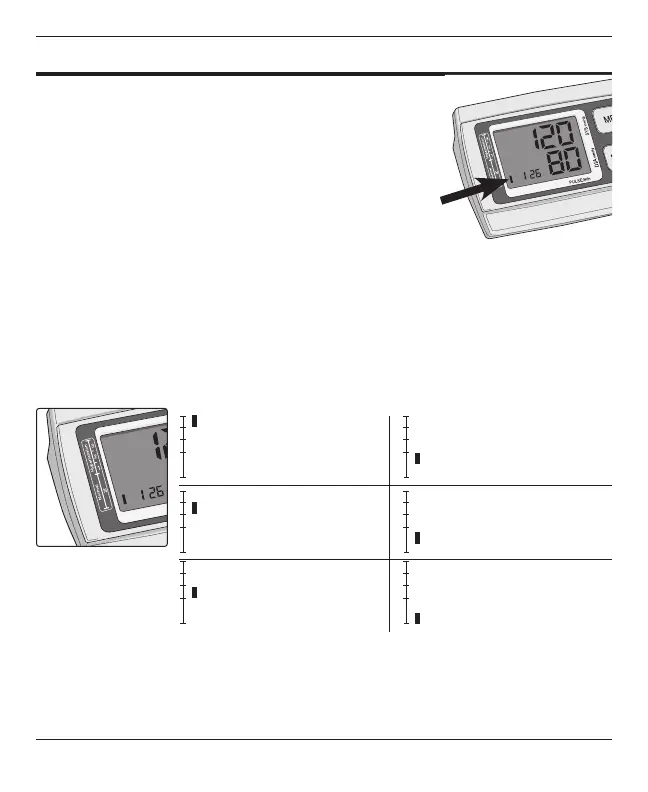
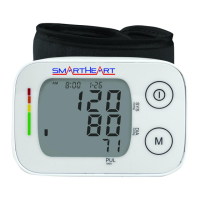
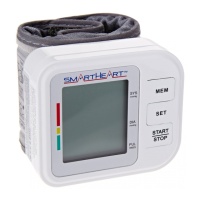
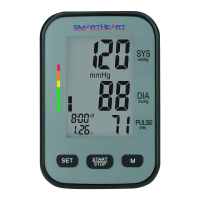
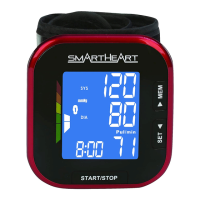
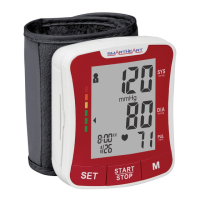
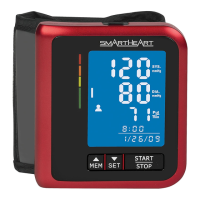
This unit features our unique Hypertension Indicator.
The color bars on the left side of the monitor display
correspond with an icon on the digital display, indicating
where the measurement results fall within the World
Health Organization standards.
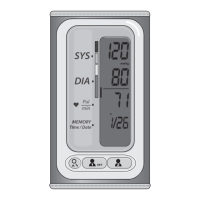
The Hypertension
Indicator is located
on the left side of the
display window
Stage 3 Hypertension
Systolic pressure: ≥ 180 mmHg
or
Diastolic pressure: ≥ 110 mmHg
Stage 2 Hypertension
Systolic pressure: ≥ 160-179 mmHg
or
Diastolic pressure: ≥ 100-109 mmHg
Stage 1 Hypertension
Systolic pressure: ≥ 140-159 mmHg
or
Diastolic pressure: ≥ 90-99 mmHg
High Normal
Systolic pressure: ≥ 130-139 mmHg
or
Diastolic pressure: ≥ 85-89 mmHg
Normal
Systolic pressure: ≥ 120-129 mmHg
or
Diastolic pressure: ≥ 80-84 mmHg
Optimal
Systolic pressure: < 120 mmHg
or
Diastolic pressure: < 80 mmHg
Hypertension Indicator
This unit features our unique Hypertension Indicator. The World Health
Organization has established globally accepted standards for the assessment of
high or low blood pressure readings
This chart can help you identify where a given blood pressure measurement falls
according to World Health Organization standards. This chart should only be
considered as a guideline; always consult
with your physician to interpret your
individual results. Never adjust your medication(s) dosage, or severly alter your
diet or exercise routine without consulting with your physician.
1
2
3
N
1
2
3
N
1
2
3
N
1
2
3
N
1
2
3
N
1
2
3
N
INTERPRETING YOUR RESULTS


 To Next Page