25
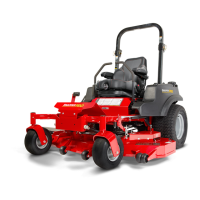
Raise and Lower the Roll Bar
WARNING
Avoid serious injury or death from roll over:
• Keep roll bar in the raised position and use seat belt.
• There is no roll over protection when the roll bar is
down.
• Lower the roll bar only when necessary and NEVER
remove it.
• Do NOT use seat belt when the roll bar is down.
• Raise the roll bar as soon as clearance permits.
• Do NOT jump off if mower tips.
To lower the roll bar:
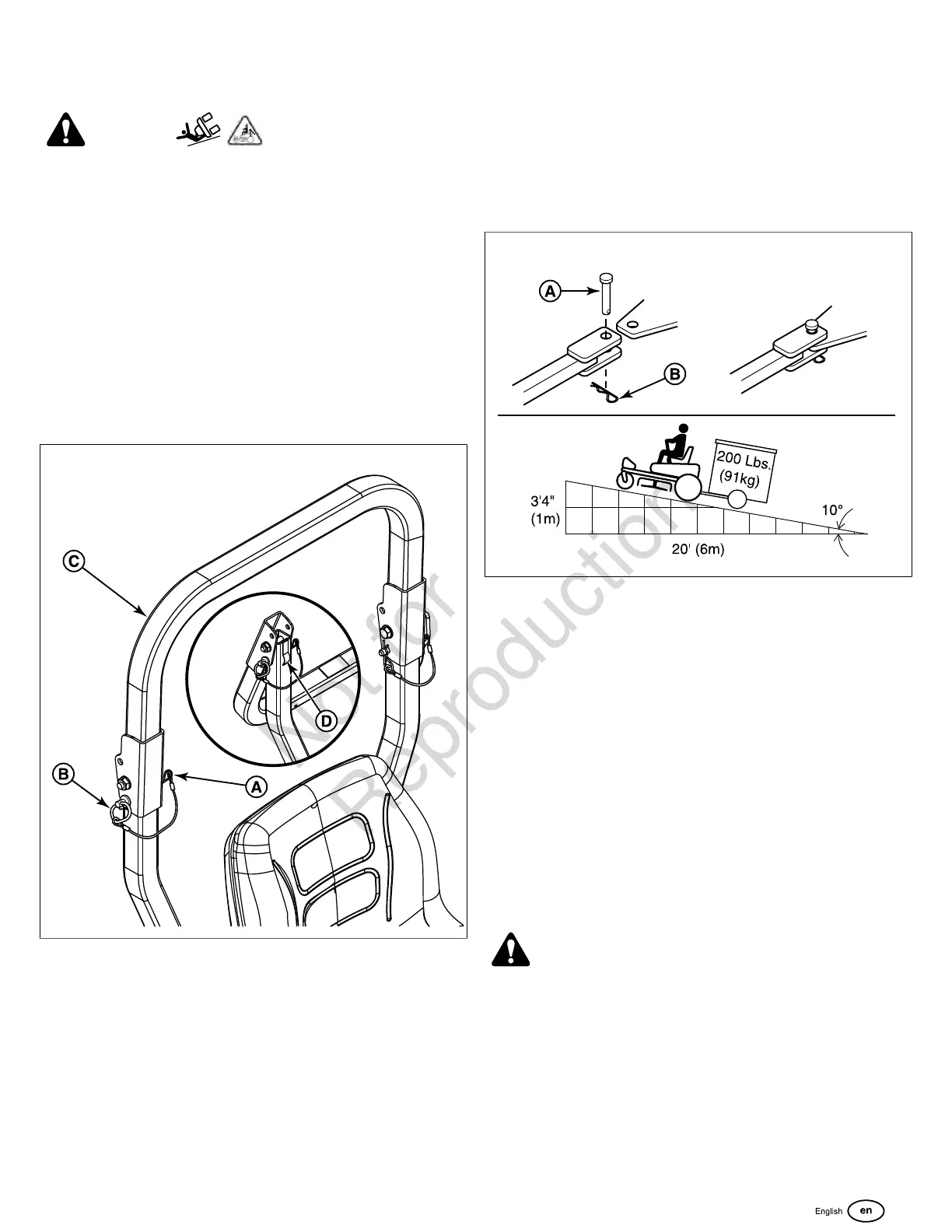
1. Pull the hair pin clips (A, Figure 24) out of the retainer
pins (B).
24
2. Push or pull the top of the roll bar (C) forward against the
spring clips (D) and remove the retainer pins (B).
3. Lower the roll bar and reinstall the retainer pins and hair
pin clips to secure the roll bar in the down position (see
insert, Figure 24).
To raise the roll bar:
1. Pull the hair pin clips (A) out of the retainer pins (B) and
remove the retainer pins.
2. Raise the roll bar (C) until the top of the roll bar (C)
contacts the spring clips (D) on the upright tubes.
3. Push or pull the top of the roll bar forward against the
spring clips and reinstall the retainer pins and hair pin
clips to secure the roll bar in the raised position.
Attaching a Trailer
The maximum weight of a towed trailer should be less than
200 lbs (91kg). Secure the trailer with an appropriately sized
clevis pin (A, Figure 25) and clip (B).
25
Excessive towed loads can cause loss of traction and loss of
control on slopes. Reduce towed weight when operating on
slopes. The surface being driven on greatly impacts traction
and stability. Wet or slippery surfaces can greatly reduce
traction and the ability to stop or turn. Carefully evaluate
the surface conditions before operating the unit and trailer,
and never operate on slopes greater than 10°. See SLOPE
OPERATION and TOWED EQUIPMENT in the safety section
of this manual for additional safety information.
Storage
Temporary Storage (30 Days or Less)
Remember, the fuel tank will still contain some fuel, so never
store the unit indoors or in any other area where fuel vapor
could travel to any ignition source. Fuel vapor is also toxic
if inhaled, so never store the unit in any structure used for
human or animal habitation.
WARNING
Never store the unit, with fuel in the engine or fuel tank,
in a heated shelter or in an enclosed, poorly ventilated
enclosures. Fuel fumes may reach an open flame, spark or
pilot light (such as a furnace, water heater, clothes dryer,
etc.) and cause an explosion.
Handle fuel carefully. It is highly flammable and careless
use could result in serious fire damage to your person or
property.
Drain fuel into an approved container outdoors away from
open flame or sparks.


 To Next Page