Report Number : TEC135
Issue : Two
Date : Mar 2006
Page : 9
System Components
Water Detection
A water detection system is used to tell the controller when the heater tube is flooded
with water and therefore when it is safe to turn the element on. Water detection is
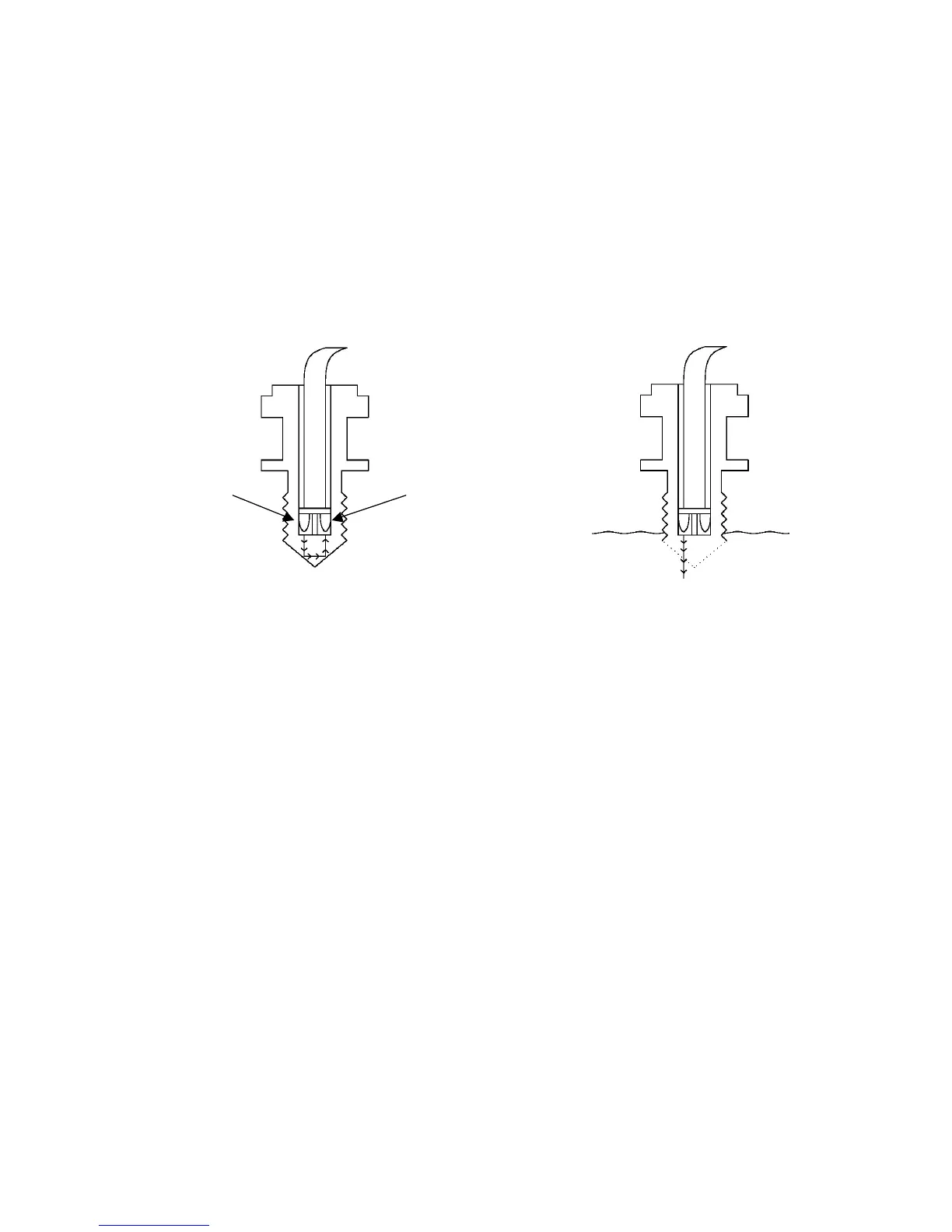
achieved by optical means, where an optical bolt (water sensor) is mounted in the
element assembly. Inside the optical bolt is a light source and a light detector.
When the tip of the optical bolt is
surrounded by air, the light emitted by
the light source is reflected back to the
light detector as the tip acts like a
mirror.
The mirroring effect of the tip is lost
once submerged and the detector
receives no light.
The optical bolt has many advantages over traditional pressure switches and flow
switches; there are no moving parts or adjustments required. Once installed, it is very
robust and offers a long service life. The optical bolt is also less sensitive to collecting
hair and debris. However care must be taken to ensure that air is not trapped in the
heater tube during normal operation. This is especially important when low flow rate
pumps are used (e.g. low flow circulation pumps), as they may not produce sufficient
water flow to clear air from the heater tube. See the ‘Circulation pump’ section for more
information.
The water sensor is connected to the SP601 PCB. Additional circuitry is included on the
PCB to check that the water sensor is connected and is functioning correctly.
Thermal Cut-out
Each SP601 contains a thermal cutout device (also known as a klixon). It is an electro-
mechanical device that acts as a switch. When it is heated above 50°C +/-3°C it
switches off creating an open circuit. When it cools below 38°C it switches on and
creates a short circuit.
Light
detector


 To Next Page