IM-P343-44 CTLS Issue 58
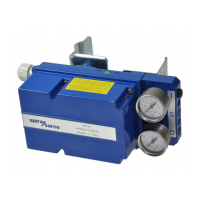
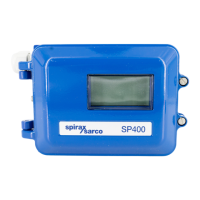
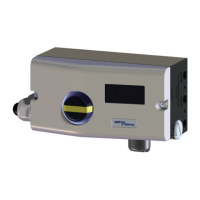
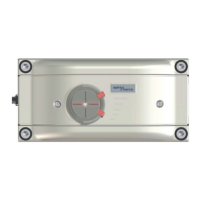
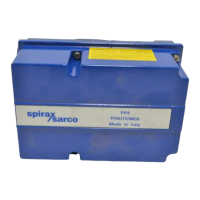
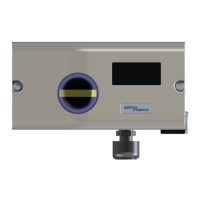
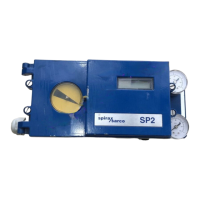
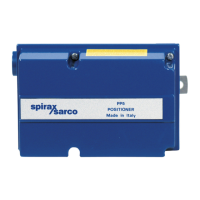
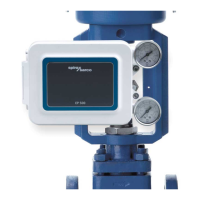
EP500 Standard Electropneumatic Positioner
Note: Before starting any installation observe the 'Safety information' in Section 1.
This document is provided as a guide and it is recommended that it is read thoroughly
prior to installation. Also refer to the separate Installation and Maintenance
Instructions for the control valve and actuator.
3.1 Location
The positioner should be mounted in sufficient space to allow opening of the cover and provide
access to connections. When fitting to an actuator, ensure the positioner will not be exposed to
an ambient temperature outside the range -20 °C to +75 °C. The positioner enclosure is rated
to IP65. Connection of air supply pressure (1.4 to 6 bar g) and control signal (4 - 20 mA) should
be considered prior to choice of location.
3.2 Connecting up
3.2.1 Pneumatic connections
Warning: Air supply must be dry, oil and dust free. Dirty air supply may damage the product
and invalidate warranty.
For best performance, set the air supply pressure to about 0.5 bar g above the pressure required
to fully travel the actuator.
Check all connections for leaks. Please note however that the EP500 bleeds air in normal
operation at a rate of approximately 0.1 Nm³/hour at 1.4 bar supply pressure.
Pneumatic connections are located at the right hand side of the positioner and are identified
as follows 'SUPPLY' and 'OUT':
SUPPLY - Air supply - 1.4 bar g to 6 bar g, depending upon required actuator spring range.
OUT - Output signal to the actuator.
Connections are ¼" NPT female. Interconnection between the positioner and the actuator should
be at least 6 mm OD tube.
3.2.2 Electrical connections
The EP500 only requires a 4 - 20 mA signal. Remove the front.
Note: Ensure resistance from earth post to local earth (e.g. pipework) is less than 1 Ohm.
Connection to the unit is through the M20 cable gland (as supplied), which when used with suitable
cable will ensure the IP65 protection rating. Appropriate conduit connections may be used instead.
3. Installation


 To Next Page