11
Always add ingredients in the order specified in the recipe.
Bread making is very sensitive to temperature and humidity conditions. If the
environment is particularly hot, use liquids that are cooler than usual. If the
environment is particularly cold, it may be necessary to warm the water and/or milk
(never exceeding 95°F). For best results, keep the room temperature between +59 ~
+93°F (+15 ~ +34°C).
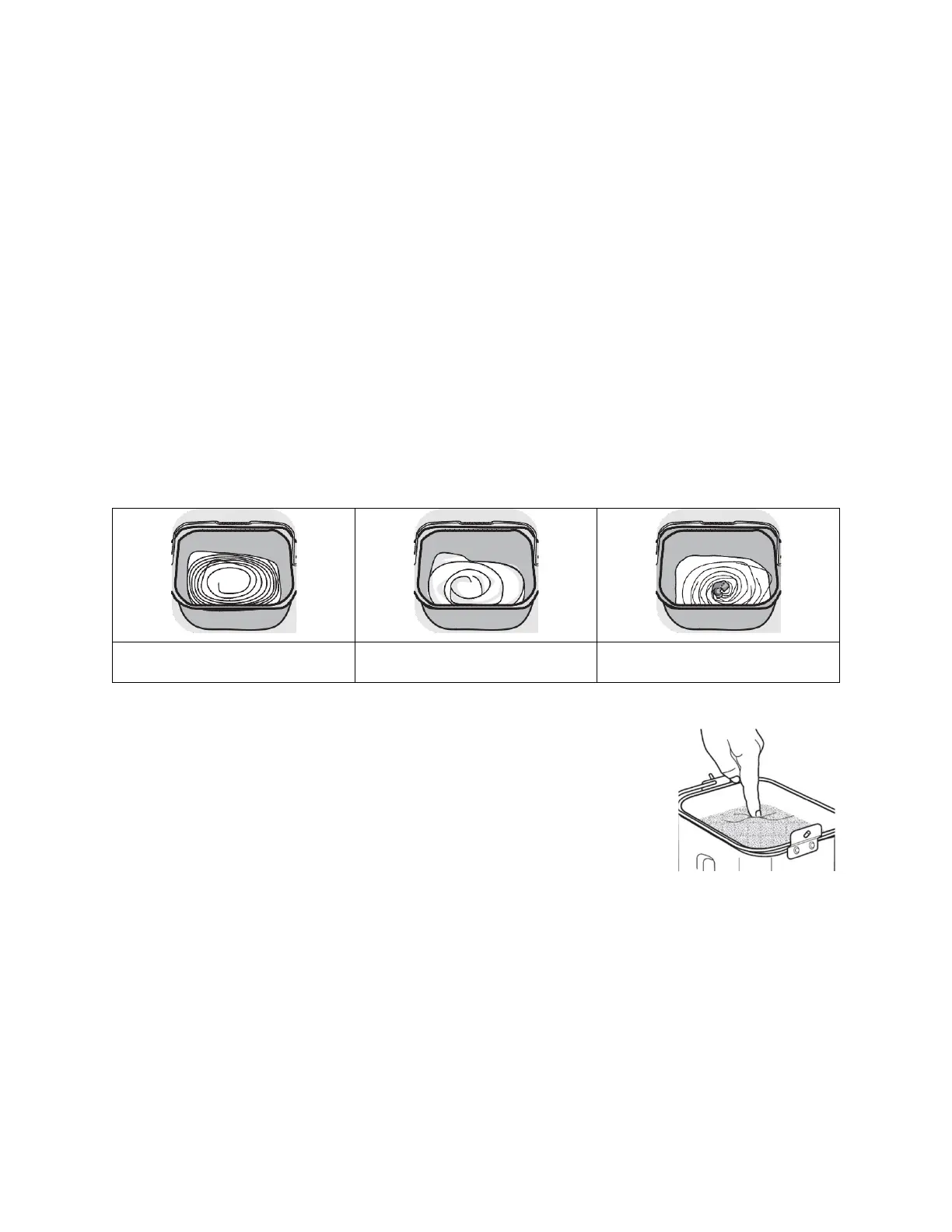
Check the state of the dough during the second kneading process. It should form an
even ball, which comes away easily from the walls of the pan. If all the dough has
not been blended, add a little water. If the dough is too wet and sticks to the walls,
add a little flour. You should add no more than a teaspoon at a time and wait to see
if there is an improvement before continuing.
A common error is to think that adding more yeast will make
the bread rise more. Too much yeast makes the structure of
the bread more fragile and it will fall while baking. You can
check the state of the dough just before baking by touching
it lightly with your fingertips. The dough should be slightly
resistant and the fingerprints should disappear slowly. The
exception is that cake dough should have more liquid.


 To Next Page