12
4.3Description of terminal function:
GLASS : Central spindle connecting pH/ORP electrode signal wire
NC : NC
REF : Network cable connecting pH/ORP electrode signal wire
GND : The terminal connecting temperature probe, or used as ±12V
ground potential. In two-wire distributing system, there
should be a short circuit between this terminal and REF (a
short circuit slice is attached when going out the factory)
T/P : Connect the other end of temperature probe
DC±12V : Output terminal of direct current voltage ±12V (PH-300T
only)
(1) 4~20mA +terminal : Master measure current output terminal +, for external recorder
or PLC control
4~20mA - terminal : Master measure current output terminal -, for external recorder
or PLC control
(2) 4~20mA + terminal/ D+(B): Temperature current output terminal +, for external recorder
or PLC control (only applicable for PC-3100); or RS-485
output D+(B) (only applicable for PC-3100RS)
4~20mA - terminal / G : Temperature current output terminal -, for external recorder or PLC
control (only applicable for PC-3100); or RS-485 output GND
(only applicable for PC-3100RS)
NC / D-(A) : NC or RS-485 output D-(A) (only applicable for PC-3100RS)
REL1 : External relay terminal high control
REL2 : External relay terminal low control
WASH : External wash relay terminal
100~240AC : Power supply terminal
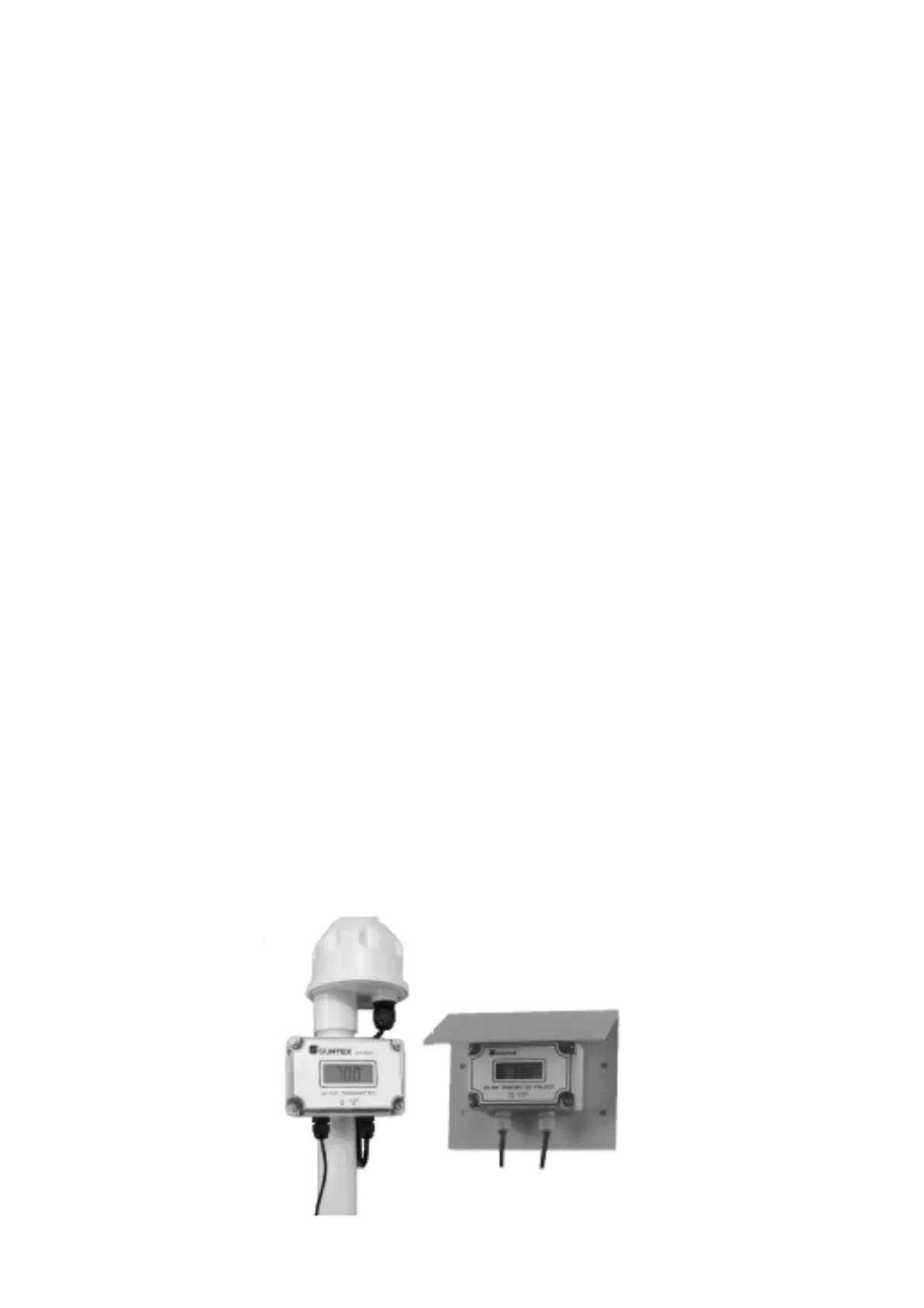
4.4 Installation of transmitter PH-300T: (alternative equipment)
PH-300T transmitter is mainly installed on the electrode protective pipe, but also can apply
wall mounting and pipe mounting. For long distance transmission (100m), if PC-3100 is more
than 30 far away from the electrode, PH-300T transmitter is recommended to avoid the
attenuation of electrode signal, and for the convenience of onsite observation, measurement,
and calibration.


 To Next Page