24
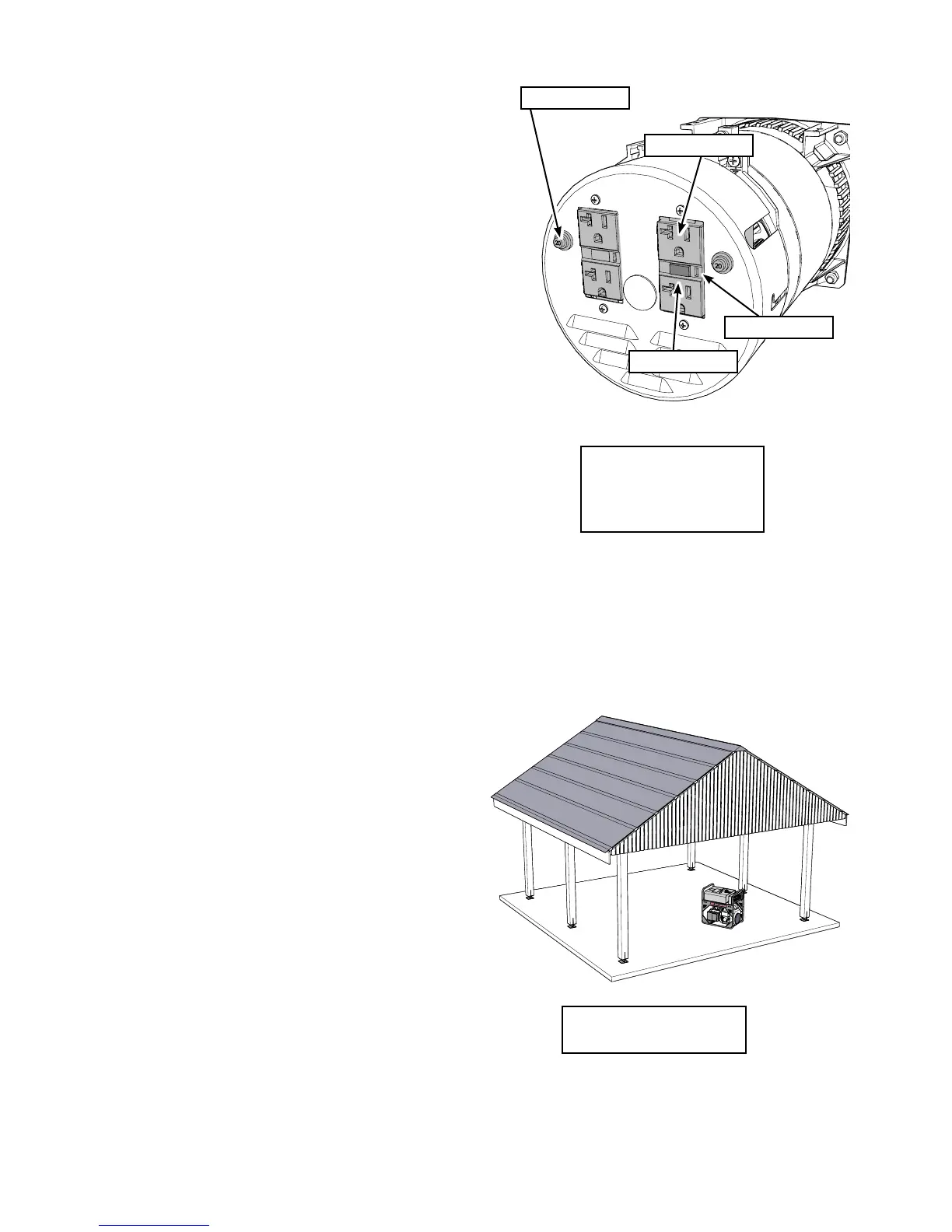
CIRCUIT BREAKERS:
Outlets on the electrical panel are protected
with circuit breakers to prevent overloading
the circuit. If a breaker trips, reduce the load
before re-setting the breaker.
• If a breaker trips,:
• the breaker reset pops out
• switch off or disconnect the load, deter-
mine the source of the over load and
correct,
• allow the breaker to cool,
• depress the breaker button to reset,
• turn on or reconnect the load
GFCI OUTLETS:
GFCI outlets main purpose is to protect people
from electric shock. GFCI equipped outlets
monitor the amount of current owing from hot
to neutral. If there is any imbalance, it trips
the circuit. It is able to detect an imbalance
as small as 4 or 5 milliamps, and it can react
almost instantly to trip the circuit.
If the GFCI trips:
• reset button pops out, indicator lights up.
• switch off or disconnect the load,
• determine the source of the imbalance
and correct,
• depress the extended GFCI button to
reset,
• turn on or reconnect the load.
OPERATING HINTS:
• Position frame on a level area to minimize
the chance of spilling fuel and maximize the
fuel capacity of the tank. Spilled fuel can be
ignited by a spark from the electrical power
system.
• Do not refuel while the engine is running. Wait
until the unit has cooled before refuelling.
• Keep the working area neat and clean to pre-
vent slipping and tripping. Prevent accidents
at the work site.
• Always keep the generator and connections
dry, do not let water pool around the generator
or connections to prevent potential electrocu-
tion hazard.
• Position the generator under cover to protect
it from rain or bad weather.
• Do not operate when the ambient temperature
exceeds 100° F (39° C) to prevent overheating.
• Do not cover the unit during operation to pre-
vent overheating.
IMPORTANT
A circuit breaker that trips
repeatedly indicates a
problem.
Circuit Breaker
Generator in optimum
working conditions
GFCI
Fault Indicator
Reset Button


 To Next Page