29
5.4.1 TRANSPORTING:
When transporting from location to location, keep the following points in mind:
• If the generator has been running, allow the engine to cool for at least 15 minutes before loading the
generator on the transport vehicle. A hot engine and exhaust system can burn you and can ignite
some materials.
• Keep the generator level when transporting to reduce the possibility of fuel leakage. Move the fuel
valve lever to the OFF position.
• Do not lay the generator on its side when moving, storing, or during operation. A hazardous condition
may be created by oil or fuel leaking.
• Transport when the fuel tank is empty or nearly empty. Turn the fuel line off.
• When using ropes or tie-down straps to secure the generator for transportation, be sure to only use
the frame bars as attachment points. Do not fasten ropes or straps to any portions of the engine or
alternator.
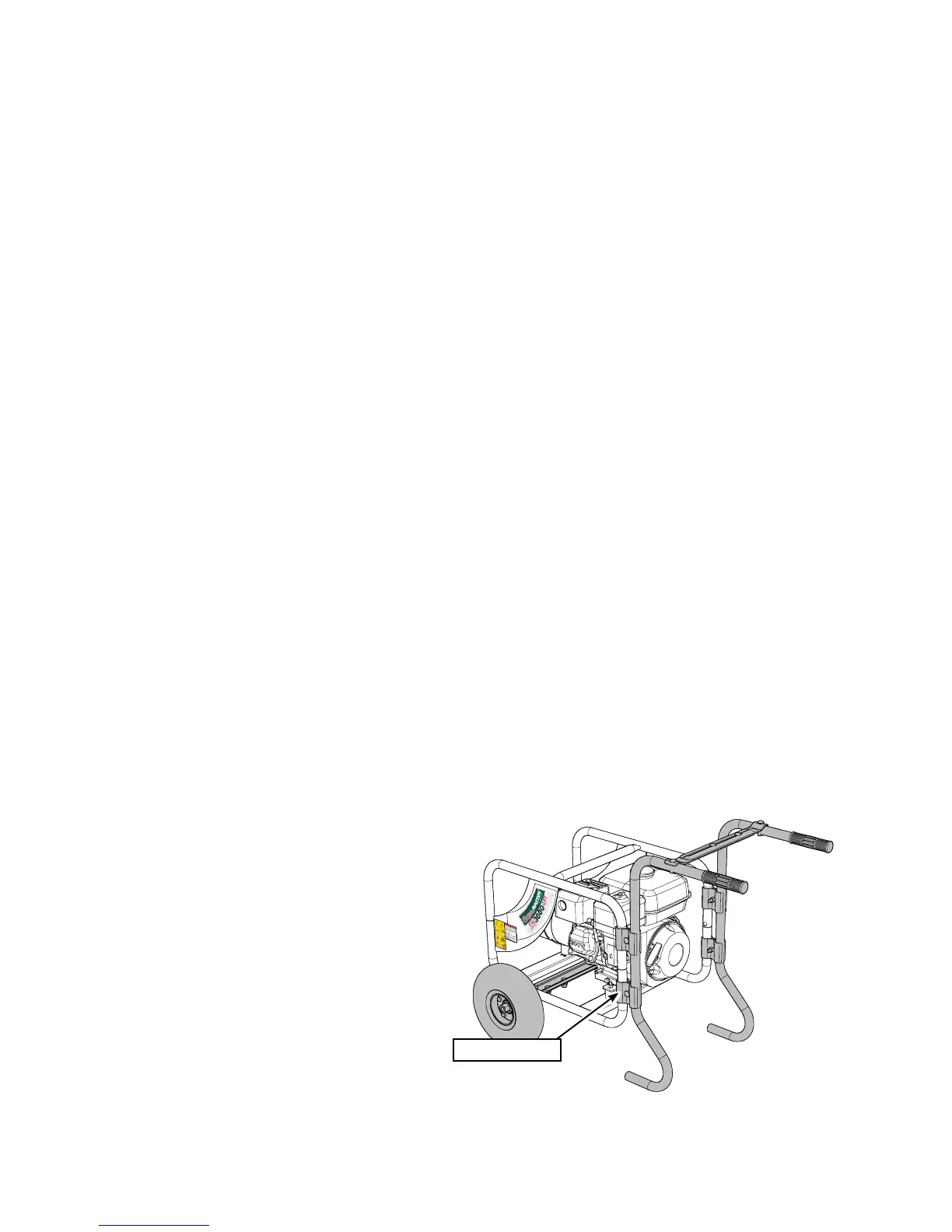
5.4.2 WHEEL KIT:
A wheel kit is available to make movement
around the work area easier. Kit consist of han-
dles and axle with tires The kit is easy to install
and simply clamps on to the existing frame.
Available with 10" tires (WK210) or 14" tires
(WK214)
5.4 MOVING
Wheel Kit
5.3 RESIDENTIAL
The most economical way to supply power during a power outage is to use a portable generator and run
extension cords into the house to power chosen appliances.
Never connect a generator to a house electrical system without an appropriate transfer switch. Known as
"backfeeding" it is illegal, extremely dangerous and potentially lethal.
A safer option is to use your generator in a standby conguration. This requires an electrician to install a
generator sub panel, connected to the house's main electrical panel. Prepare the generator, run a single
extension cord into the sub panel, ip the switch and power the circuits you need.
This eliminates the risk of electrical “back feed”, potentially injuring or killing utility workers repairing
downed power lines.
For standby installation: please note that SurgeMaster generators have a "neutral bonded to frame"
feature, and requires connection by a certied electrician when connecting the generator to a house elec-
trical system.
A portable electric generator can provide power for fridges, freezers, sump pump, furnace fan small
kitchen appliances, power tools, lights and other comforts of civilization when you are experiencing a
power outage.
When not required for home, portable generators can be used to power recreational vehicles, or put to
work on construction sites that have no electrical service, providing clean, reliable power to operate saws,
drills, air compressors, heaters, paint sprayers and other AC-powered tools.


 To Next Page