EasyManua.ls Logo

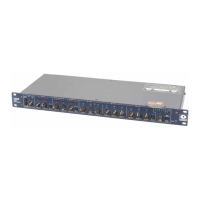
Symetrix 528 - Microphone Signal Processors; Microphone Preamplifier Details; Phantom Power for Condenser Microphones

Symetrix 528
49 pages
Print Icon
To Next Page IconTo Next Page
To Previous Page IconTo Previous Page
Loading...
www.SteamPoweredRadio.Com
I
I
I
I
I
I
I
I
I
I
I
I
I
I
I
I
I
I
I
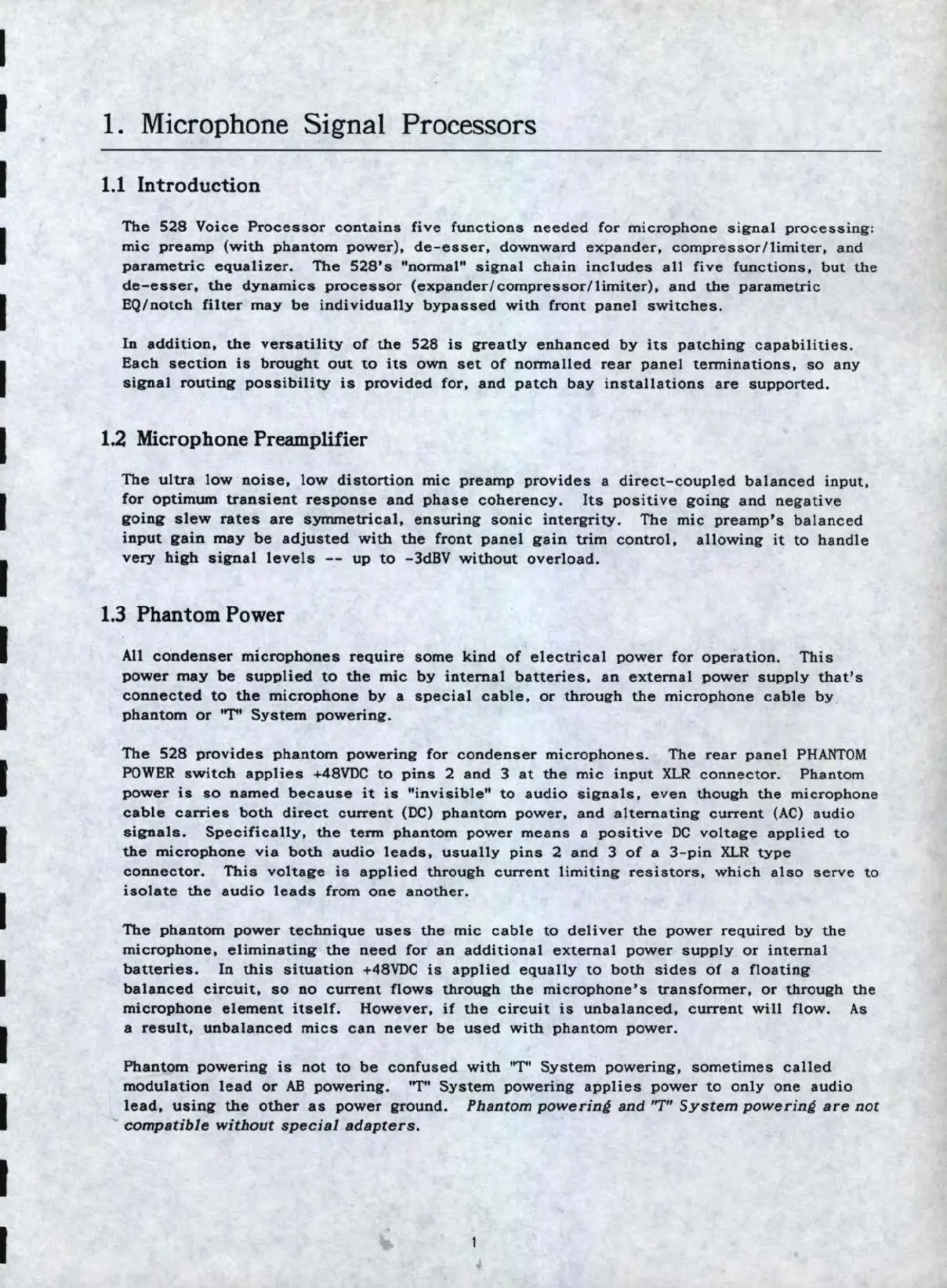
1. Microphone Signal Processors
1.1
Introduction
The
528
Voice
Processor
contains
five
functions
needed
for
microphone
signal
processing:
mic
preamp
(with
phantom
power),
de-esser,
downward
expander,
compressor/limiter,
and
parametric
equalizer.
The
528's
"normal"
si~al
chain
includes
all
five
functions,
but
the
de-easer,
the
dynamics
processor
(expander/
co
mpre
ssor/limiter),
and
the
parametric
EQ/notch
filter
may
be
individually
bypassed
with
front
panel
switches.
In
addition,
the
versatility
of
the
528
is
a-reatly
enhanced
by
its
patching
capabilities.
Each
section
is
brought
out
to
its
own
set
of
normalled
rear
panel
terminations,
so
any
si~al
routing
possibility
is
provided
for,
and
patch
bay
installations
are
supported.
1.2 Microphone Preamplifier
The
ultra
low
noise
,
low
distortion
mic
preamp
provides
a
direct-coupled
balanced
input,
for
optimum
transient
response
and
phase
coherency.
Its
positive
going
and
negative
iroinir
slew
rates
are
symmetrical,
ensurinir
sonic
intergrity.
The
mic
preamp's
balanced
input
.rain
may
be
adjusted
with
the
front
panel
gain
trim
control,
allowing
it
to
handle
very
hi1rh
signal
levels
--
up
to
-3dBV
without
overload.
1.3
Phantom Power
All
condenser
microphones
require
some
kind
of
electrical
power
for
operation.
This
power
may
be
supplied
to
the
mic
by
internal
batteries,
an
external
power
supply
that's
connected
to
the
microphone
by
a
special
cab
le,
or
through
the
microphone
cable
by
phantom
or
"T"
System
powerin1r.
The
528
provides
phantom
powering
for
condenser
microphones.
The
rear
panel
PHANTOM
POWER
switch
applies
+48VDC
to
pins
2
and
3
at
the
mic
input
XLR
connector.
Phantom
power
is
so
named
because
it
is
"invisible"
to
audio
signals,
even
though
the
microphon
e
cable
carries
both
direct
current
(DC)
phantom
power,
and
alternating
current
(AC)
audio
si~als.
Specifically,
the
term
phantom
power
means
a
positive
DC
volts.re
applied
to
the
microphone
via
both
audio
leads,
u
sua
ll
y
pins
2
and
3
of
a
3-pin
XLR
type
connector.
This
volta.re
is
applied
thrOUIZ'h
current
limiting
resistors,
which
also
serve
to
isolate
the
audio
leads
from
one
another.
The
phantom
power
technique
uses
the
mic
cable
to
deliver
the
power
required
by
the
microphone
,
eliminatinri
the
need
for
an
additional
external
power
supply
or
internal
batteries.
In
this
situation
+48VDC
is
applied
equally
to
both
sides
of
a
floating
balanced
ci
rcuit
,
so
no
current
flows
throurih
the
micr
ophone's
transformer,
or
through
the
microphone
element
itself.
However,
if
the
circuit
is
unbalanced,
current
will
flow.
As
a
result,
unbalan
ced
mies
can
never
be
used
with
phantom
power.
Phantom
powerinri
is
not
to
be
confused
with
''T''
System
powering,
sometimes
called
modulation
lead
or
AB
pow
erinri.
''T''
System
powerinri
applies
power
to
only
one
audio
lead,
usin1r
the
other
as
power
a-round.
Phantom
powerin4
and
'T"
Syste
m
powerin4
are
noc
compatible
without
special
adapters.

Table of Contents

Other manuals for Symetrix 528

Related product manuals