Section 2 – Chimneys & Dampers
Temp-Cast 2000 Installation Manual February 2010
7
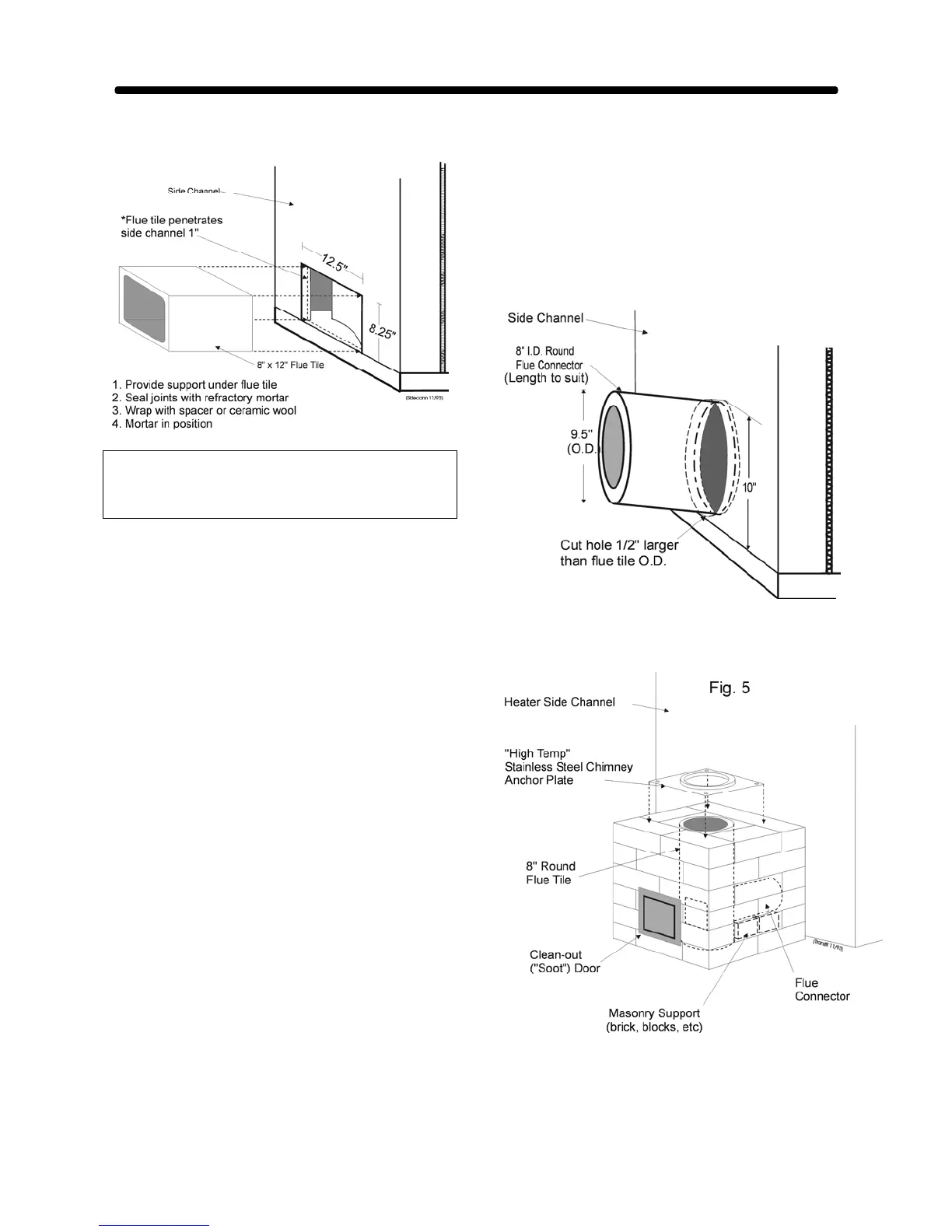
Fig 3
A 4” grinder with a diamond blade is ideal for
cutting accurate & neat holes in the refractory
concrete modules.
FACTORY-BUILT CHIMNEYS
We do not recommend exterior chimneys, (see
Sec. 4 of the Temp-Cast Planning Guide) but if a
chimney on the outside of the house is
unavoidable, then an insulated factory-built (e.g.
"HT" or 2100F.) chimney is the better choice.
When a factory-built chimney is started at the
floor level, there will not be sufficient space to
access the clean-out cap under it. In order to
provide a clean out access, one of the following
2 methods is suggested.
Create a masonry connection to the fireplace,
with 8" (200mm) round flue tile. Add vertical
sections of 8” round flue tile, with a clean-out
access built into the first vertical section. Wrap
the horizontal tile and the first vertical flue tile
with “ceramic wool” blanket & ensure they
cannot be dislodged. Continue with flue tile &
masonry to the point where the transition to
factor-built chimney is wanted – often the
masonry is extended to the first ceiling. If a
roof-top damper is to be installed, the cable
protector for the damper cable must be built into
the masonry chimney where it will be accessible
for daily use – we recommend at least 6 feet
from the floor. Install an anchor plate approved
for the factory-built chimney, on top of the last
masonry section - the factory-built chimney
continues from this point. (See Fig. 5.) If the
factory-built chimney will also be enclosed in
masonry, the layout of the first masonry courses
must take this into account. (Confirm this
connection method with your local building
official.)
Fig 4



 To Next Page