Section 2 – Chimneys & Dampers
Temp-Cast 2000 Installation Manual February 2010
9
INSTALLING THE ROOF-TOP
CHIMNEY DAMPER
An optional “roof-top” chimney damper is
recommended to allow the chimney to be closed
off when the fire is out. This will let the
chimney mass hold additional heat and greatly
improve the overall heating efficiency of the
system. (Refer to the Temp-Cast Owner's
Manual for proper use of the chimney damper.)
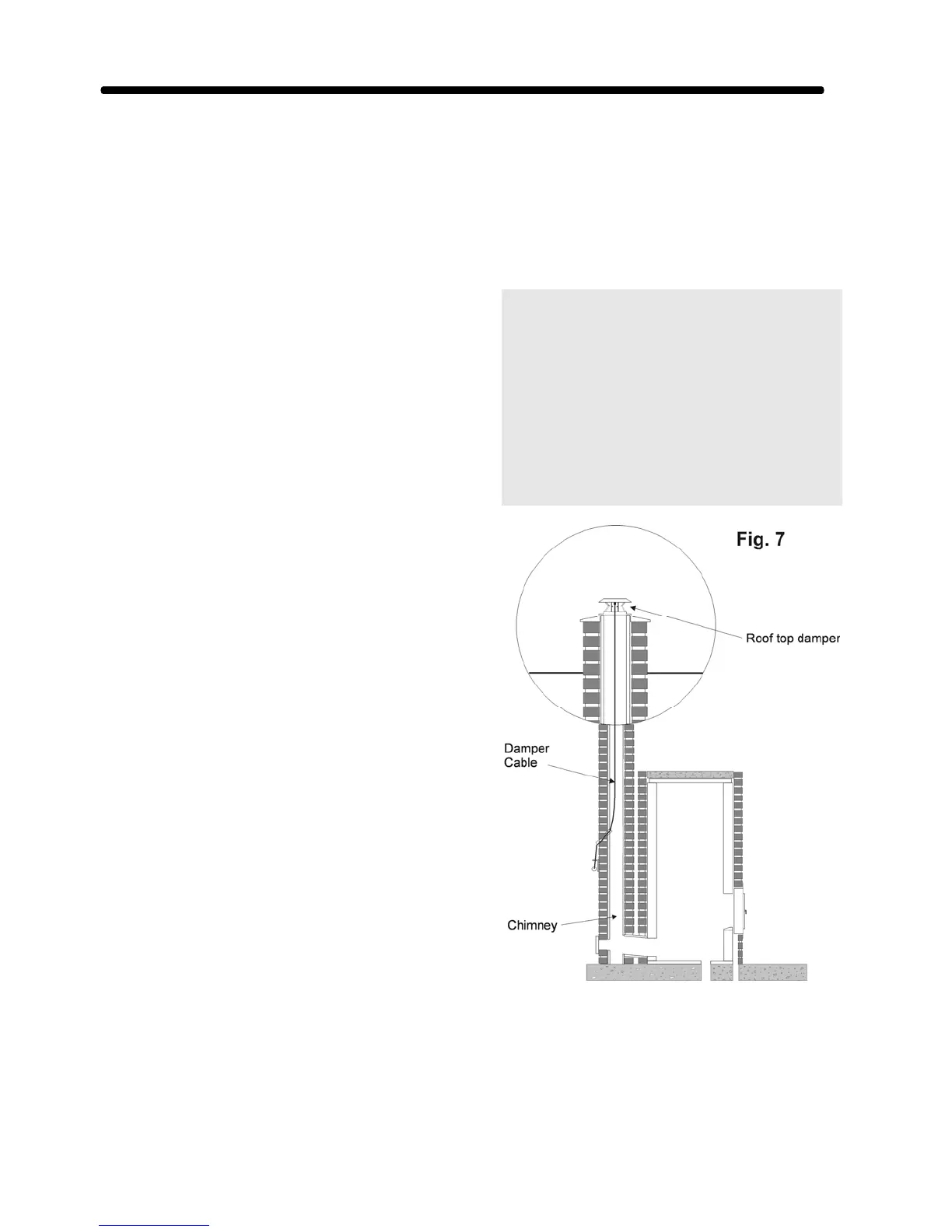
The damper is cemented to the top of the
uppermost flue tile of the chimney, and is
controlled by a cable through the centre of the
chimney. (See Fig. 7) The cable is routed
through the side of the flue tile during
construction of the chimney and masonry facing.
(Note: Installation of the damper cable is greatly
simplified if the protective sleeve and steel
cable are installed in the desired area when the
chimney is being built. If this has not been done,
then a string will have to be fished through the
sleeve & secured to the steel cable.) Attach the
cable bracket to the outside of the chimney in a
convenient, unobtrusive location, but always out
of the reach of small children.
For 8” round chimneys, including factory-built
models, a Round-to-Square adapter and a 13” x
13” damper will be required.
NOTE: When a stainless steel (i.e. “factory-
built”) chimney is used, penetrating the steel
chimney is not permitted. Alternatives
include:
1. Installing a Temp-Cast Base-Exit Damper,
construct a short section of masonry
chimney, install an approved masonry
adapter part and continue with factory-built
chimney through the roof. (See Fig 6.)
2. Starting the installation with a Temp-Cast
Base-Exit Transition, with or without an
integral damper. For exposed chimneys, a
Temp-Cast Base-Exit Transition/Damper
must be used. If the chimney is to be
enclosed to the first ceiling or through to
the roof, you can use the same Temp-Cast
Base Exit Damper/Transition, or obtain an
adapter with a built-in damper, which can
be installed with the first section of
“factory-built” chimney. This permits a
more effective damper, much higher up in
the chimney system. In either case, the
whole chimney assembly and transition can
be enclosed in masonry.
CAUTION: Whenever a full-closure damper is
used, care should be taken to ensure that the fire
is completely out before the damper is shut.
Closing the damper prematurely could cause
combustion gases, especially carbon monoxide,
to be spilled into the home. Carbon monoxide
has the potential to be fatal. We therefore
strongly recommend installation of a carbon
monoxide alarm, available where smoke alarms
are purchased, whenever a damper is used with a
Temp-Cast masonry heater.



 To Next Page