Section 2 – Chimneys & Dampers
Temp-Cast 2000 Installation Manual February 2010
8
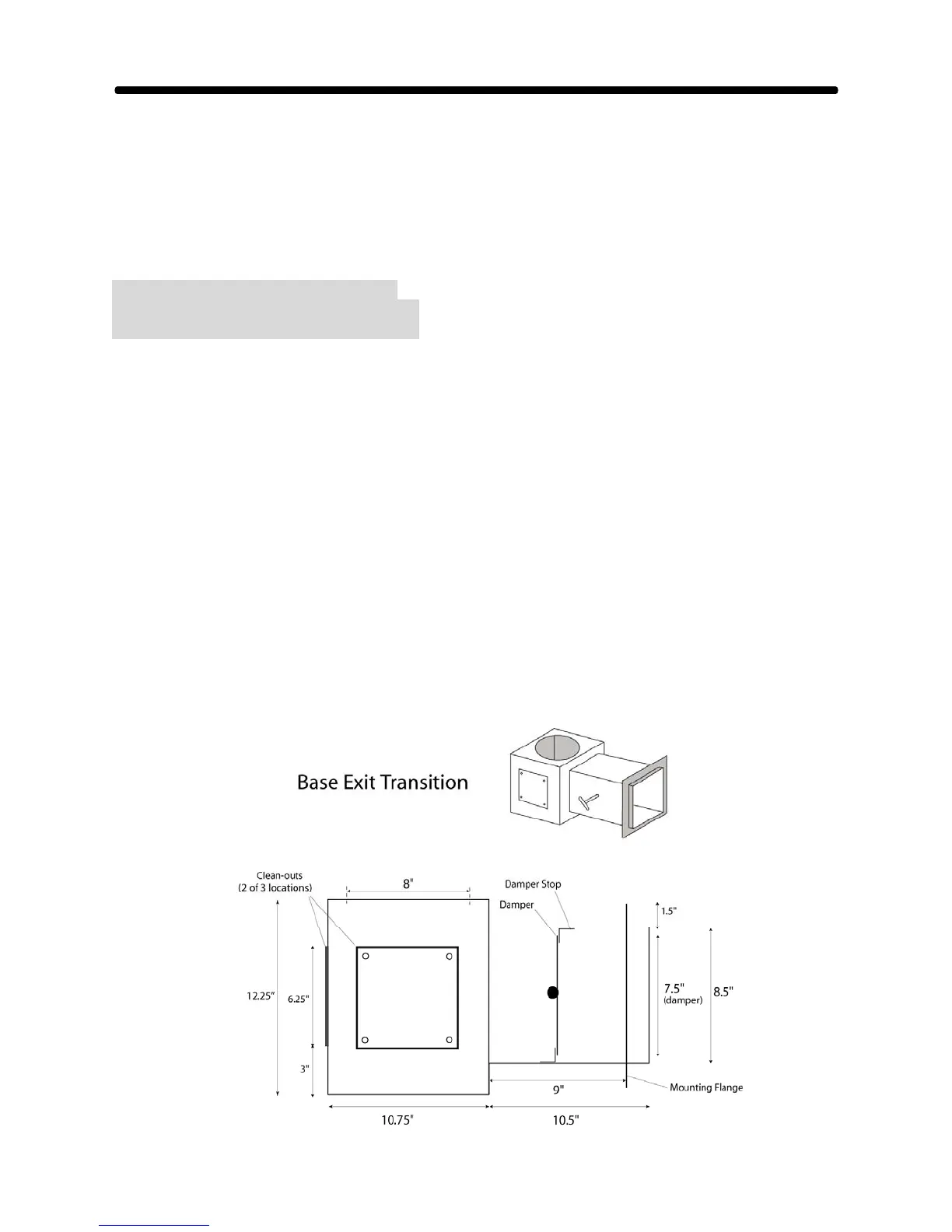
BASE-EXIT DAMPER/TRANSITION
A Temp-Cast base-exit damper/transition is
another method to make a suitable connection
from the heater to a factory-built chimney, and
also incorporates a damper & cleanout access
that is not otherwise possible with factory-built
chimneys. (See Fig 6.)
If you use a damper of any kind, be
certain to read the cautions regarding
carbon monoxide, in the next section.
The following details the installation of the
Temp-Cast base-exit damper/transition.
1. At Step 18, position the base-exit
damper/transition, sitting on the
concrete slab. Mark where the damper
will be installed into the side channel
(Part #30 or 31) or rear manifold (Part
#3), and cut a 9½” x 9½” opening.
2. Cut the damper rod to length, if
required, to extend beyond the masonry
which will enclose the entire assembly.
3. Attach the handle to the rod with the nut
extender and nuts supplied. Check the
operation of the damper to become
familiar with its operation. (The handle
is usually shipped inside the damper.)
4. Attach a strip of ceramic wool to the
outside of the side channel around the
damper opening, with high-temperature
silicone. Lay a strip of ceramic wool on
the bottom edge of the opening and
insert the base-exit damper/transition.
Insert the damper into the opening and
slightly compress the ceramic wool – it
may be helpful to temporarily support
the damper box until masonry work has
been started around it.
5. Cover the damper rod so that it will not
be inadvertently cemented in position
during installation of the masonry facing
– flexible cardboard or ½” copper pipe
(not supplied) may be used for this.
6. With at least 3 metal screws, attach an
approved masonry adapter to the top of
the damper assembly & install the first
vertical section of factory-built chimney.
7. Enclose the entire damper assembly
with at least 4” of solid masonry,
leaving an access for the cleanout. (If
the factory-built chimney will also be
enclosed, the first masonry courses must
take this into account.)
Other methods of connecting factory-built
chimneys may also be acceptable. Consult the
chimney manufacturer, a certified installer or
your local building official.
Fig 6



 To Next Page