TI3500 GPU-24
14
3
Operating Procedures
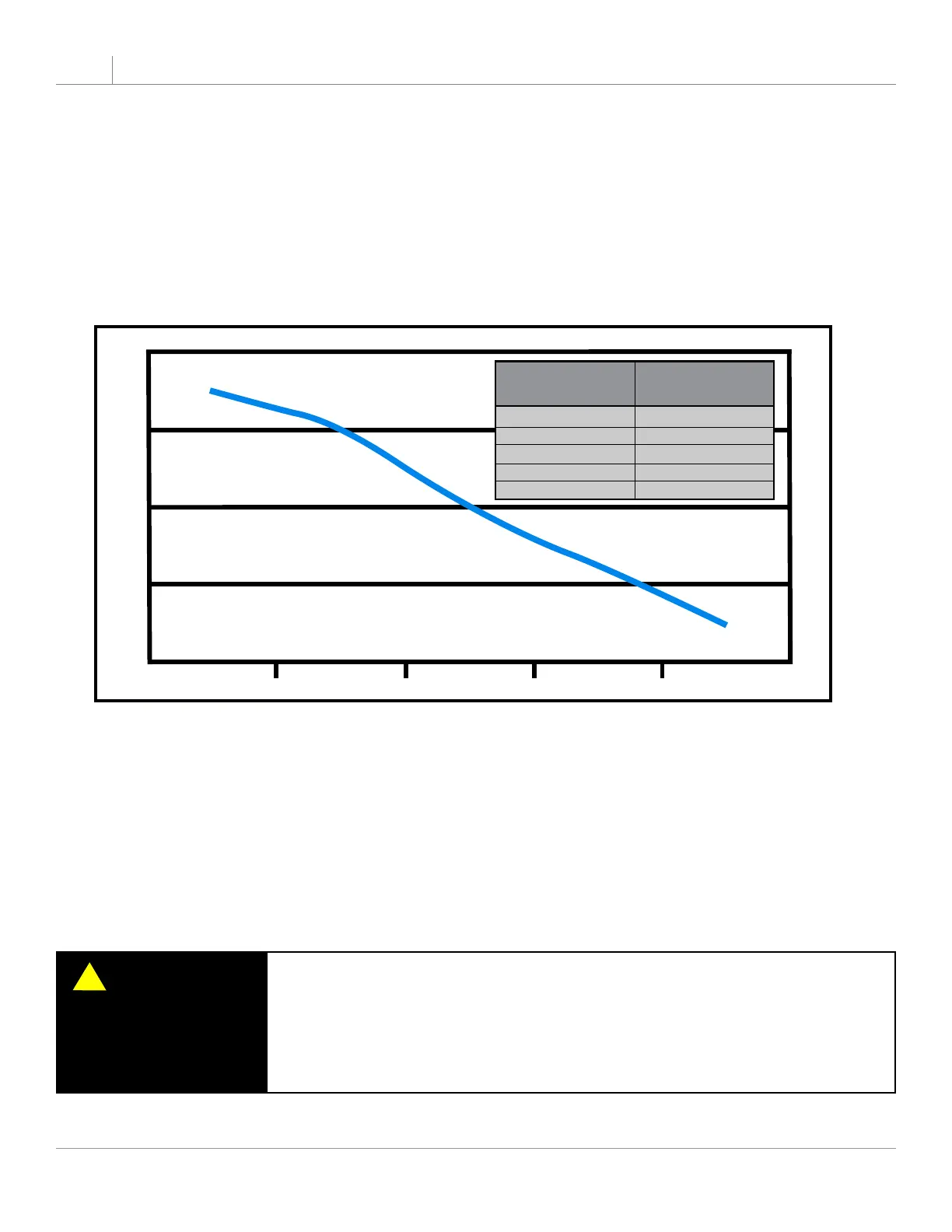
120%
100%
80%
60%
40%
+40°C +25°C +0°C -20°C -40°C
Ambient
Temperature
+40°C (+104°F)
+25°C (+77°F)
+0°C (+32°F)
-20°C (-4°F)
-40°C (-40°F)
110% ±5%
100% ±5%
80% ±5%
65% ±10%
50% ±10%
Percentage of
Cell Capacity
Figure 3.6.1 – Output power capability versus ambient temperature
3.7 – Environmental
If the unit is exposed to signi cant moisture, preventive measures and precautions shall be taken to:
A. Prevent accumulation of moisture on ac and dc connectors/receptacles
B. Minimize moisture entering forward inlet and outlet cooling fan vent ports
When not in use, unit inlet and outlet vent ports shall be covered from exposure. Unit shall be kept
horizontal.
Hot Soaked or Cold Soaked De nition
Simple terms: When a material is exposed to a change in temperature, its temperature will also change.
Some material changes temperature quickly, others slowly. If the ambient temperature changes and is then
held constant, the materials temperature will also change until its temperature stabilizes. Once the material
temperature has stabilized, it is considered “soaked”.
Example: The unit is moved from the cool shade into the hot sun. The unit’s temperature will increase until
it stabilizes. Once stabilized, the unit would be considered “hot soaked”.
NOTE
!
The unit is equipped with a temperature switch that automatically disables
AC power functions when the internal temperature is above 150°F (65°C).
This protects the unit from overheating and damage. If the unit shuts down,
move the unit into a cooler climate such as shade or air conditioning when
possible. Perform a full function test prior to use after the unit has been
allowed to cool.
3.6 – Temperature Speci cations
Cold/Hot Soaked Temperature
The ambient temperature that a unit is exposed to for one (1) hour or more establishes the unit’s cold/
hot soaked stabilization temperature. If the unit’s cold/hot soaked temperature is outside the normal
operating temperature range, the unit must be stabilized prior to operation. For COLD SOAKED tem perature
stabilization, the unit must be placed in an environment with a temperature above +10°C (+41°F) for 3
hours or a temperature above +20°C (+68°F) for 2 hours. For HOT SOAKED temperature stabilization, the
unit must be placed in an environment with a temperature below +38°C (+100°F) for 1 hour.
WARNING
Operating any electrical equipment in the presence of moisture creates possible
safety hazards and/or potential for equipment damage. Every effort has been
made, within the scope of existing technology to prevent foreseeable safety
hazards and make theunit moisture resistant to prevent damage or failure.
3.7 – Environmental
If the unit is exposed to signi cant moisture, preventive measures and precautions shall be taken to:
A. Prevent accumulation of moisture on ac and dc connectors/receptacles
B. Minimize moisture entering forward inlet and outlet cooling fan vent ports
When not in use, unit inlet and outlet vent ports shall be covered from exposure. Unit shall be kept
horizontal.
Hot Soaked or Cold Soaked De nition
Simple terms: When a material is exposed to a change in temperature, its temperature will also change.
Some material changes temperature quickly, others slowly. If the ambient temperature changes and is then
held constant, the materials temperature will also change until its temperature stabilizes. Once the material
temperature has stabilized, it is considered “soaked”.
Example: The unit is moved from the cool shade into the hot sun. The unit’s temperature will increase until
it stabilizes. Once stabilized, the unit would be considered “hot soaked”.
NOTE
!
The unit is equipped with a temperature switch that automatically disables
AC power functions when the internal temperature is above 150°F (65°C).
This protects the unit from overheating and damage. If the unit shuts down,
move the unit into a cooler climate such as shade or air conditioning when
possible. Perform a full function test prior to use after the unit has been
allowed to cool.
3.6 – Temperature Speci cations
Cold/Hot Soaked Temperature
The ambient temperature that a unit is exposed to for one (1) hour or more establishes the unit’s cold/
hot soaked stabilization temperature. If the unit’s cold/hot soaked temperature is outside the normal
operating temperature range, the unit must be stabilized prior to operation. For COLD SOAKED tem perature
stabilization, the unit must be placed in an environment with a temperature above +10°C (+41°F) for 3
hours or a temperature above +20°C (+68°F) for 2 hours. For HOT SOAKED temperature stabilization, the
unit must be placed in an environment with a temperature below +38°C (+100°F) for 1 hour.
WARNING
Operating any electrical equipment in the presence of moisture creates possible
safety hazards and/or potential for equipment damage. Every effort has been
made, within the scope of existing technology to prevent foreseeable safety
hazards and make theunit moisture resistant to prevent damage or failure.


 To Next Page