Need help?
Do you have a question about the Tevo TORNADO and is the answer not in the manual?
Overview of potential hazards and warnings for the 3D printer operation.
Warning about opening the electronics bay while the printer is powered on.
Caution against touching hot parts like the nozzle or heated bed.
Warning about flammable materials near the printer.
Advice to avoid moving parts during operation.
Guidance on grounding to prevent damage to electronic components.
Recommendation for adult supervision for users under 18.
Instructions for unpacking parts and checking for shipping damage.
Steps to install the gantry frame (A) to the base frame (B) using M5x25 screws.
Installing T-shaped plates for frame reinforcement, including limit switch placement.
Guide to connecting various electrical cables for the printer components.
Ensuring the PTFE tube is correctly seated in the hotend to prevent clogging.
Adjusting the tension of build plate wheels on the Y-axis using eccentric nuts.
Adjusting the tension of gantry wheels on the Z-axis pillar.
Adjusting the tension of X-carriage wheels on the X-axis.
Tightening the belt driving the Y-axis by adjusting the pulley.
Tightening the belt driving the X-carriage by adjusting the pulley.
Adjusting Titan Extruder tension for smooth filament extrusion.
Steps to preheat the printer and move the nozzle to the home position.
Disabling steppers to allow manual adjustment of the build plate and X-carriage.
Using a paper test to set the nozzle distance from the build plate.
Making micro-adjustments to bed level during the first layer of a print.
Overview of compatible slicing software like Simplify3D, Cura, Repetier-Host.
Setting up Repetier-Host, including port and baud rate.
Configuring printer dimensions (X/Y/Z Max, Bed Left/Front) in Repetier-Host.
Adjusting travel speed, temperatures, and other extruder settings in Repetier-Host.
Loading Tornado.ini configuration into Slic3r for PLA filament printing.
Steps to load a 3D object file into the slicing software.
Selecting print settings and performing the slice operation using Slic3r.
Saving the sliced G-code file to an SD card for printing.
Downloading Arduino IDE and firmware source code.
Steps to verify and compile firmware using Arduino IDE.
Process of uploading the compiled firmware to the printer's controller board.
Details on the 12-month replacement part program and conditions.
Procedure for reporting lost, damaged, or defective parts during shipping.
Information on obtaining support and joining the TEVO Tornado Owners Group.
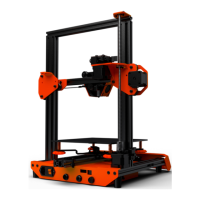
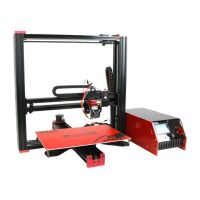
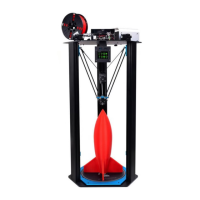
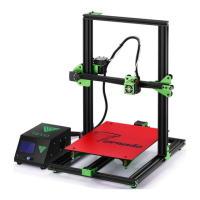
The TEVO Tornado is a 3D printer designed for enthusiasts and professionals alike, offering a robust platform for additive manufacturing. This assembly manual guides users through the setup, fine-tuning, and initial operation of the printer, ensuring a smooth start to their 3D printing journey.
The TEVO Tornado is a Fused Deposition Modeling (FDM) 3D printer that creates three-dimensional objects by extruding molten thermoplastic material layer by layer onto a build plate. It is capable of printing various designs, from prototypes to functional parts, using a range of compatible filaments. The printer operates by precisely controlling the movement of its print head (extruder) along the X, Y, and Z axes, while simultaneously extruding filament at a controlled rate and temperature. The heated build plate ensures optimal adhesion of the first layer and helps prevent warping of the printed object, especially with materials that are prone to shrinking upon cooling. The printer's design emphasizes ease of assembly and a user-friendly experience, making it accessible for those new to 3D printing while still offering the performance expected by experienced users.
The TEVO Tornado is designed with several features to enhance its usability and printing capabilities.
Assembly and Setup: The manual provides clear, step-by-step instructions for assembling the printer. This includes attaching the gantry frame to the base frame, installing reinforcement plates, and connecting all electrical cables. Special attention is given to ensuring the PTFE tube is fully seated in the hotend to prevent clogging, a common issue in 3D printing. The assembly process is designed to be straightforward, allowing users to quickly get their printer ready for operation.
Fine-Tuning for Optimal Performance: Before the first print, the manual emphasizes the importance of fine-tuning various mechanical components. This includes adjusting the tension of the build plate wheels on the Y-axis, the gantry wheels on the right pillar of the gantry frame, and the X-carriage wheels on the X-axis. Proper tensioning of these wheels is crucial for smooth movement, preventing wobbling, and ensuring accurate print quality. The manual also details how to check and adjust the tension of the belts driving the Y-axis and X-carriage, as well as the tension on the Titan Extruder, which is vital for consistent filament extrusion. These adjustments ensure that all moving parts operate without excessive play or resistance, contributing to higher print precision and reliability.
Build Plate Leveling: A critical step for successful 3D printing is leveling the build plate. The TEVO Tornado's manual provides a detailed procedure for this, recommending the use of an A4 paper to achieve the optimal 0.1mm distance between the nozzle and the build plate. The process involves preheating the bed and nozzle to actual printing conditions, auto-homing the nozzle, and then disabling steppers to allow manual movement of the X-carriage and build plate. Users are guided to adjust four thumbscrews under the bed until the paper slides with slight drag at all locations. The manual also offers tips for fine-tuning the bed level during the first layer of a print, allowing for real-time adjustments to achieve smooth extruded lines and maximum surface area contact.
Slicing Software Integration: The TEVO Tornado is compatible with popular slicing software such as Simplify3D, Cura, and Repetier-Host. The manual provides an in-depth guide for setting up Repetier-Host, including configuring printer settings like port, baud rate, and printer shape dimensions (X Max, Y Max, Print Area Width, Depth, and Height). It also details how to adjust printer parameters such as travel feed rates, manual extrusion/retraction speeds, and default extruder/heated bed temperatures. The guide then walks users through the slicing process, from loading a 3D object to selecting print settings (e.g., adhesion type, quality, support type, print speed, infill density) and saving the G-code for SD card printing. This comprehensive approach ensures users can prepare their 3D models effectively for printing on the TEVO Tornado.
Firmware Management: The manual includes instructions on how to flash new firmware to the printer's control board. This involves downloading the Arduino IDE and the firmware source code (e.g., Marlin), selecting the correct board and serial port, and then verifying and uploading the firmware. This feature allows users to update their printer's software, potentially gaining new functionalities or improving performance, and ensures the printer remains up-to-date with the latest advancements.
While the manual primarily focuses on assembly and initial setup, it implicitly highlights several aspects that contribute to the printer's maintenance and longevity.
Regular Mechanical Checks: The fine-tuning section encourages users to regularly check the tension of wheels and belts. This proactive approach helps identify and correct loose components before they can lead to print quality issues or mechanical wear. By ensuring proper tension, users can extend the lifespan of moving parts and maintain consistent print accuracy.
Extruder Tension Adjustment: The ability to adjust the tension on the Titan Extruder is a key maintenance feature. If filament does not come out smoothly, users can easily adjust this screw to optimize extrusion, preventing under-extrusion or grinding of the filament. This ensures reliable material delivery and consistent print quality over time.
PTFE Tube Seating: The instruction to ensure the PTFE tube is fully seated in the hotend is a crucial preventative maintenance step. A loose PTFE tube can lead to clogs, which can be time-consuming to clear and potentially damage the hotend. By regularly checking this connection, users can avoid common printing failures and maintain optimal filament flow.
Firmware Updates: The provision for flashing new firmware allows for software maintenance. Updates can fix bugs, improve performance, or add new features, ensuring the printer's control system remains robust and efficient. This is an essential aspect of long-term device health and adaptability.
Troubleshooting and Support: The manual directs users to a Facebook group and a support website for assistance with assembly problems or other issues. This community and official support infrastructure serve as a vital resource for troubleshooting and maintaining the printer, allowing users to find solutions to common problems and get expert advice when needed. The detailed after-sales policy, including replacement parts and carrier loss claims, further supports the long-term usability and maintenance of the TEVO Tornado.
 General
| Build Volume | 300 x 300 x 400 mm |
|---|---|
| Layer Resolution | 0.05 - 0.4 mm |
| Nozzle Diameter | 0.4 mm |
| Filament Diameter | 1.75 mm |
| Connectivity | USB, SD Card |
| Frame Material | Aluminum |
| Bed Leveling | Manual |
| Bed Temperature | Up to 110°C |
| Display | LCD |
| Extruder Type | Single |
| Heated Bed | Yes |
| Nozzle Temperature | up to 260°C |
| Power Supply | 24V |
| Technology | FDM (Fused Deposition Modeling) |
| Supported Materials | PLA, ABS, PETG |

 To Next Page