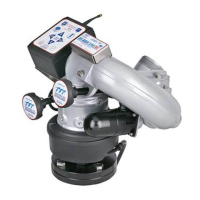
What to do if TFT HURRICANE have leaks?
- RryanmaloneAug 2, 2025
If your TFT Measuring Instruments are leaking, it is likely due to debris or damage in the seal area. You should clean out any debris or replace any damaged parts to resolve this issue.

What to do if TFT HURRICANE have leaks?
If your TFT Measuring Instruments are leaking, it is likely due to debris or damage in the seal area. You should clean out any debris or replace any damaged parts to resolve this issue.
Why is there elevation binding in my TFT Measuring Instruments?
Elevation binding in your TFT Measuring Instruments can occur due to debris or damage to the elevation drive parts. Try cleaning out any debris or replacing damaged parts. Also, a lack of lubricant can cause this issue, so ensure the parts are adequately greased.
| Display | LCD |
|---|---|
| Type | Anemometer |
| Resolution | 0.1 m/s, 0.1 °C |
| Units | m/s, km/h, ft/min, knots, mph, °C, °F |
| Power Supply | 9V battery |
| Battery | 9V battery |
| Features | Data hold, Max/Avg, Auto power off |
Details physical characteristics including weight, dimensions, flow rates, and materials of construction.
Outlines voltage requirements, torque, and speed specifications for electric models.
Graphical representation of safe operating limits for flow and pressure, crucial for preventing damage or injury.
Guidelines for using the equipment with salt water, including maintenance and warranty considerations.
Identifies and illustrates different Hurricane monitor models and defines key operational terms.
Details the various inlet and outlet options available for the Hurricane monitor series.
Lists specific inlet fitting types, dimensions, and bolt requirements for monitor configurations.
Provides detailed diagrams and measurements for different Hurricane monitor configurations.
Details how various inlet fittings affect the overall height of the monitor models.
Instructions for connecting electrical components, referencing supplemental documentation.
Specifies structural integrity needs and mounting procedures to withstand reaction forces.
Guidance on securely mounting the monitor to a riser pipe or threaded joint, avoiding obstructions.
Describes how to mount inlet fittings and Extend-A-Gun, including attachment procedures.
Step-by-step guide for attaching various inlet fittings and Extend-A-Gun components to the monitor.
Illustrates the correct method for routing the wire harness for Extend-A-Gun RC models.
Details how to install stop bolts to limit the horizontal rotation range of the monitor.
Explains the installation of stop bolts and adjustment discs to limit vertical travel.
Guidance on securely attaching nozzles to the monitor, ensuring proper clearance for actuators.
Specifies the correct orientation for electric-controlled nozzles for optimal connection and movement.
Information on installing a pressure gauge into the designated port for monitoring system pressure.
Instructions for the automatic drain system, including how to disable it and prevent freezing.
Procedure for installing the loose handle on manual models, including thread preparation.
Details how to rotate the monitor horizontally using lock levers or knobs for positioning.
Explains the operation of the handwheel for controlling the vertical elevation of the monitor.
Guidance on parking the monitor safely on vehicles to prevent damage during transit.
Information on using manual override knobs for operation in case of electrical system failure.
Provides flow rate and reaction force data for MST-4NJ stacked tips at various pressures.
Graphs illustrating how elevation angle and wind affect the stream's horizontal and vertical reach.
Information on automatic nozzles and their operation within the monitor's operating envelope.
Graph showing pressure loss within the monitor at different flow rates.
Discusses the use and effectiveness of stream straighteners with different nozzle types.
Explains how integral straighteners improve stream quality with stacked tip nozzles.
Advises against using stream straighteners with fog nozzles due to potential gear train stress.
Requirements for annual service testing of the equipment as per NFPA 1962 standards.
Guidance on lubricating the elevation and horizontal worm gears for smooth operation.
Specific instructions for lubricating the elevation control worm gear to address stiffness.
Instructions for lubricating the horizontal rotation worm gear to resolve stiff operation.
Table listing common symptoms, their possible causes, and recommended remedies for issues.
Information on factory service, obtaining repair parts, and user-performed repairs.
Loading...