133
fresh water tank (the water heater will be bypassed
automatically). When the container is empty, turn
pump OFF, and disconnect hose from utility panel.
To aid in siphoning, place the container approxi-
mately (2) feet o the ground. The drain valves
must be closed.
3. Fill the fresh water tank full of clean (potable) wa-
ter. Use water from either a pressurized source or from a container (as detailed below).
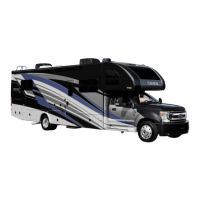
a). Filling from a pressurized source: Set the
valves to the setting.
Connect a non-toxic drinking hose to the
city water ll inlet. Connect the other end
of the hose to the pressurized water source.
Turn on the water source. When tank is full,
turn o the water source, then
disconnect from the utility panel.
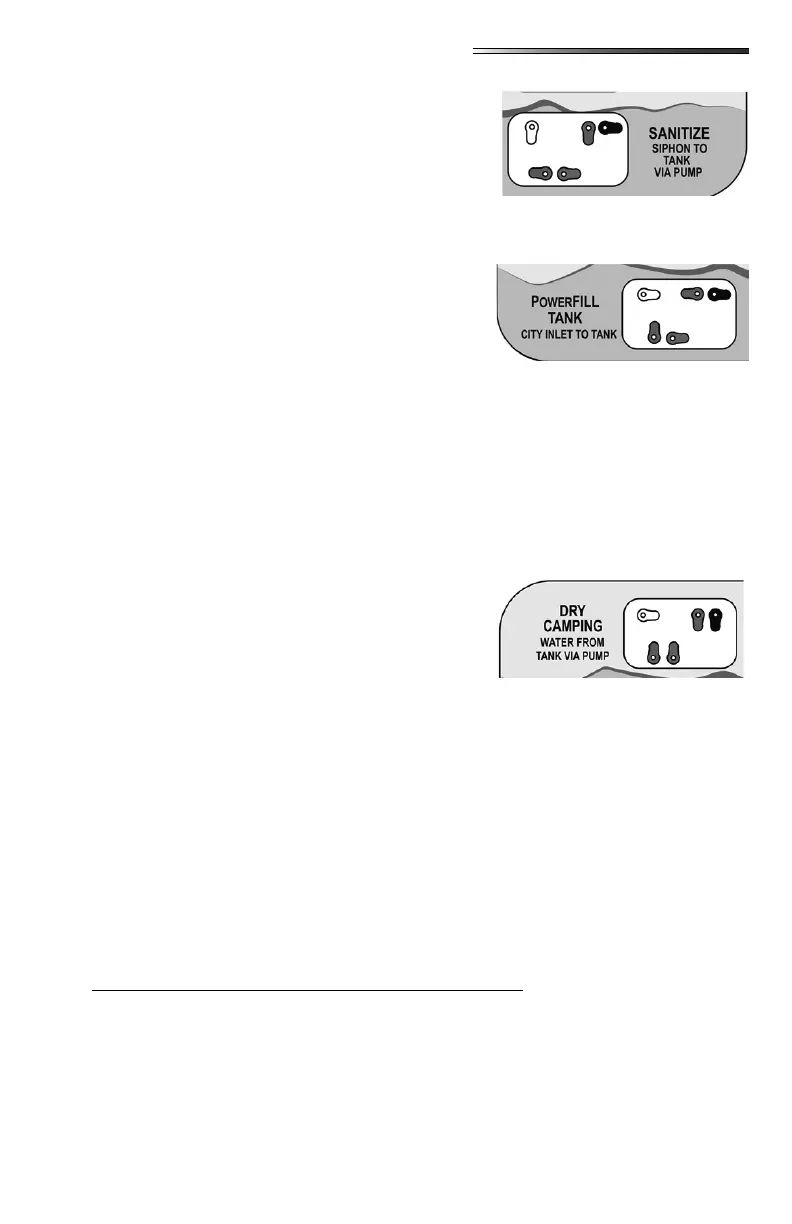
b). Siphon lling from a water container: set the valves to the setting.
Insert a hose into the city water ll inlet, place other end of the hose in a
container of water. Turn pump ON to draw water into the tank. After the tank is
full, turn the pump OFF. Remove the hose and the container. To aid in siphoning
place the container approximately (2) feet o the ground. The drain valves must
be closed.
4. Run water through all faucets (hot & cold, includ-
ing outside shower) until chlorine smell is gone.
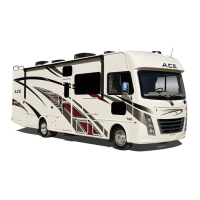
Set the valves to the setting.
Turn the pump ON to send water through the lines.
5. Close all faucets including outside shower. Turn
pump OFF.
6. Drain the system again, but don’t drain the water heater. Do not remove water heater
drain plug (if so equipped).
7. Close low point drains and fresh water tank drain.
8. Rell the fresh water tank with clean potable water. Use the city water ll connection
inlet, and one of the two methods explained in Step 3.
9. Open faucets and check that the chlorine taste is gone.
10. Drain the system one more time (See Draining Fresh Water System).
11. Remove the clear tube and replace the cartridge lter (if so equipped), or remove full
system canister, insert lter, and reattach canister to the mount.
12. Rell the fresh water system with clean water.
13. After lling the water tank, set the valves to either DRY CAMPING or CITY WATER
in order for water to ow through the water heater again.
Preparing your recreation vehicle for colder weather or storage is very important for most
states and Canada. Failure to prepare your RV may cause water supply lines and the water
heater to freeze. The RV should be winterized at the end of the camping season or when it
will be exposed to temperatures that will fall at or below 32°F (0°C). Repairs due to freezing
are not covered by warranty.



 To Next Page