TT31 Transponder Installation Manual 1 February 2010
00455-00 Issue AJ
______________________
2. Introduction
2.1 TT31 Description
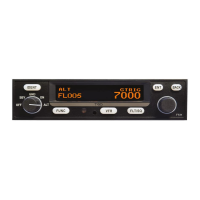
The TT31 Mode S panel mount transponder is an ED-73B Class 1 compliant Mode S level 2es datalink
transponder, with support for extended squitter, elementary surveillance and SI codes. The TT31 is also
a DO-260A change 2 Class B0 compliant ADS-B out participant, which also meets the power output
levels for Class B1. The TT31 meets the relevant environmental requirements of ED-14D, and is
certified to ETSO 2C112b, ETSO C166a and TSO C112.
The TT31 transmitter power output is nominally 240 watts, and the transponder runs from either 14 volt
nominal or 28 volt nominal DC power supply with no configuration changes required.
The TT31 transponder responds to both legacy Mode A/C interrogations and to Mode S interrogations
from both ground radar and airborne collision avoidance systems. In all cases, the interrogations are
received by the transponder on 1030MHz, and replies are transmitted on 1090MHz.
In the Mode S environment, S stands for Select, and a Mode S interrogator can selectively address a
single transponder. This allows accurate position plotting with lower reply rates, which in turn reduces
frequency congestion and interference. As a side benefit, power consumption by the transponder may
be reduced, and simple datalink services can be supported, such as ADS-B. It is however crucial to the
reliable operation of the system that each aircraft has a distinct Mode S address. The Mode S address is
allocated by the registration authority for the aircraft, and must be set when the TT31 is installed.
2.2 Interfaces
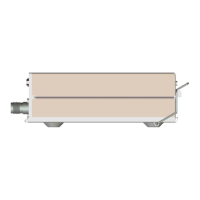
At the rear, the transponder has two Molex style connectors and a single antenna connector for blind
mating with the corresponding connectors in the mounting tray.
The interfaces provide the following services:
Parallel altitude input Connection to an external altitude encoder using parallel Gray code.
Serial altitude input Connection to an external RS232 altitude encoder. Using serial altitude data
allows the transponder to report altitude with 25 foot resolution.
Serial altitude output Connection to a GPS or other device needing serial altitude data – this allows the
transponder to act as a repeater instead of requiring a second altitude encoder.
Ident input External IDENT switch input.
Standby input External standby input for dual transponder installations.
“On ground” input Allows automatic flight/ground mode switching for aircraft with a squat switch.
Lighting bus input Used to adjust the backlight and switch lighting intensity.
DME Suppression
Input
Input to limit interference between DME interrogations and transponder replies –
suppresses transponder whilst active.
Suppression bus I/O ARINC compatible suppression bus signal used in aircraft with more
sophisticated suppression needs, both an input to and output from the
transponder.
Audio output Optionally used by the altitude monitor function.
Audio mute input Toggle function to mute the audio output.
Altitude alert output Output used to signal altitude deviations when optional altitude monitor function
is used.
GPS Input Connection to a GPS supplying position input for ADS-B position reporting.
Page 2 Trig Avionics Limited


 To Next Page