38
It is not uncommon for the wall to pause or slow while
the load moves past the first cross member; this is more
likely to happen when hauling heaped loads. Having
the tarp loose will allow the load to more easily flow past
the cross member and will reduce the stress on your
tarp and tarp securement. This is especially important
with a product that has larger pieces like wood chips as
there is less chance chips will pack together and bind at
restriction points like the first cross member and the rear
door opening.
2. IMPORTANT: Before you engage the floor drive ensure
that you have unlatched the Cleanout Wall from the front
wall of the trailer.
3. Do not use the unloading process to push the trailer
forward as it may compact the material in the trailer and
could impede proper functioning of the Cleanout Wall.
Care and Maintenance
1. Inspect the Cleanout Wall tarp for signs of wear; the
more worn the tarp becomes the less effective it is.
Figure 05 - 11
2. Check the condition of the rubber along the wall; if the
rubber is broken or missing pieces the load will start to
spill behind the wall.
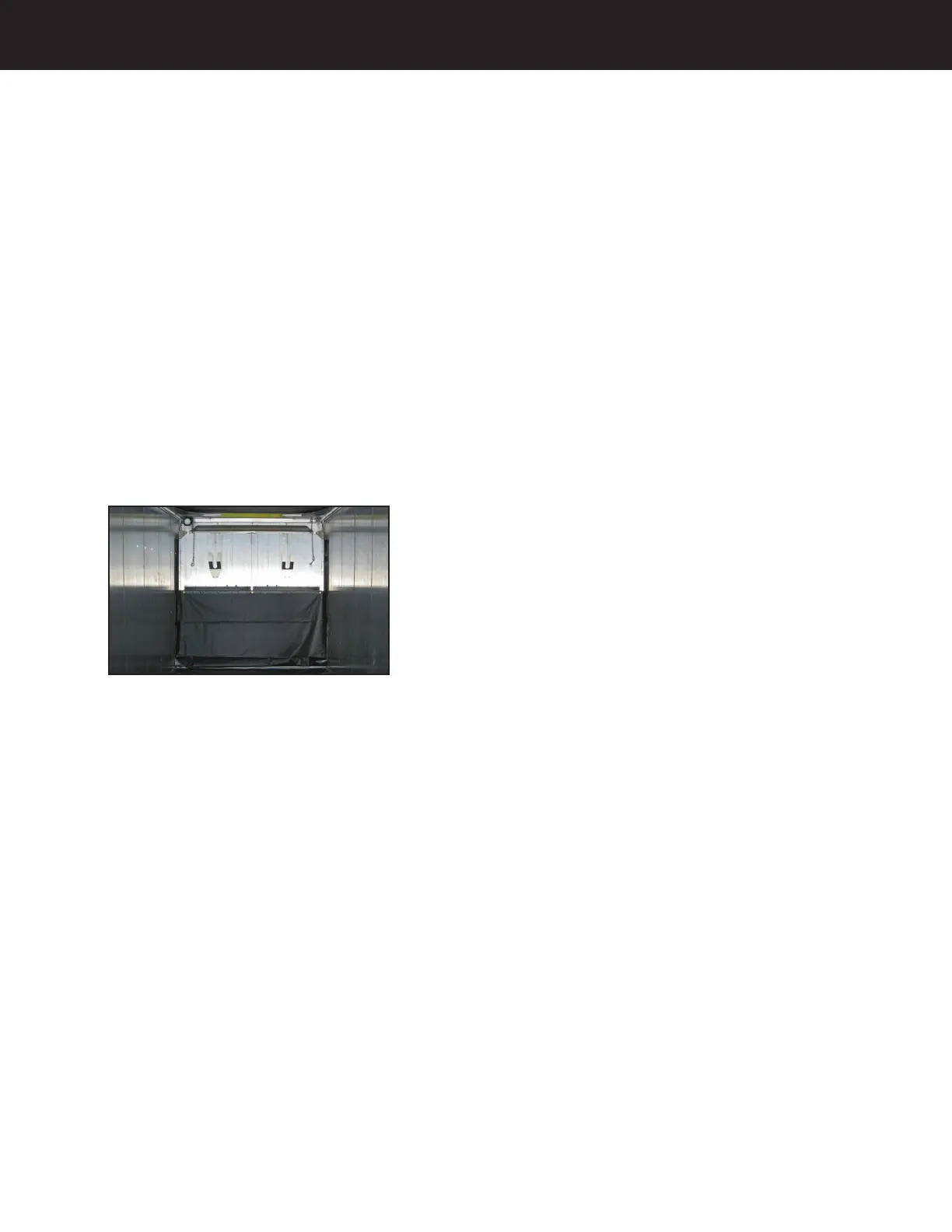
3. Routinely check the chains, latches, and corner plates
for damage or excessive wear. Replace any worn or
damaged parts immediately to prevent damage to the
Cleanout Wall or trailer (Figure 05 - 11).
4. IMPORTANT: Look at how the rollers are moving along:
are they rolling smoothly or dragging? Any unnecessary
resistance from the rollers will cause premature wear of
the top rail and impair the function of the Cleanout Wall.
Replacing worn or damaged rollers immediately will help
prevent costly repairs to a worn out top rail.
5. IMPORTANT: While you are pushing the wall to the front
of the trailer take this opportunity to inspect your top
rail for any excess debris that may impede the wall from
moving along smoothly. Make sure you clean the top
rail at the end of every shift, or as needed. This will vary
based on the type of product you are hauling: particular
attention should be paid when hauling corrosive, sticky,
or oily products. Maintaining a clean top rail is required to
get the best performance from your Cleanout Wall: if the
rail is not cleaned properly the Cleanout Wall can jam,
which may cause damage to the top rail and promote
excessive, premature wear.
Applications and the Environment
In conjunction with the type of materials that you may haul,
the environment will also affect how well the Cleanout Wall
will work.
1. If you are working in sub-zero conditions and you have
product freezing to the side walls we recommend you
do not use the Cleanout Wall. Under these conditions
it would be advisable to keep the Cleanout Wall locked
in the forward position and the tarp stowed under the
rubber flap.
2. IMPORTANT: When hauling heaped loads of light
product, especially sawdust or peat moss, you may
have issues with the top rail filling with product so ensure
that it stays clean. There is also the possibility that
there will not be enough weight from the load pressing
the tarp into the floor, so the Cleanout Wall may move
intermittently or very slowly. Also, with products that
consist of fine particles such as sawdust and peat moss
there will be some product that gets past the rubber and
the tarp, leaving a narrow strip along the walls.
3. On the other end of the product spectrum are heavy
or sticky, wet products. With these products, types of
poultry manure for example, there is the possibility they
may stick to the floor slats and pull past the Cleanout
Wall tarp. If this happens the tarp will eventually end up
behind the wall, and will not clean the product off the
floor. With this type of product it is not advisable to use
the wall.
If you have any questions or concerns with the operation of
you wall please contact us. At TYCROP we endeavour to
continually refine our products for maximum performance and
efficiency, keeping our customers ‘First on the Road’.


 To Next Page