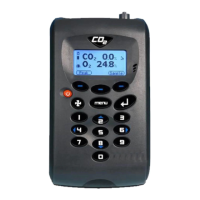
Prior to use, it is good practice to ensure
that:
Step 1 The instrument has the correct
time and date set.
Step 2 Fit the sample filter checking
that it is clean and dry. If
experiencing condensation in
sample line or the sample filter
keeps getting blocked, fit the
moisture trap or similar at
take-off point.
Step 3 The battery has a good charge
(minimum 25% charge, even if
only a few readings are
required).
Step 4 The memory has sufficient
space available.
Step 5 The main gases have been
verified with zero gas
concentration present.
Step 6 If necessary check the span
calibration with a known
concentration calibration-check
gas.
Step 7 Take readings.
Do protect the instrument from strong direct
sunlight which will quickly raise the
temperature of the instrument beyond its
operating range and the LCD display will
appear almost black. The contrast setting
cannot then alter the contrast.
Do remember to always use the sample filter!
If the sample filter becomes flooded, change it
and ensure all sample tubes are clean and dry
before re-use.
Don’t place the instrument against anything
hot as this may cause excessive internal
temperatures which can lead to erroneous
readings.
Don’t get the instrument wet, for example
exposure to rain.


 To Next Page
 Loading...