Should condensate form despite actuation of the gas ballast device, the suction port must be closed and the
pump operated with gas ballast for a lengthy period (about 2 hours).
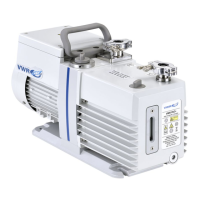
The gas ballast valve can increase the pump’s water vapour tolerance. In many vacuum pump applications
the gases being pumped from a system are a combination of permanent gases and undesirable vapours
such as water vapour. Under some conditions, the vapours condense in the second stage of the pump and
contaminate the oil. The gas ballast valve reduces oil contamination by decreasing or eliminating vapour
condensation.
Vapour condensation is most likely to take place when the gas compression ratio is high, i.e. when the pump
compresses a relatively large volume of gas to a small volume. Whether or not condensation takes place is
dependent upon several factors, including the proportion of permanent gases to vapours at the pump intake.
If the gases being pumped consist entirely of vapours, condensation will definitely occur unless the gas
ballast valve is opened. The gas ballast valve adds a small amount of air at atmospheric pressure to the gas
being compressed in the second stage. This reduces the compression required to push the gas out past the
exhaust valve (less reduction in volume is required), and therefore reduces or eliminates condensation.
When the gas ballast valve is open, the pump has to work a little harder, resulting in a slight increase in
operating temperature. The increase in temperature is small, however, and is not harmful to the pump. Also,
the pump is slightly noisier, and the pump’s ultimate pressure is somewhat reduced. Therefore, the gas
ballast valve should be kept closed when it is not needed. Note that the gas ballast is not equally effective
on all different types of chemical vapours, so it may not always eliminate condensation completely.
Should condensate form despite actuation of the gas ballast device, the suction port must be closed and the
pump operated with gas ballast for a lengthy period (about 2 hours).


 To Next Page