This document is a manual for the W6 N 2000 Exklusive sewing machine.
Function Description
The W6 N 2000 Exklusive is a sewing machine designed for domestic use, offering a wide range of sewing capabilities from basic utility stitches to decorative and specialized stitches. It features 100 different patterns, including straight stitches, zigzag stitches, basting stitches, blind hem stitches, lingerie stitches, satin stitches, antique/nostalgia stitches, quilting stitches, buttonholes, darning, bar-tacking, eyelets, and button sewing. The machine is designed for ease of use, with features like an automatic needle threader and a speed controller. It can be operated with or without a foot controller, offering flexibility to the user. The machine also provides recommendations for optimal presser feet and needle types for each pattern, which are displayed on its screen.
Important Technical Specifications
- Model: W6 N 2000 Exklusive
- Dimensions:
- Width: 44 cm
- Depth: 20.5 cm
- Height: 32 cm
- Weight:
- Net weight: 6.4 kg
- Weight including packaging and accessories: 8.5 kg
- Stitch Types:
- Max. stitch length: 4.5 mm
- Max. stitch width: 7 mm
- Electrical System:
- Mains voltage: 230 V
- Illumination: LED
- Technical Data:
- Max. stitch rate: Approximately 810 stitches per minute
- Needle system: 130 / 705 H
- Accessories: Standard accessories include a standard foot (J), zipper foot, blind hem stitch foot (H), buttonhole foot (R), button foot (O), closed satin stitch foot (Z), felt spool pin washer, large and small spool caps, four W6 plastic bobbins, feed dog lever plate, selection of needles ("For standard woven fabrics"), screwdriver, spool pin, ripping knife/seam ripper with integrated brush, round metal screwdriver for the needle plate, and a folded cover with a recess for the handle. Special accessory feet like the walking foot, quilting foot, or darning embroidery foot can be purchased separately.
Usage Features
- Easy Setup: The manual provides clear instructions for unpacking, setting up, and connecting the machine, including plugging in the power and foot controller.
- Control System: The machine features a display and control elements for selecting patterns (00 to 99), adjusting pattern length and width, and changing the needle position (for straight stitches).
- Needle Up - Needle Down Button: This button allows precise positioning of the needle, which is crucial for threading and program changes. Pressing it twice moves the thread take-up lever and needle to the correct starting position.
- Reverse Button: Used for back-tacking at the beginning and end of a seam to ensure durability.
- Start - Stop Button / Speed Controller: The machine can be operated without the foot controller using the Start-Stop button. The speed controller allows users to adjust the sewing speed from slow (tortoise icon) to fast (rabbit icon).
- Presser Foot Lifter: Used to raise and lower the presser foot for placing fabric. An error message ("LO") appears if the fabric is too thick and the presser foot cannot be lowered sufficiently.
- Automatic Needle Threader: Simplifies threading the eye of the needle, compatible with needle sizes 75 to 100.
- Twin Needle Protection Button: When activated, this feature automatically limits the stitch width to a value of 5 to prevent needle breakage when sewing with a twin needle.
- Extension Table with Accessory Compartment: The extension table can be pulled out for freehand sewing and houses the standard accessories.
- Recommended Supplies: The manual emphasizes the importance of using W6 WERTARBEIT thread, needles, and plastic bobbins for optimal performance, to prevent damage, and to ensure good seam appearance.
- Test Seams: Detailed instructions are provided for sewing test seams using straight stitch and stretch zigzag stitch patterns to ensure correct machine settings and thread tension.
- Pattern Application: Comprehensive tables and step-by-step guides are given for various stitch types, including utility stitches (e.g., basting, overlock, blind hem, lingerie), satin stitches, decorative stitches, antique/nostalgia stitches, quilting, buttonholes, darning, bar-tacking, eyelets, button sewing, twin needle sewing, free-hand embroidery, and zipper sewing.
- Specialized Feet: Instructions are included for changing the presser foot and the presser foot holder to accommodate special accessory feet like the walking foot or darning embroidery foot.
- Fabric Handling: Tips are provided for sewing different fabric types, including thick fabrics (using padding or a W6 Balance Hub) and thin fabrics (using tissue paper or padding). Guidance is also given for sewing corners and edges.
Maintenance Features
- Regular Cleaning: Users are advised to regularly clean the machine, removing small pieces of thread, lint, and dust. Increased use requires more frequent cleaning.
- Needle Exchange: Needles should be exchanged regularly, as worn or damaged needles can pose a hazard and affect seam quality.
- Checking Needle Plate: The needle plate should be removed periodically to check for needle strikes and other damage. Minor damage can be smoothed with fine emery paper, while severe damage requires replacement.
- Cleaning Hook Race: The hook race system must be kept clean to prevent uneven seams or jamming. Instructions are provided for removing the hook race and cleaning it with a brush or vacuum cleaner.
- Thread Tension Check: The manual explains how to check and adjust the upper thread tension, recommending a standard setting of 4 for most stitches and fabrics.
- Machine Lighting: The machine is equipped with a maintenance-free LED lamp. For any failure, contact W6-WERTARBEIT Customer Service.
- Professional Inspection: W6 WERTARBEIT recommends an annual inspection for frequent sewers and an inspection every 2-4 years for normal use, at the owner's expense, to ensure quiet operation, nice seams, and increased longevity.
- Troubleshooting Guide: A comprehensive troubleshooting table is included to help users identify and rectify common errors.
- Disposal: The product should not be disposed of with normal household waste but should be taken to a collection point for recycling electrical and electronic devices.

 Need help?
 General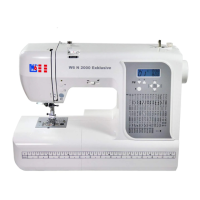

 To Next Page