17
5.2.1 Separate valves for vehicles with an ABS braking system
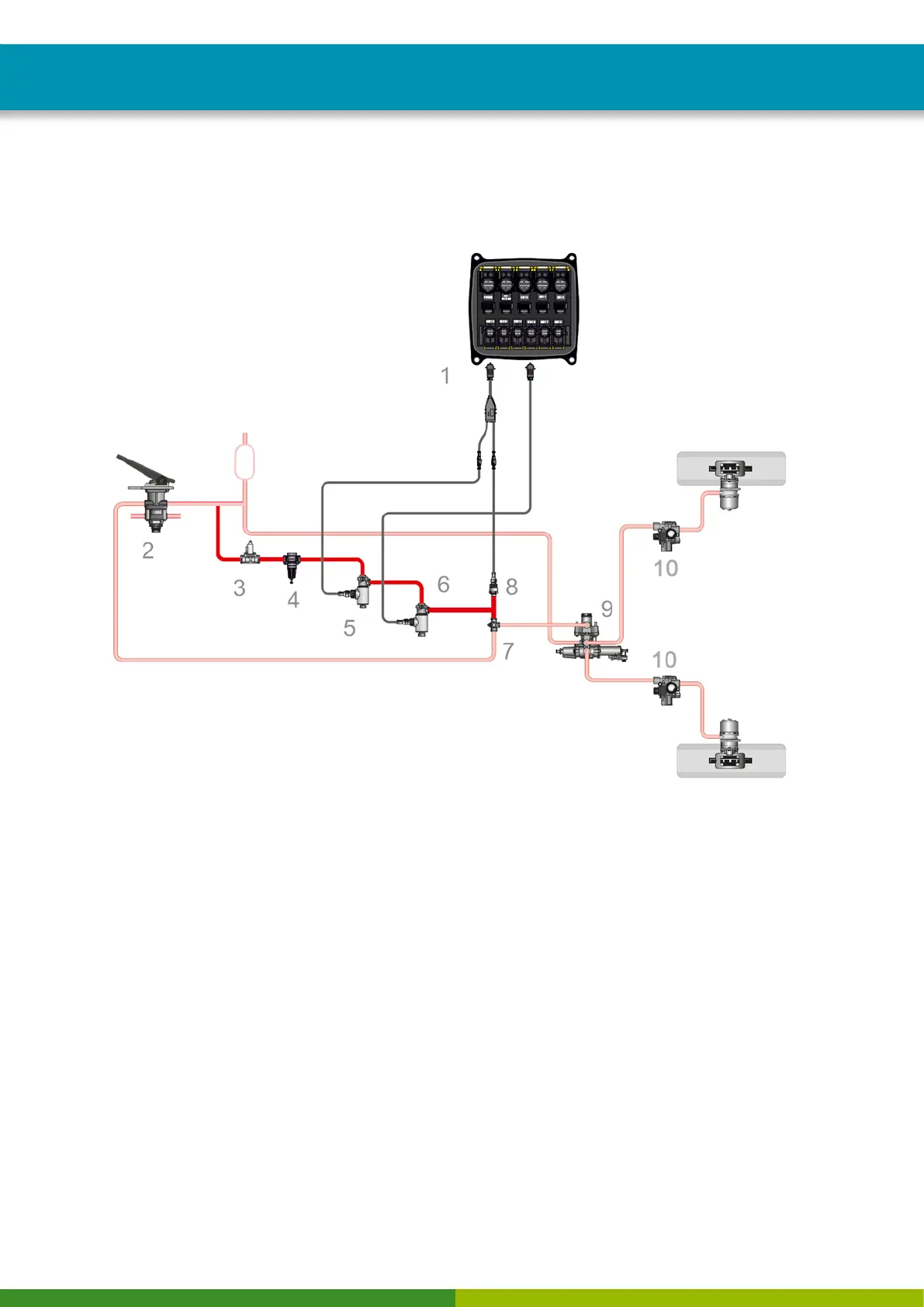
Whenthedriveractuatesthebrakingvalve(2)onatowingvehicleequippedwithanABSbrakingsystem,thebraking
pressurefortherearaxlereachesthecontrolinputoftheLSVregulator(9),whichthenadaptsthebrakingpressure
totheloadstatusofthevehicle.ItsoutputpressurereachestheTristopcylindersattherearaxleviathetwoABS
solenoidvalves(10).
Toadditionallyenableautonomousbrakingactions,thestandardcongurationofthispartoftheABSbrakingsystem
isextendedwithTailGUARD™asfollows:
Supplypressurefortherearaxleispassedonviaabranchlinetoanappropriatelysetchargingvalve(3).The
effectofthisisthatautonomousbrakingisonlypossibleatasufcientsupplypressureofatleast7.3bar.
Fromhere,thepressurereachesapressurelimitingvalve(4).Thismakesitpossibletosetthemaximumbraking
pressurethatcanbegeneratedforanautonomousbrakingaction.Inthecaseofrefusecollectionvehicles,a
maximumbrakingpressureofapprox.3.8barhasfrequentlyprovedtobemosteffective.
Thebrakingpressurethenpassesthroughtwosolenoidvalves(5)and(6)thatareconnectedinseries.Theseare
controlledbytheECU(1),andenablemodulationofabrakingpressurethatisadaptedtothevehiclespeed.The
seriescircuitensuresthatthevehicleisonlybrakedwhenbothvalvesareactuated.Thispreventsanautonomous
brakingactionfrombeingtriggeredduetoanelectricalfault.
ThemodulatedbrakingpressureisfedintothecontrolinputoftheLSVregulator(9)viaatwo-wayvalve(7).From
here,theoutputpressurereachestheTristopcylindersoftherearaxleintheusualmanner.Thebrakingpressure
isalsomeasuredbyapressuresensor(8)thatislikewiseconnectedtotheECU(1).
Required components: Overview



 To Next Page