50
Maintenance Instructions CLEANING
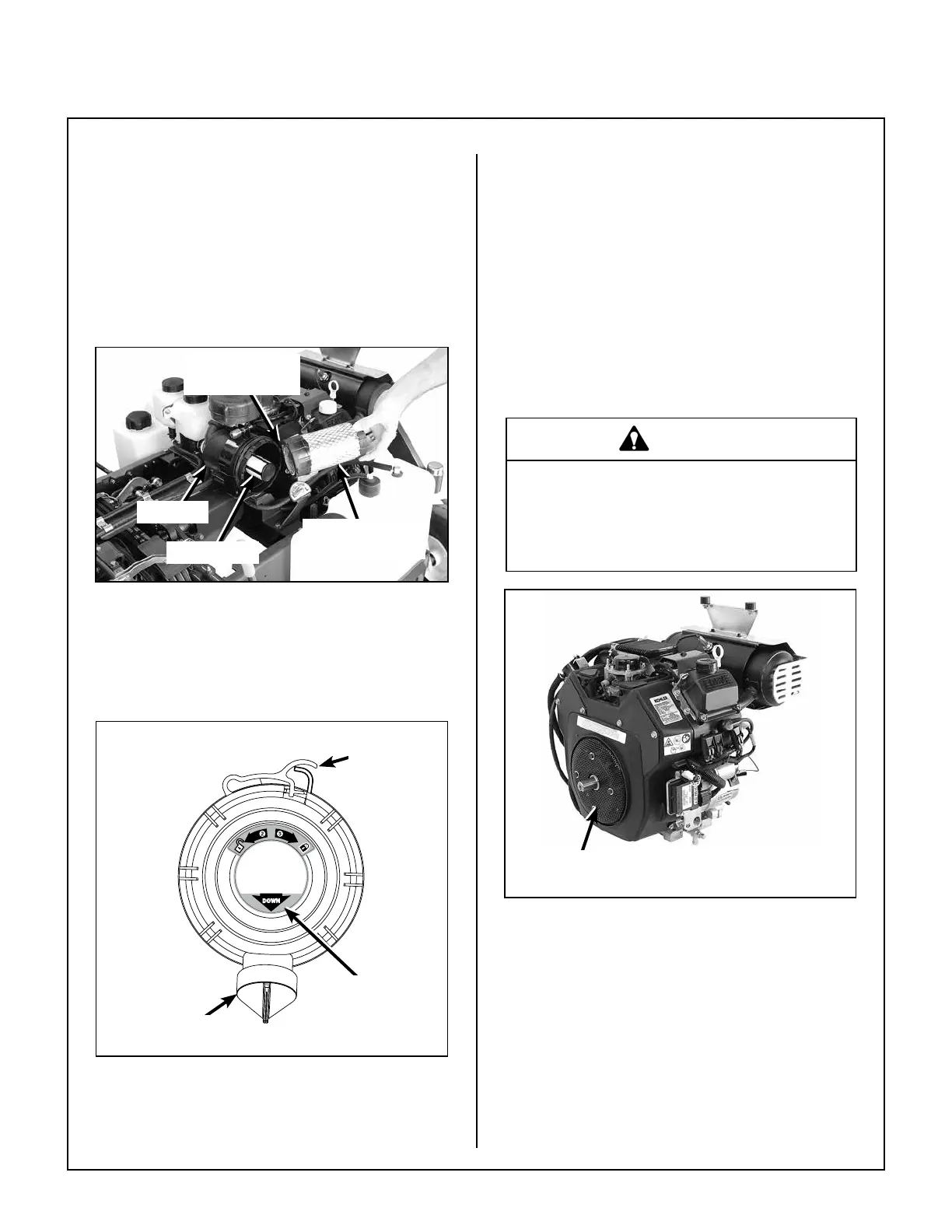
9. Insert and seat the safety lter and primary el-
ement carefully into the canister, applying pres-
sure at the outer rim of the lter; not at the exible
center. Make sure the lter element is completely
in place before installing the cover.
NOTE: DO NOT use petroleum based lubri cants
on the sealing surfaces of the lter elements; use
tal cum powder or dry silicone lubricants if re-
quired for lter installation.
Primary
Filter Element
Radial Sealing
Surface
Canister
Safety Filter
Air Filter Element Replacement
10. Install the cover with the word “DOWN” properly
oriented to the bottom of the canister. Twist the
OptiAir™ cover to the right and put into the
“closed” position.
3
DOWN
2
Mono Latch
Twist Lock™
Dust Ejection
Valve
Orient to Bottom
of Canister
Proper Orientation of Air Cleaner Cover
11. Check the air intake hose for cuts, nicks, cracks,
etc., and the hose clamps for tightness.
12. Reset the air lter restriction gauge (press button
on the end of the indicator).
Engine Cooling System
Cooling Air Intake System
To prevent engine overheating and possible engine
damage, clean grass clippings, chaff, and dirt from
the rotating engine cooling air intake screen after ev-
ery 8 hours of operation. In certain mowing condi-
tions (dry grass, leaves, tree “cotton”, etc.), it may be
nec essary to check and clean the screen several
times each day to prevent engine overheating.
CAUTION
Operating the engine with a blocked air
intake screen, dirty or plugged cooling
ns, and/or cooling shrouds removed will
cause engine damage from overheating.
Rotating Engine Cooling
Air Intake Screen
Keep Engine Screen Clean
Cylinder Head Cooling Fins
It is essential for performance and longevity of the
air-cooled engine to keep the cylinder head cooling
ns clean and free of obstruction. After every 8 hours
of operation, check the performance of the cooling
system by starting the engine, holding a hand
adjacent to the cylinder head, and feeling the cooling
airow. If there is little or no airow, clean the cooling
ns as described on the next page.


 To Next Page