
 Need help?
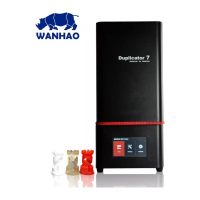
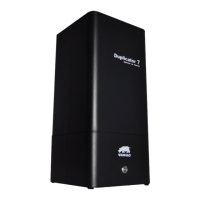
Do you have a question about the WANHAO DUPLICATOR 7 and is the answer not in the manual?
Guidance on maximizing printer use through manual, website, forum, and email support.
Instructs users to contact WANHAO for issues before returning the product to the store.
Covers unattended operation, glove use, scraper handling, environmental conditions, and emergency shutdown.
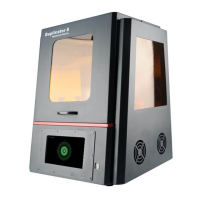
Welcome message and introduction to Direct UV-light Printing (DUP) technology.
Explains the advantages of DUP technology focusing on LCD screens and energy efficiency.
Details electrical connection, safety precautions, and troubleshooting for power-related issues.
Provides guidance on the proper disposal and recycling of the electronic device.
Offers tips on supervision, resin handling, and printer placement away from direct light.
Lists all items included in the package with the Wanhao Duplicator 7 printer.
Suggests additional items recommended for use with the printer.
Specifies hardware and software requirements for the computer used with the printer.
Details connecting the printer via VGA, USB, and power cables, and configuring software.
Guides on selecting the appropriate resin and resolution profile in the software for printing.
Details specific values for layer thickness, exposure time, and bottom layers for printing.
Instructs to check object placement in the 3D view and start the slicing operation.
Explains how to verify first layer adhesion and object position in the Slice View.
Details how to correctly attach the vat and platform to the printer.
Guides on calibrating the platform to the screen for accurate printing.
Covers filling the vat with resin and initiating the printing process.
Details removing excess resin, objects, and cleaning the build platform and vat.
Explains the process of post-exposure for hardening and drying printed objects.
Describes removing hardened resin from the screen without causing damage.
Details the software's compatibility with operating systems and introduces the main interface.
Explains file operations (open, save) and connecting/disconnecting the printer.
Explains print control buttons, 3D View, and Slice View modes for inspecting models.
Describes Control mode for Z-axis movement and Configure mode for settings.
Details options like Alpha-Blending, Slice Preview, and Console for scene visualization.
Describes options for showing bounding boxes, outlines, and selected object colors.
Covers moving, angling, manual, auto, and adaptive support configuration options.
Describes viewing individual layers, scrolling through slices, and checking layer count.
Explains the G-code view, recommending it be left untouched for advanced users.
Details controlling the Z-axis motors for moving the build base and homing the printer.
Explains projector options like Show Calibration, Show Blank, and Hide for focused control.
Explains selecting COM port and speed to communicate with the printer's controller.
Describes viewing and refreshing available connected display devices on the system.
Explains how displays are used for projection and configuration within the software.
Details customizing controls on the 'Manual Control' screen via checkboxes.
Explains selecting current slicing profiles and managing available/new profiles.
Instructs to save slicing profile configurations by clicking the 'Save Changes' button.
Defines slice thickness, exposure time per layer, and bottom layer exposure.
Covers bottom layers, blanking time, and lift/retract sequence timing.
Details lift distance, Z lift speeds, and slide/tilt values for printer movement.
Allows X/Y pixel offset and specifies resin price per liter for cost calculation.
Determines lift direction and controls saving of generated image slices and gcode files.
 General
| Print Technology | DLP (Digital Light Processing) |
|---|---|
| Connectivity | USB |
| Heated Bed | No |
| Materials | 405nm Resin |
| Nozzle Diameter | Not applicable |
| Filament Diameter | Not applicable |
| Nozzle Temperature | Not applicable |
| Display | Touchscreen |
| Power Supply | AC 100-240V, 50/60Hz |

 To Next Page

