EasyManua.ls Logo

WEG W22Xdb - User Manual

WEG W22Xdb
68 pages
Print Icon
To Next Page IconTo Next Page
Loading...
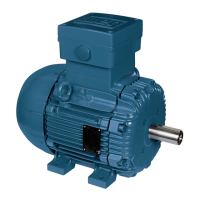
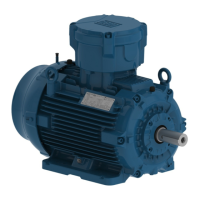
W22Xdb Flameproof Motors
Motors | Automation | Energy | Transmission & Distribution | Coatings
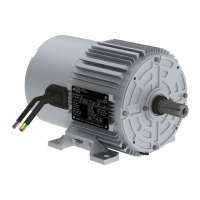
Rib-cooled
Tube-cooled
Installation, Operation and Maintenance
Manual

Table of Contents

Questions and Answers

  • D
    David ClineAug 5, 2025
    Why is the stator winding of my WEG Engine getting so hot under load?
    • R
      Rebecca FlowersAug 5, 2025
      If the stator winding of your WEG Engine gets very hot under load, several factors could be the cause. It could be due to insufficient cooling because of dirty air channels, so you should open and clean them. The fans might be operating in the wrong direction, so correct the rotation. Overload can also cause this, so measure the stator current, decrease the load, and analyze the motor application. Other causes include a high number of starts, very high voltage, very low voltage, an interruption on a power supply cable, the rotor dragging against the stator, the operating condition not corresponding to the nameplate data, power supply unbalance, or dirty windings. Clean the windings and check the power supply voltage and motor voltage drop.
  • J
    Joseph WeaverAug 12, 2025
    What to do if my WEG Engine starts with no load but fails when load is applied?
    • A
      Andrew Wilson DDSAug 12, 2025
      If your WEG Engine starts without a load but fails when a load is applied, or if it starts very slowly and doesn't reach its rated speed, it could be due to several reasons. The load torque might be very high during starting, so avoid applying load on the driven machine when starting. Alternatively, the power supply voltage may be very low, so measure it and set the correct value. A very high voltage drop on the power supply cables could also be the problem; therefore, check the installation design, including the transformer and cable section. Other potential causes include rotor issues, such as interrupted bars, or an interruption in the power supply cable after starting, so check the power supply cables and repair the rotor bars.
  • M
    Monica GrayAug 20, 2025
    Why my WEG W22Xdb does not start either coupled or uncoupled to the load?
    • E
      Erin BakerAug 20, 2025
      If your WEG Engine doesn't start whether coupled or uncoupled to the load, it could be due to a few reasons. At least two power supply cables might be interrupted, without voltage, so check the command panel, the power supply cables, and the terminals. Another possible cause is a blocked rotor, or a damaged bearing, in which case you should replace the bearing.
  • U
    unolanAug 27, 2025
    What to do if my WEG W22Xdb Engine makes noise when coupled but not when uncoupled?
    • M
      Michael Hill IIAug 28, 2025
      If noise appears when your WEG Engine is coupled but disappears when uncoupled, it could be due to a defect on the transmission components or the driven machine, so check the power transmission, the coupling, and the alignment. It may also be caused by a defect on the gear transmission, in which case you should align the driven system. Other possible causes are a base that is not aligned or leveled, defective balance of the components or the driven machine, a defective coupling (repair or replace the coupling), or the wrong rotation direction of the motor (invert 2 phase connection).

Summary

General Information

Safety Information

Crucial safety guidelines and warnings for handling and operating WEG motors.

General Instructions

Safety Warnings in the Manual

Explanation of safety symbols and warnings used throughout the manual.

Storage

Prolonged Storage

Detailed instructions for storing motors for extended periods.

Preparation for Service After Long Term Storage

Procedures to prepare motors for operation after prolonged storage.

Insulation Resistance Verification

Verification of insulation resistance before putting the motor into operation.

Maintenance Plan for Storage

Detailed maintenance plan and inspection schedule for stored motors.

Handling

Installation

Mounting

Procedures and requirements for motor mounting and alignment.

Foundations

Guidelines for constructing suitable motor foundations.

Alignment;Levelling

Procedures for aligning and leveling the motor and driven machine.

Couplings

Information on selecting and using couplings for motor applications.

Vibration; Balance

Importance of vibration control and dynamic balancing for motors.

Shaft Vibration Limits

Permissible shaft vibration limits as per IEC standards.

Electrical Aspects

Electrical considerations for motor installation.

Power Supply

Ensuring correct and quality electric power supply to the motor.

Connections

Procedures for making electrical connections and selecting cables.

Protections

Types and settings of motor protection devices.

Windings Protections

Details on thermal protectors for motor windings.

Bearings Protections

Use of temperature detectors for bearing protection.

Adjustment of Motor Protection Devices

Proper adjustment of motor protection devices for safe operation.

Mechanical Installation Checking

Maintenance

Lubrication

Importance and general procedures for motor lubrication.

Bearing Lubrication Steps

Detailed steps for performing bearing lubrication procedures.

Sleeve Bearings

Detailed information on sleeve bearing assembly and maintenance.

Disassembly of the Sleeve Bearing System (Type EF)

Step-by-step guide for disassembling sleeve bearing systems.

Sleeve Bearing Assembly

Procedures for assembling sleeve bearings correctly.

Safety Measures for Explosive Gas Atmospheres

Motors with Internal Bearing Temperature Probes

Power Terminal Box Rotation Procedure

Tightening Torque for Flameproof Enclosures Bolts

Maintenance Plan

Motor Abnormalities in Service

Common Damage to Induction Motors

Overview of common damages affecting induction motors.

Damage Caused to the Winding

Various types of winding damage and their origins.

Damage to the Bearings

Common causes of bearing damage in electric motors.

Troubleshooting Chart

A chart listing motor abnormalities, causes, and corrective actions.

Troubleshooting Chart About Bearings

WEG W22Xdb Specifications

General IconGeneral
TypeThree-Phase Induction Motor
Frequency60 Hz
EfficiencyIE3
Cooling MethodTEFC (Totally Enclosed Fan Cooled)
Protection ClassIP55
Mounting TypeB3 (Foot mounted), B5 (Flange mounted), B14 (Flange mounted with feet), Face-mounted
EnclosureTotally Enclosed (TEFC)
Ambient Temperature-15°C to +40°C (standard), other ranges available
Altitude1000 m.a.s.l.

Related product manuals