.
44 © Weldclass 2020 | E.&O.E.
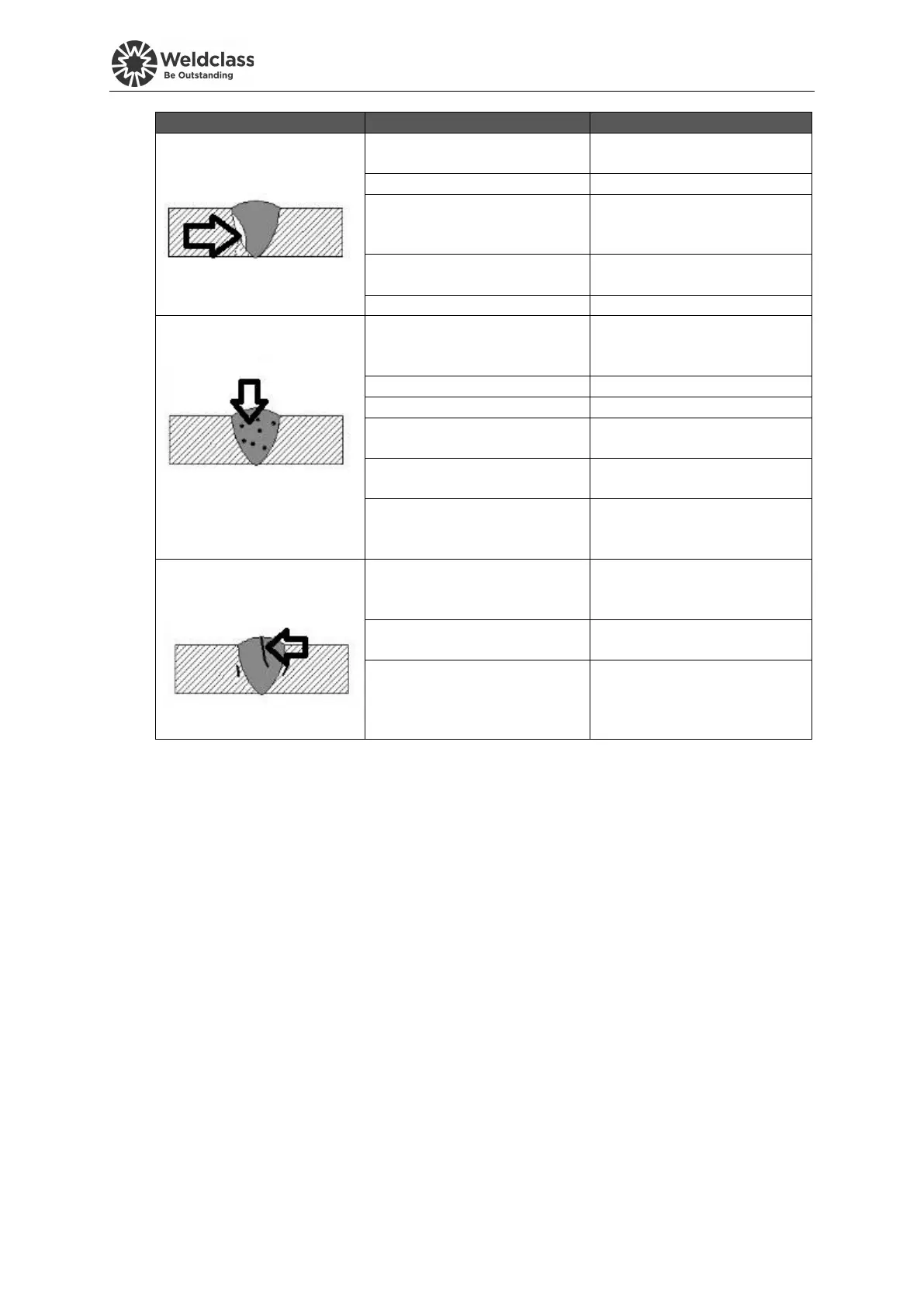
Portions of the weld run do
not fuse to the surface of the
metal or edge of the joint.
Figure 40
Small electrodes used on heavy
cold plate.
Use larger electrodes and
preheat the plate.
Welding current is too low.
Increase welding current.
Adjust angle so the welding arc
is directed more into the base
metal.
Travel speed of electrode is too
high.
Reduce travel speed of
electrode.
Scale or dirt on joint surface.
Clean surface before welding.
Gas pockets or voids in weld
metal (porosity)
Figure 41
High levels of Sulphur in steel.
Use an electrode that is
designed for high Sulphur
steels.
Dry electrodes before use.
Welding current is too high.
Surface impurities such as oil,
grease, paint, etc.
Clean joint before welding.
Welding in a windy
environment.
Shield the weld area from the
wind.
Electrode damaged i.e. flux
coating incomplete.
Discard damaged electrodes
and only use electrodes with a
complete flux coating.
Crack occurring in weld metal
soon after solidification
commences
Figure 42
Redesign to relieve weld joint
of severe or use crack
resistance electrodes.
Insufficient throat thickness.
Travel slightly slower to allow
greater build up in throat.
Weld current is too high.
Decrease welding current.


 To Next Page