5 Maintenance Operator Manual for Gasoline Generators
page 26
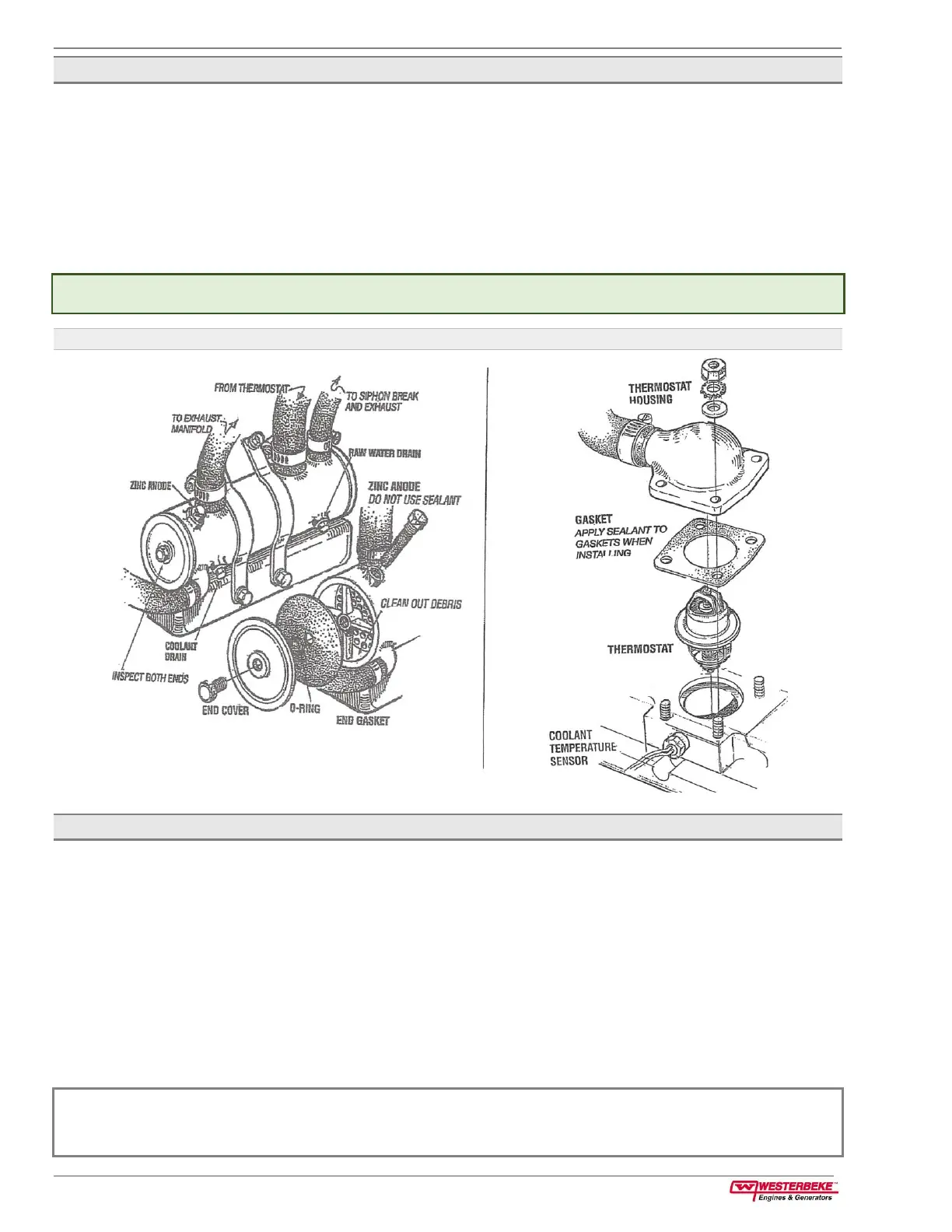
5.3.3 Cooling System Heat Exchanger
Cool raw water flows through the inner tubes of the heat exchanger. As the engine coolant passes around
these tubes, the heat of the internal engine is conducted to the raw water which is then pumped into the
exhaust system and discharged. The engine coolant (now cooled) flows back through the engine and the cycle
repeats itself.
The engine coolant and raw water are independent of each other; this keeps the engine fresh water passages
clean from the harmful deposits found in raw water.
Remove, clean, and pressure test the engine heat exchanger per the interval listed in 5.1: Maintenance
Schedule. A local automotive radiator shop should be able to clean and test the heat exchanger.
TIPS: Operating in silty and/or tropical waters may require that heat exchanger cleaning be performed more often.
Figure 19: Cooling System Heat Exchanger (Left) and Thermostat (Right)
5.3.4 Cooling System Zinc Anode
A zinc anode (or pencil) in the raw water cooling circuit in the heat exchanger sacrifices itself to electrolysis
action taking place in the raw-water cooling circuit, reducing the effects of electrolysis on other components of
the system. The condition of the zinc anode should be checked monthly to determine a change interval and
the anode cleaned or replaced as required. Spare anodes should be carried on board.
If the zinc anode needs replacement, hold the hex boss into which the zinc anode is threaded with a wrench
while loosening it with another wrench to avoid potential exchanger damage. After removing the zinc anode,
note its condition. If the zinc is in poor condition, there are probably zinc flakes within the exchanger. Remove
the end of the heat exchanger and clean the inside of all zinc debris.
Always have a spare heat exchanger end gasket in case the present one becomes damaged when removing
the end cover. Replace the gasket (refer to the heat exchanger end gasket part number for your engine
model). Also replace the O-ring and cover and install a new zinc anode.
NOTE: The threads of the zinc anodes are pipe threads and do not require sealant. Sealant should not be used because
it may electrically insulate the zinc from the metal of the heat exchanger housing preventing electrolysis action on the
zinc.



 To Next Page