Salisbury axles
Brake System
The service brakes consist of calipers
acting upon dry discs.
The brake system is designed to require
the minimum of maintenance, and
providing the hydraulic fluid in the
reservoir is not allowed to fall below the
recommended level, no defects should
normally occur.
Fluid loss must be supplemented by
topping up the reservoir with brake fluid
that conforms to SAE. J1703. No other
fluid may be used.
If air is present in the system, it will be
indicated by sluggish response and by
spongy action of the brake pedal. This
may be due to air being introduced at a
loose joint or by the reservoir fluid level
being allowed to fall very low. These
defects must be remedied immediately
and the complete system bled.
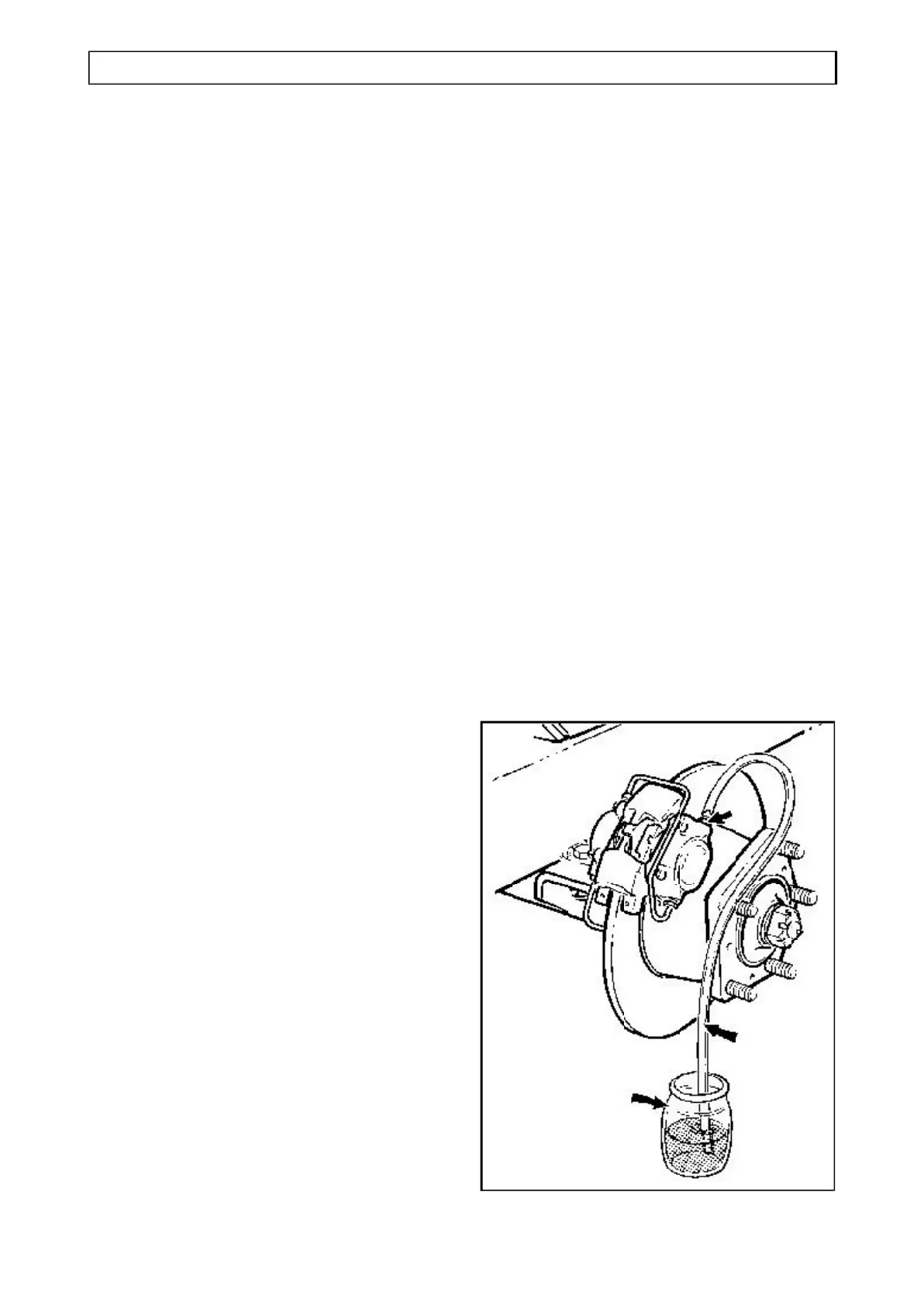
To bleed the system, proceed as
follows:
A Check that all connections are tight and
all bleed screws are closed.
B Fill reservoir with the correct fluid.
C Attach bleeder tube (1) to one of the
bleed screws (2) and immerse other
end in a small quantity of brake fluid
contained in a glass jar (3).
Slacken bleed screw and operate brake
pedal up and down to its full stroke until
fluid pumped into jar contains no air
bubbles. Hold down pedal and close
bleed screw.
Remove bleeder tube and release
pedal.
D Repeat on other caliper.
E Continue until all air has been bled from
the system.
F Lock both bleed screws and top up
reservoir to the correct level.
G Apply normal working load on brake
pedal for two or three minutes and
examine entire system for leaks.
Note: During operation it is essential
that the reservoir levels are kept
topped up to prevent further air being
drawn into the system. Only use new
fluid for topping up.
3.20 SERVICE
BRAKING SYSTEM


 To Next Page