46
Wissner-Bosserhoff Carisma Bed, Instruction & Safety Manual
T 08 9351 7500 E info@unicarehealth.com.au W www.unicarehealth.com.au
The operation of nursing home dates is allowed exclusively from mains sockets installed in the
building that are up-to-date and that are inspected regularly for the correct function of safety
installations (RCD protection, insulation error detectors, power fuse, etc.) in accordance with
valid regulations.
The nursing home beds are not protected from explosions and may not be used in application
rooms in which fl ammable anaesthetics, cleaning or solvent agents or possible ignitable
substances mixed with air and can be found. The regulations of the professional associations
must be observed in this respect.
Possible use deviating from this intended purpose represents a non-intended use and is
excluded from all claims of liability.
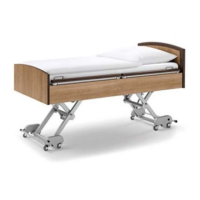
Basic Functions And Uses Of Nursing Home Beds
Modern nursing home beds have numerous bedding functions, which are described in detail
in the instructions for use for the respective product. The full benefi ts of a nursing home bed
can only be achieved through careful training of the users and inhabitants of a nursing home.
Please repeat these training sessions as regularly as possible and pay particular attention to the
necessary safety regulations that must be observed.
In general there is always a risk of unintended or wrong adjustment of the bed. For example,
pressing switches accidentally or unintended release of functions can be a hazard to certain
patients/residents! To ensure a high degree of protection, it is absolutely essential to use locking
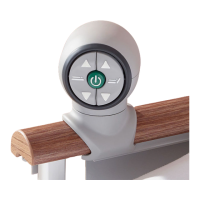
facilities and/or the release keys selectively. Under no circumstances may release keys remain
on the handset or on the bed! Release keys are intended exclusively for use by nursing staff.
The use of the locking facilities and if required, the intentional separation of the bed from the
power supply – as an absolute locking measure for the maximum protection of a possibly
jeopardised patient/resident– lies exclusively at the discretion of and in the responsibility of the
medical supervision and nursing staff in charge. Corresponding measures should be noted in
the shift report to guarantee a correct shift handover.
The use of special positions, such as Trendelenburg anti-Trendelenburg, layered bedding
or relative lowered head position as a shock position is explicitly allowed only by medical
supervision staff. These functions must be locked for patients and residents, since this could
otherwise result in hazards.


 To Next Page