P1-02DC3: #35122 Rev 2.2/12-2128
MAINTENANCE
Note: Refer to SERVICE MANUAL #36106 when applicable.
VACUUM PAD MAINTENANCE
Pad-to-Load Friction Coefficient
The friction coefficient represents the lifter's ability to resist load slippage. The Maximum
Load Capacity is based on a friction coefficient of 1, as determined by testing of clean,
new, standard rubber vacuum pads
on clean, dry, regular glass. If the lifter is used under any
other conditions, a qualified person must first determine the effective lifting capacity.
1
Long-term exposure to heat, chemicals or UV light can damage vacuum pads. Replace pads and
sealing rings (if applicable) every 2 years or more often when necessary.
Pad Inspection
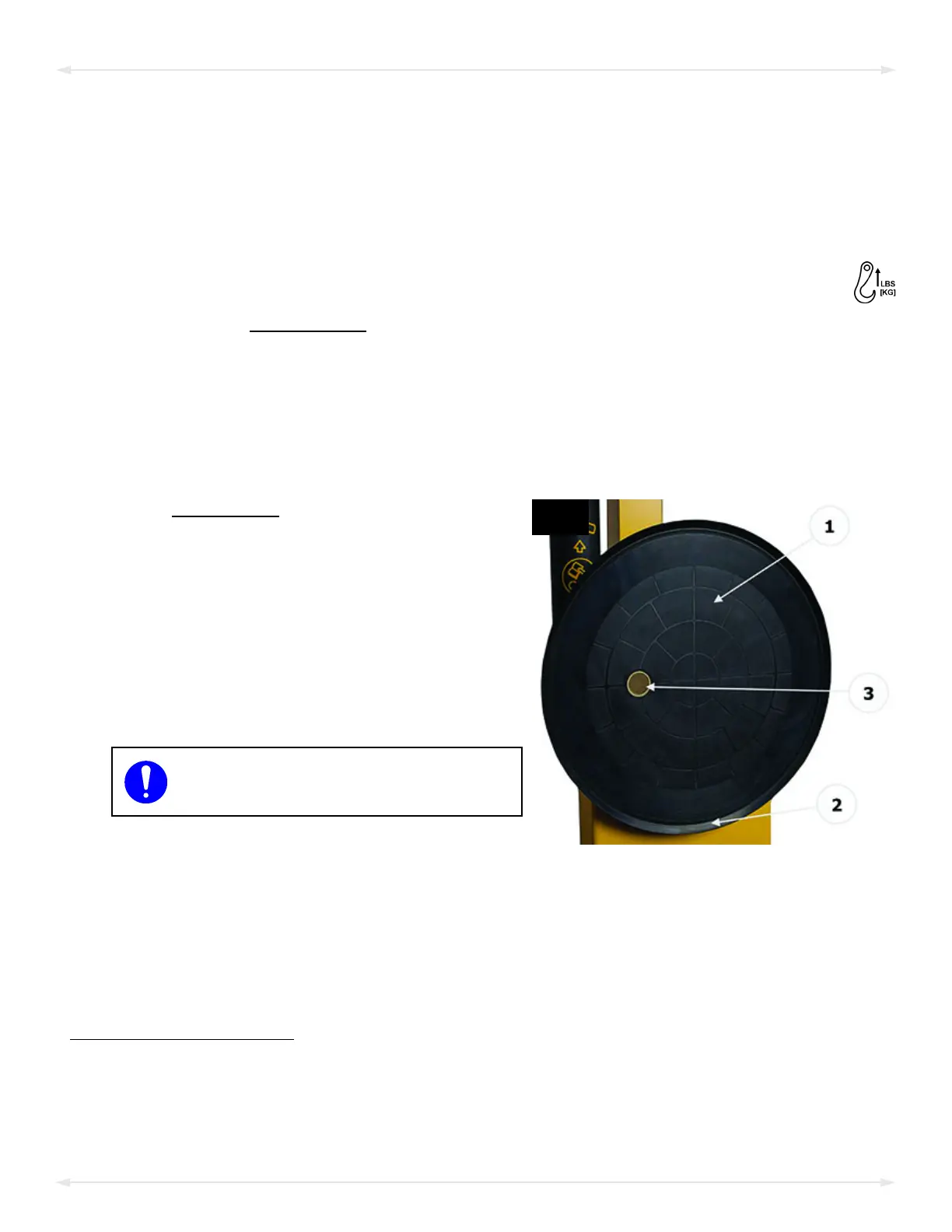
Inspect each vacuum pad (fig. 1A) according to the
“I
NSPECTION SCHEDULE” and correct the following faults
before using the lifter (see “REPLACEMENT PARTS”,
when applicable):
• Contaminates on the face (item 1 in fig. 1A) or
sealing edg
es (item 2 in fig. 1A).
• Filter screen (item 3 in fig. 1A) missing fr
om
face.
Replace any pad that has damaged
sealing edges.
• Nicks, cuts, deformation or abrasions in sealing
edges.
2
• Wear, stiffness or glaze.
1..... A “qualified person” has successfully demonstrated the ability to solve problems relating to the subject matter and work, either by possessing a
recognized degree in an applicable field or a certificate of professional standing, or by possessing extensive knowledge, training and experience.
2..... If the lifter has VPFS10T pads, the replaceable sealing ring is the sealing edge.


 To Next Page