EasyManua.ls Logo

Alcatel-Lucent Enterprise ALE-400 - User Manual

Alcatel-Lucent Enterprise ALE-400
113 pages
Print Icon
To Next Page IconTo Next Page
Loading...
OXO Connect
ALE-500 Enterprise DeskPhone
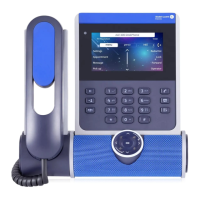
ALE-400 Enterprise DeskPhone
ALE-300 Enterprise DeskPhone
User manual
8AL91434ENABed01
w2213

Table of Contents

Question and Answer IconNeed help?

Do you have a question about the Alcatel-Lucent Enterprise ALE-400 and is the answer not in the manual?

Summary

Introduction

Phone Description

Details on the physical components and features of the ALE-500, ALE-400, and ALE-300 desk phones.

1 Getting to Know Your Telephone

1.1 ALE-500 Enterprise DeskPhone

Overview of the ALE-500 model, including its description, virtual keyboard, and ordering options.

1.2 ALE-400 Enterprise DeskPhone

Overview of the ALE-400 model, including its description and ordering options for accessories.

1.3 ALE-300 Enterprise DeskPhone

Overview of the ALE-300 model, including its description and ordering options for accessories.

1.4 Removable Keys

Details on removable keys for ALE-400 and ALE-300, including their functions and installation.

1.5 Compatible Accessories

List of accessories compatible with the desk phones, available for separate order.

1.6 Unboxing Instructions

Guidance on unboxing the desk phone models, detailing included components based on model.

1.7 Smart Pad Features

Description of the Smart Pad, its keys, gestures, and LED indicators for phone operation.

1.8 Change Phone Theme (Skin)

Instructions on how to customize the visual theme (skin) of the desk phone interface.

1.9 Welcome Screens Overview

Explanation of the phone's home pages, navigation keys, and call management screens.

1.10 User Local Menu

Guide to accessing and configuring the user local menu for audio and display settings.

1.11 Status and Call Icons

Explanation of status icons and call icons displayed on the phone's screen.

1.12 Permanent Feature Keys

Description of permanent feature keys on the desk phone and Smart Pad.

1.13 Alphanumeric Keyboard Usage

Instructions on using the built-in alphanumeric keyboard for text input and dialling.

1.14 Connectors and Power Options

Details on phone connectors, power supply options, and power boost features.

1.15 Telephony Encryption

Information on the phone's support for secure DTLS telephony encryption.

2 Using Your Telephone

2.1 Identify Your Terminal

How to identify the specific terminal or phone number being used.

2.2 Messaging Portal Functions

Accessing and managing call logs, instant messages, and voice messages via the portal.

2.3 Consulting the Call Log

Steps to view missed, incoming, and outgoing calls from the call log.

2.4 Making a Call

Methods for initiating calls using the desk phone, including dialling and directories.

2.5 Receiving a Call

Instructions on how to answer incoming calls using different audio devices.

2.6 Ignore a Call

Procedure for ignoring an incoming call without ending the ring.

2.7 Switching Between Audio Modes

How to switch between handset, headset, and hands-free modes during a call.

2.8 Activating Loudspeaker (Group Listening)

Enabling the loudspeaker during a conversation for group listening.

2.9 Making Calls by Name (Company Directory)

How to search and call contacts using the company directory feature.

2.10 Programmed Call Keys

Making calls using programmed direct call keys like Perso, F1, F2, and add-on modules.

2.11 Filtering Calls via Voice Mailbox

Using the voice mailbox to filter incoming calls and activate call screening.

2.12 Redialing Last Numbers

Accessing the redial list to call the last dialed numbers.

2.13 Automatic Callback Request

Requesting automatic callback when an internal number is busy.

2.14 Receiving Interphony Calls

Answering calls without lifting the handset using interphony mode.

2.15 Sending DTMF Signals

Sending DTMF signals for communication with automated systems.

2.16 Mute Functionality

Using the mute function to disable microphone during calls.

2.17 Forwarding Calls to Voice Message

Forwarding incoming calls directly to the voice message service.

2.18 Consulting Your Voice Mailbox

Accessing and listening to voice messages in the mailbox.

2.19 Sending Instant Messages

Sending instant messages to contacts via name or phone number.

2.20 Consulting Instant Messages

Viewing received, sent, and all instant messages.

2.21 Answering with Instant Message or Voice Mail

Replying to instant messages or voice messages.

2.22 Lock;Unlock Telephone

Securing the desk phone by locking and unlocking the device.

2.23 Placing Call on Hold

Putting an active call on hold and recovering it later.

2.24 Placing External Call on Hold (Parking)

Putting an external call on hold and retrieving it from another phone.

2.25 Making a Second Call & Retrieving Held Call

Handling multiple calls, including making a second call and retrieving a held call.

2.26 Answering a Second Incoming Call

Managing a second incoming call while on an active call.

2.27 Switching Between Calls (Broker Call)

Switching between active and held calls during a conversation.

2.28 Transferring a Call

Procedures for transferring calls to another person or extension.

2.29 Transfer Call to Voice Mail

Transferring a call directly to another user's voice mailbox.

2.30 Three-Way Conference

Setting up and managing three-way conference calls with internal/external contacts.

2.31 Meet me Conference Setup

Initiating and joining 'Meet me' conference calls.

2.32 Intrusion (Barge-in) into Conversations

Intruding into internal conversations (barge-in) if not protected.

2.33 Save Number to Personal Directory

Saving a phone number to the personal directory during a call.

2.34 Selecting Calls for Forwarding

Choosing which types of calls (internal, external, all) to forward.

2.35 Forwarding Calls (Immediate Forward)

Setting up immediate call forwarding to another number or destination.

2.36 Forwarding Calls When Busy

Configuring call forwarding when the line is busy.

2.37 Personal Assistant Features

Using the personal assistant to direct callers to a single contact number.

2.38 Activate;Disable Personal Assistant

Enabling or disabling the personal assistant feature.

2.39 Do Not Disturb Mode

Temporarily making the terminal unavailable for all incoming calls.

2.40 Follow me Call Forwarding

Setting up 'Follow me' function to receive calls at a present location.

2.41 Forwarding All Group Calls

Forwarding all group calls to another internal number.

2.42 Forwarding Calls to Pager

Forwarding calls to a pager to ensure contact while mobile.

2.43 Cancelling All Call Forwards

Procedure to cancel all active call forwarding settings.

2.44 Cancelling Specific Call Forward

Cancelling a specific type of call forward (group or selective).

2.45 Leaving Text Messages for Callers

Leaving text messages for internal callers that display on their terminal.

2.46 Consulting Text Messages

Viewing received text messages, including sender and content.

2.47 Sending Voice Message Copy

Sending a copy of a voice message to another number or contact.

2.48 Sending Recorded Message to Number;List

Sending recorded voice messages to specific numbers or distribution lists.

2.49 Message Notification Configuration

Setting up notifications for new messages on another telephone.

2.50 Receiving Supervised Call Ringing

Receiving special ringing for calls directed to another number.

2.51 Answering General Bell Calls

Answering outside calls directed to an absent operator via a general bell.

2.52 Manager;Assistant Filtering Setup

Configuring call filtering for managers to direct calls to assistants.

2.53 Call Pick-up Functionality

Answering a ringing phone in another office within your pick-up group.

2.54 Answering Operator Calls

Answering calls designated for the operator when they are unavailable.

2.55 Supervision Features

Monitoring and picking up calls from supervised contacts.

2.56 Hunting Groups Management

Calling members of a hunting group and managing group membership.

2.57 Calling Internal Contact via Pager

Contacting an internal user who has a pager.

2.58 Answering Call on Pager

Answering a pager alert from any telephone within the system.

2.59 Calling Contact via Loudspeaker

Remotely activating a contact's loudspeaker for a call.

2.60 Broadcasting Message to Station Group

Broadcasting a message to loudspeakers of a station group.

2.61 ACD Agent;Supervisor Station Operations

Managing agent sessions, statuses, and supervisor functions in ACD systems.

3 Do More with Your Desk Phone

3.1 Configure Phone for Remote Working

Steps to configure the desk phone for secure remote working via VPN.

3.2 Connect Phone to Wi-Fi

Instructions for connecting the desk phone to a Wi-Fi network.

3.3 Beacon Geo-localization Feature

Using the desk phone as a Bluetooth beacon for enterprise geo-localization.

3.4 Customize Phone Color and Logo

Personalizing the desk phone appearance with company colors and logos.

4 Programming Your Telephone

4.1 Initialize Your Voice Mailbox

Setting up the voice mailbox, including personal code and name recording.

4.2 Customize Voice Greeting

Replacing default greetings with personal messages or recorded greetings.

4.3 Modify Personal Code

Changing the personal code used for accessing voice mailbox and phone lock.

4.4 Adjust Audio Functions

Configuring ringtones, ringer volume, silent mode, and meeting mode.

4.5 Audio Ambiences Settings

Selecting audio ambiences (Neutral, Bass Boost, Clarity, Legacy) for personalized sound.

4.6 Hearing Aid Compatibility

Activating hearing aid compatibility features to avoid discomfort.

4.7 Adjust Phone Brightness Settings

Configuring auto-brightness, manual brightness, and screensaver delay.

4.8 Select Welcome Page

Choosing the default page that displays on the telephone.

4.9 Select Phone Language

Setting the preferred language for the desk phone interface.

4.10 Program Direct Call Keys

Programming softkeys, F1/F2 keys, and add-on module keys for direct calls.

4.11 Customize Softkey Color and Style

Customizing the color and style of programmable softkeys using prefixes.

4.12 Modify Direct Call Keys

Editing the name and number associated with direct call keys.

4.13 Delete Direct Call Keys

Removing direct call keys from the phone's configuration.

4.14 Program Appointment Reminder

Setting temporary or permanent reminders for appointments.

4.15 Install USB Accessory

Connecting and configuring USB accessories like headsets and speakers.

4.16 Install Bluetooth Headset (Pairing)

Pairing and connecting a Bluetooth wireless headset to the desk phone.

4.17 Manage Connected Devices

Viewing and managing connected audio devices (handset, headset, etc.).

4.18 Using Bluetooth Wireless Headset

Operating the desk phone using a connected Bluetooth wireless headset.

4.19 Display Paired Bluetooth Devices

Viewing a list of all Bluetooth devices that have been paired with the phone.

4.20 Remove Bluetooth Accessory

Removing Bluetooth accessories like headsets and handsets from the phone's pairing list.

4.21 Activate;Deactivate Forced Headset Mode

Enabling or disabling forced headset mode when a headset is installed.

4.22 Contacting Administrator (Technical Support)

Information needed to contact support, including phone codes and software versions.

5 Accessories

5.1 List of Accessories

Categorized list of supported accessories including USB, Bluetooth, and other types.

5.2 ALE-160 WB Cordless Handset Details

Comprehensive guide to the ALE-160 cordless handset, including description, unboxing, and pairing.

5.3 ALE-150 SWB Corded Handset

Information on the ALE-150 wired handset, including description, unboxing, and installation.

5.4 ALE-140 Customization Kit

Details on the ALE-140 kit for changing desk phone colors, including description and installation.

5.5 Magnetic Alphabetic Keyboard (ALE-100)

Information about the ALE-100 USB keyboard, its description, unboxing, and usage.

5.6 ALE-120 Key Expansion Module

Guide to the ALE-120 module, covering its description, connectors, installation, and smart pad.

5.7 ALE-108 Wireless Module

Details on the ALE-108 wireless module for Bluetooth and Wi-Fi features.

5.8 ALE-110 Wall Mounting Kit

Instructions for installing the ALE-110 wall mounting kit for the desk phone.

5.9 Third-Party Headset Certification (DSPP)

Information on third-party headset certification through the DSPP program.

6 Technical Specifications

7 Ordering Information

8 Guarantee and Clauses

8.1 Safety Instructions

Essential safety guidelines for operating the desk phones and accessories.

8.2 Regulatory Statements

Compliance information, RF exposure, and regulatory approvals for various regions.

Summary

Introduction

Phone Description

Details on the physical components and features of the ALE-500, ALE-400, and ALE-300 desk phones.

1 Getting to Know Your Telephone

1.1 ALE-500 Enterprise DeskPhone

Overview of the ALE-500 model, including its description, virtual keyboard, and ordering options.

1.2 ALE-400 Enterprise DeskPhone

Overview of the ALE-400 model, including its description and ordering options for accessories.

1.3 ALE-300 Enterprise DeskPhone

Overview of the ALE-300 model, including its description and ordering options for accessories.

1.4 Removable Keys

Details on removable keys for ALE-400 and ALE-300, including their functions and installation.

1.5 Compatible Accessories

List of accessories compatible with the desk phones, available for separate order.

1.6 Unboxing Instructions

Guidance on unboxing the desk phone models, detailing included components based on model.

1.7 Smart Pad Features

Description of the Smart Pad, its keys, gestures, and LED indicators for phone operation.

1.8 Change Phone Theme (Skin)

Instructions on how to customize the visual theme (skin) of the desk phone interface.

1.9 Welcome Screens Overview

Explanation of the phone's home pages, navigation keys, and call management screens.

1.10 User Local Menu

Guide to accessing and configuring the user local menu for audio and display settings.

1.11 Status and Call Icons

Explanation of status icons and call icons displayed on the phone's screen.

1.12 Permanent Feature Keys

Description of permanent feature keys on the desk phone and Smart Pad.

1.13 Alphanumeric Keyboard Usage

Instructions on using the built-in alphanumeric keyboard for text input and dialling.

1.14 Connectors and Power Options

Details on phone connectors, power supply options, and power boost features.

1.15 Telephony Encryption

Information on the phone's support for secure DTLS telephony encryption.

2 Using Your Telephone

2.1 Identify Your Terminal

How to identify the specific terminal or phone number being used.

2.2 Messaging Portal Functions

Accessing and managing call logs, instant messages, and voice messages via the portal.

2.3 Consulting the Call Log

Steps to view missed, incoming, and outgoing calls from the call log.

2.4 Making a Call

Methods for initiating calls using the desk phone, including dialling and directories.

2.5 Receiving a Call

Instructions on how to answer incoming calls using different audio devices.

2.6 Ignore a Call

Procedure for ignoring an incoming call without ending the ring.

2.7 Switching Between Audio Modes

How to switch between handset, headset, and hands-free modes during a call.

2.8 Activating Loudspeaker (Group Listening)

Enabling the loudspeaker during a conversation for group listening.

2.9 Making Calls by Name (Company Directory)

How to search and call contacts using the company directory feature.

2.10 Programmed Call Keys

Making calls using programmed direct call keys like Perso, F1, F2, and add-on modules.

2.11 Filtering Calls via Voice Mailbox

Using the voice mailbox to filter incoming calls and activate call screening.

2.12 Redialing Last Numbers

Accessing the redial list to call the last dialed numbers.

2.13 Automatic Callback Request

Requesting automatic callback when an internal number is busy.

2.14 Receiving Interphony Calls

Answering calls without lifting the handset using interphony mode.

2.15 Sending DTMF Signals

Sending DTMF signals for communication with automated systems.

2.16 Mute Functionality

Using the mute function to disable microphone during calls.

2.17 Forwarding Calls to Voice Message

Forwarding incoming calls directly to the voice message service.

2.18 Consulting Your Voice Mailbox

Accessing and listening to voice messages in the mailbox.

2.19 Sending Instant Messages

Sending instant messages to contacts via name or phone number.

2.20 Consulting Instant Messages

Viewing received, sent, and all instant messages.

2.21 Answering with Instant Message or Voice Mail

Replying to instant messages or voice messages.

2.22 Lock;Unlock Telephone

Securing the desk phone by locking and unlocking the device.

2.23 Placing Call on Hold

Putting an active call on hold and recovering it later.

2.24 Placing External Call on Hold (Parking)

Putting an external call on hold and retrieving it from another phone.

2.25 Making a Second Call & Retrieving Held Call

Handling multiple calls, including making a second call and retrieving a held call.

2.26 Answering a Second Incoming Call

Managing a second incoming call while on an active call.

2.27 Switching Between Calls (Broker Call)

Switching between active and held calls during a conversation.

2.28 Transferring a Call

Procedures for transferring calls to another person or extension.

2.29 Transfer Call to Voice Mail

Transferring a call directly to another user's voice mailbox.

2.30 Three-Way Conference

Setting up and managing three-way conference calls with internal/external contacts.

2.31 Meet me Conference Setup

Initiating and joining 'Meet me' conference calls.

2.32 Intrusion (Barge-in) into Conversations

Intruding into internal conversations (barge-in) if not protected.

2.33 Save Number to Personal Directory

Saving a phone number to the personal directory during a call.

2.34 Selecting Calls for Forwarding

Choosing which types of calls (internal, external, all) to forward.

2.35 Forwarding Calls (Immediate Forward)

Setting up immediate call forwarding to another number or destination.

2.36 Forwarding Calls When Busy

Configuring call forwarding when the line is busy.

2.37 Personal Assistant Features

Using the personal assistant to direct callers to a single contact number.

2.38 Activate;Disable Personal Assistant

Enabling or disabling the personal assistant feature.

2.39 Do Not Disturb Mode

Temporarily making the terminal unavailable for all incoming calls.

2.40 Follow me Call Forwarding

Setting up 'Follow me' function to receive calls at a present location.

2.41 Forwarding All Group Calls

Forwarding all group calls to another internal number.

2.42 Forwarding Calls to Pager

Forwarding calls to a pager to ensure contact while mobile.

2.43 Cancelling All Call Forwards

Procedure to cancel all active call forwarding settings.

2.44 Cancelling Specific Call Forward

Cancelling a specific type of call forward (group or selective).

2.45 Leaving Text Messages for Callers

Leaving text messages for internal callers that display on their terminal.

2.46 Consulting Text Messages

Viewing received text messages, including sender and content.

2.47 Sending Voice Message Copy

Sending a copy of a voice message to another number or contact.

2.48 Sending Recorded Message to Number;List

Sending recorded voice messages to specific numbers or distribution lists.

2.49 Message Notification Configuration

Setting up notifications for new messages on another telephone.

2.50 Receiving Supervised Call Ringing

Receiving special ringing for calls directed to another number.

2.51 Answering General Bell Calls

Answering outside calls directed to an absent operator via a general bell.

2.52 Manager;Assistant Filtering Setup

Configuring call filtering for managers to direct calls to assistants.

2.53 Call Pick-up Functionality

Answering a ringing phone in another office within your pick-up group.

2.54 Answering Operator Calls

Answering calls designated for the operator when they are unavailable.

2.55 Supervision Features

Monitoring and picking up calls from supervised contacts.

2.56 Hunting Groups Management

Calling members of a hunting group and managing group membership.

2.57 Calling Internal Contact via Pager

Contacting an internal user who has a pager.

2.58 Answering Call on Pager

Answering a pager alert from any telephone within the system.

2.59 Calling Contact via Loudspeaker

Remotely activating a contact's loudspeaker for a call.

2.60 Broadcasting Message to Station Group

Broadcasting a message to loudspeakers of a station group.

2.61 ACD Agent;Supervisor Station Operations

Managing agent sessions, statuses, and supervisor functions in ACD systems.

3 Do More with Your Desk Phone

3.1 Configure Phone for Remote Working

Steps to configure the desk phone for secure remote working via VPN.

3.2 Connect Phone to Wi-Fi

Instructions for connecting the desk phone to a Wi-Fi network.

3.3 Beacon Geo-localization Feature

Using the desk phone as a Bluetooth beacon for enterprise geo-localization.

3.4 Customize Phone Color and Logo

Personalizing the desk phone appearance with company colors and logos.

4 Programming Your Telephone

4.1 Initialize Your Voice Mailbox

Setting up the voice mailbox, including personal code and name recording.

4.2 Customize Voice Greeting

Replacing default greetings with personal messages or recorded greetings.

4.3 Modify Personal Code

Changing the personal code used for accessing voice mailbox and phone lock.

4.4 Adjust Audio Functions

Configuring ringtones, ringer volume, silent mode, and meeting mode.

4.5 Audio Ambiences Settings

Selecting audio ambiences (Neutral, Bass Boost, Clarity, Legacy) for personalized sound.

4.6 Hearing Aid Compatibility

Activating hearing aid compatibility features to avoid discomfort.

4.7 Adjust Phone Brightness Settings

Configuring auto-brightness, manual brightness, and screensaver delay.

4.8 Select Welcome Page

Choosing the default page that displays on the telephone.

4.9 Select Phone Language

Setting the preferred language for the desk phone interface.

4.10 Program Direct Call Keys

Programming softkeys, F1/F2 keys, and add-on module keys for direct calls.

4.11 Customize Softkey Color and Style

Customizing the color and style of programmable softkeys using prefixes.

4.12 Modify Direct Call Keys

Editing the name and number associated with direct call keys.

4.13 Delete Direct Call Keys

Removing direct call keys from the phone's configuration.

4.14 Program Appointment Reminder

Setting temporary or permanent reminders for appointments.

4.15 Install USB Accessory

Connecting and configuring USB accessories like headsets and speakers.

4.16 Install Bluetooth Headset (Pairing)

Pairing and connecting a Bluetooth wireless headset to the desk phone.

4.17 Manage Connected Devices

Viewing and managing connected audio devices (handset, headset, etc.).

4.18 Using Bluetooth Wireless Headset

Operating the desk phone using a connected Bluetooth wireless headset.

4.19 Display Paired Bluetooth Devices

Viewing a list of all Bluetooth devices that have been paired with the phone.

4.20 Remove Bluetooth Accessory

Removing Bluetooth accessories like headsets and handsets from the phone's pairing list.

4.21 Activate;Deactivate Forced Headset Mode

Enabling or disabling forced headset mode when a headset is installed.

4.22 Contacting Administrator (Technical Support)

Information needed to contact support, including phone codes and software versions.

5 Accessories

5.1 List of Accessories

Categorized list of supported accessories including USB, Bluetooth, and other types.

5.2 ALE-160 WB Cordless Handset Details

Comprehensive guide to the ALE-160 cordless handset, including description, unboxing, and pairing.

5.3 ALE-150 SWB Corded Handset

Information on the ALE-150 wired handset, including description, unboxing, and installation.

5.4 ALE-140 Customization Kit

Details on the ALE-140 kit for changing desk phone colors, including description and installation.

5.5 Magnetic Alphabetic Keyboard (ALE-100)

Information about the ALE-100 USB keyboard, its description, unboxing, and usage.

5.6 ALE-120 Key Expansion Module

Guide to the ALE-120 module, covering its description, connectors, installation, and smart pad.

5.7 ALE-108 Wireless Module

Details on the ALE-108 wireless module for Bluetooth and Wi-Fi features.

5.8 ALE-110 Wall Mounting Kit

Instructions for installing the ALE-110 wall mounting kit for the desk phone.

5.9 Third-Party Headset Certification (DSPP)

Information on third-party headset certification through the DSPP program.

6 Technical Specifications

7 Ordering Information

8 Guarantee and Clauses

8.1 Safety Instructions

Essential safety guidelines for operating the desk phones and accessories.

8.2 Regulatory Statements

Compliance information, RF exposure, and regulatory approvals for various regions.

Alcatel-Lucent Enterprise ALE-400 Specifications

General IconGeneral
BrandAlcatel-Lucent Enterprise
ModelALE-400
CategoryTelephone
LanguageEnglish