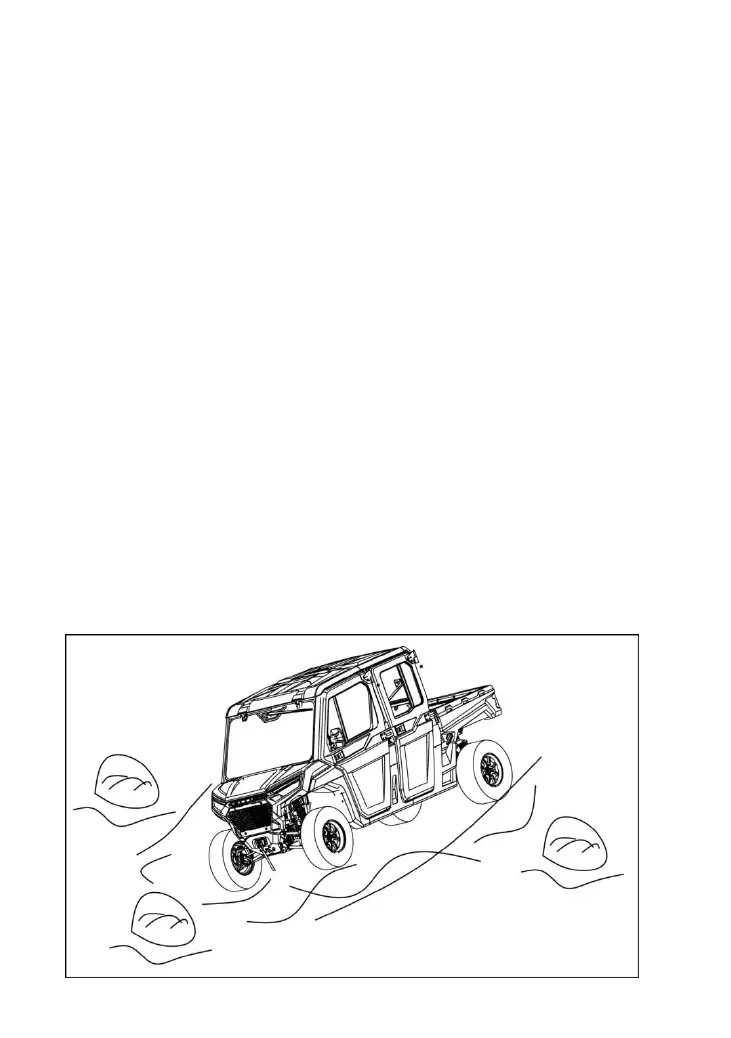
Driving Techniques
Driving your vehicle too fast for the conditions may result in injury. Apply only
enough throttle to proceed safely. Statistics show that mishaps and injury
usually result from high speed turns. Always remember that this vehicle is
heavy! Its pure weight alone may entrap you should it fall and pin you down.
This vehicle is not designed for jumping, nor can it fully absorb the high impact
energy generated during man oeuvres such as jumping which, can be passed
on to you, the operator. Performing wheelies can cause the vehicle to flip over
onto you. Both practices have a high risk for you and should be avoided at all
times.
Driving on roads or soft shoulders may confuse other road users, especially if
your lights are on.
If you have to cross a road, the lead driver should get off his vehicle, then
observe and give directions to the other drivers. The last person after crossing
then assists the lead driver to cross. Do not travel on sidewalks. They are
designated for pedestrian use.
Water can be a unique hazard. If it is too deep the vehicle may "float" and
topple Check the water depth and current before you attempt to cross any
water. Water level should not go above the tires. Be wary of slippery surfaces
such as rocks, grass, logs, etc., both in the water and on its banks. A loss of
traction may occur. Do not attempt to enter the water at high speed. The water
will act as a brake and could throw you off the vehicle, on the ground.
Water will affect the braking ability of your vehicle. Make sure you dry the
brakes by applying them several times after the vehicle leaves the water.


 To Next Page