32
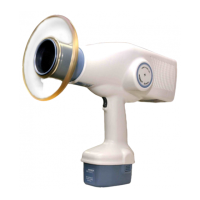
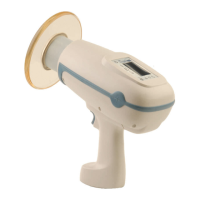
Annual Maintenance: Observe the following steps for annual maintenance of the
NOMAD Pro 2.
1. Verify that the Power button is working properly. When the device is powered on, the
display should illuminate and an indicator alarm should sound.
2. Verify that the device is in lock mode when the Patient and Select buttons are
pressed simultaneously. Repeat the process to unlock the device. Verify that the device
is unlocked.
3. Verify that, when left on for a period of approximately three minutes without pressing
any buttons, the device automatically shuts off.
4. With the device powered on and unlocked, verify that a time selection value displays
on the user interface panel. Also check the function of the Increase
and
Decrease
buttons. Pressing the buttons should cause the time setting to adjust
accordingly.
5. Verify that the trigger moves freely in and out when depressed and released.
6. Verify that a single pull and release of the trigger enables the X-rays and the device
moves into the Ready state.
7. Verify that the backscatter shield is firmly attached to the collimator cone and that it is
not cracked or broken.
8. Select an exposure of 1.00 second using the time exposure buttons. Initiate an
exposure, but release the exposure switch after a brief period of time before the timer
terminates the exposure. Verify that the exposure terminates immediately upon release
of the trigger.
9. While taking the exposure, verify that the X-Rays On LED illuminates and the audible
signal is heard.
10. Ensure that the operator of the system has received a copy of the operator manual.
• The NOMAD Pro 2 should not be operated if it has been dropped, if performance
degrades, or if the backscatter shield has been broken or compromised in any way;
it should be returned to Aribex for an evaluation.
• For long-term storage, it is recommended to fully recharge batteries every 3
months.
The NOMAD Pro 2, the handsets, and the charging cradle are NOT designed to be
user-serviceable. There are dangerous voltages inside. Do not open the device housing.


 To Next Page