8
2.0 Safety Precautions
2.1 Radiation Safety
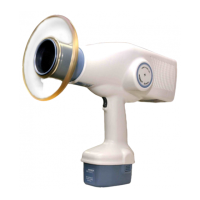
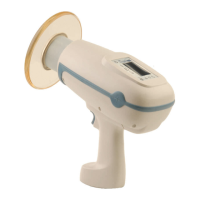
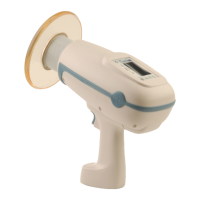
The NOMAD Pro 2 was designed to be used in both clinical settings (e.g., a dental office)
and controlled settings where transportation or use of other X-ray devices might be
prohibitive due to the device’s size and/or mobility.
This X-ray unit may be dangerous to patient and operator unless safe exposure factors,
operating instructions, and maintenance schedules are observed.
This X-ray unit must only be operated by trained personnel in a controlled setting.
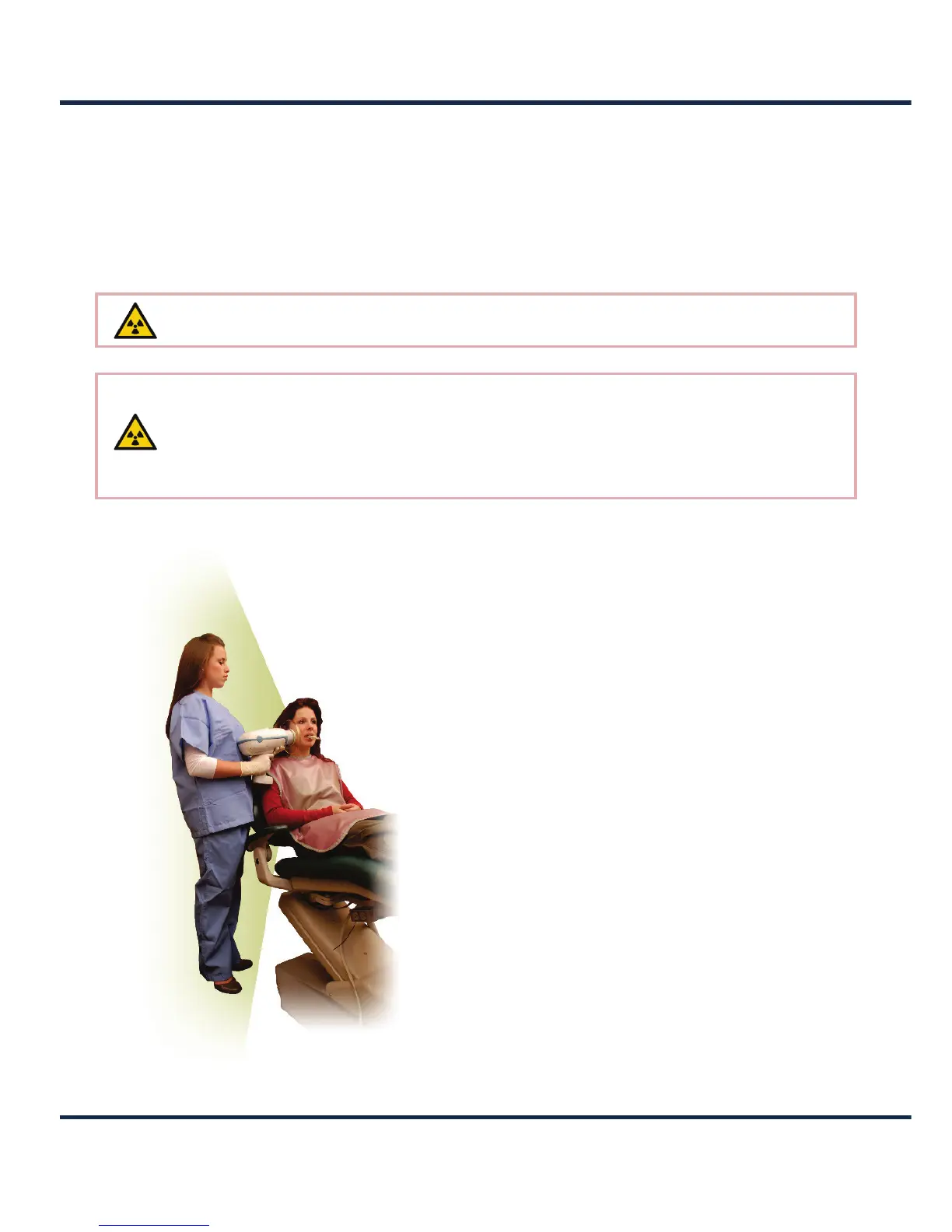
Within such a setting, ensure that only the patient is in the direct beam of the x-ray,
and that any ancillary personnel are a minimum of 6 feet away from the patient. If it is
necessary for any ancillary personnel to be closer than 6 feet, these personnel should
stay out of the direct beam and wear personal protective equipment, such as an apron
and thyroid collar.
• The NOMAD Pro 2 provides a high degree of
protection from unnecessary radiation. However, no
practical design can provide complete protection nor
prevent operators from exposing themselves or others
to unnecessary radiation. It is important to restrict
use and follow all applicable government radiation
protection regulations. Pregnant women should not
be exposed to X-rays unless necessary. Proper safety
precautions should be taken to minimize dose to the
fetus.
• Operators must be fully acquainted with industry
safety recommendations, established maximum
permissible doses, and local jurisdiction requirements
for use.
• Optimal operator protection from radiation
backscatter exists when the following measures are
taken:
a) the backscatter shield is positioned at the outer end
of the collimator cone,
b) the backscatter shield is close to the patient,
c) the patient tilts his or her head when needed to
accommodate exposures (see
Section 4.7 Exposure
Techniques
), and
d) the operator remains within the significant zone of
occupancy immediately behind the device shield.


 To Next Page