28 • Arrival Procedures
Short-Field Approach & Landing
Steps 1-7 are identical to a normal approach and landing procedure.
8. Select aps 40° and slow to 66 KIAS on nal when landing is assured.
9. Close throttle slowly during are – touch down on intended
touchdown point with little or no oating.
10. Prevent nosewheel from slamming onto the runway.
11. Retract the aps after touchdown.
12. Simulate and announce "Max Braking" for training and checkride
Use 66 KIAS (max weight speed) on nal as a minimum speed for
training and ight checks, unless specied by the Examiner to
use computed speed for actual weight.
Technique: Fly proper speed and maintain some power for round
out, close throttle in are.
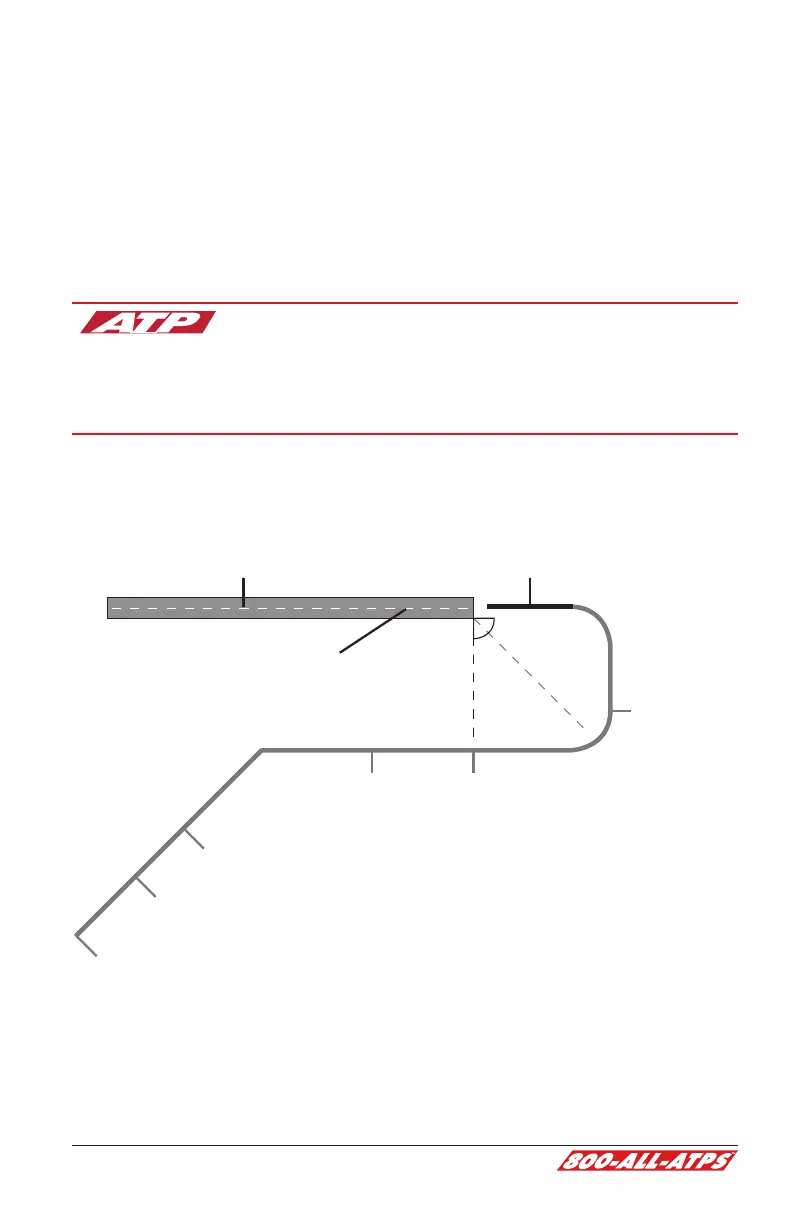
Short-Field Approach & Landing Prole
45˚
90˚
No Later Than 15 NM from Airport
• “Approach Checklist”
• Verify Trac Pattern Altitude
(Usually 1,000’ Above Field Elevation)
Approx. 10 NM from Airport
• Begin Slowing to 90 KIAS
• Plan Descent to Enter Pattern at TPA
(or Overight Altitude as Appropriate)
Approx. 5 NM from Airport
• Maintain 90 KIAS
When Established on Downwind
• Trim for 90 KIAS
On Base
• Trim for 70 KIAS
Rollout
• Retract Flaps After Touchdown
• Simulate and Announce “Max Braking”
Touchdown
• On Intended Touchdown Point
• With Little or No Floating
When Ready to Descend Out of TPA
• “Before Landing Checklist”
• Reduce Power
• Select Flaps 25°
•Descend Out of TPA at 70-80 KIAS
On Final
• Select Flaps 40°
• Slow to 66 KIAS


 To Next Page