Instruction Manual for DAC3 HGC and DAC3 L with 2.X Firmware Page 32
DAC1, DAC2 and DAC3 Family
History
The pristine audio performance of the award-
winning DAC1 made it the ‘Benchmark’ of
stand-alone D/A converters. The DAC1 USB,
DAC1 PRE , and DAC1 HDR added many
features to the basic DAC1 platform.
Benchmark converters are in use in many of
the world's top studios.
The following is a brief overview of the various
Benchmark DAC1, DAC2 and DAC3 models:
DAC1 Series
DAC1
Benchmark's original DAC1 converter.
The DAC1 features included:
• Three digital inputs
• XLR outputs with passive pads
• RCA outputs
• Analog volume control
• HPA2™ headphone amplifier
• UltraLock™ jitter-attenuation system
DAC1 USB
The DAC1 USB introduced these
improvements:
• AdvancedUSB™ computer input
• Mute switch on the left headphone jack
• Two headphone gain ranges
• High-current LM4562/LME49860 output
stages - designed to drive difficult loads
• Lower output impedances
Benchmark's AdvancedUSB™ computer input
was the first USB audio interface to support 96
kHz audio without the need to install special
drivers.
DAC1 PRE
The DAC1 PRE added these improvements:
• Three coaxial digital inputs
• Three Headphone Gain Ranges
• LM4562/LME49860 opamps throughout
• Premium bulkhead-mounted RCA
connectors
In order to provide room for the analog inputs,
we removed the XLR digital input and replaced
it with two additional coaxial digital inputs.
DAC1 HDR
The DAC1 HDR added:
• IR Remote Control
• HDR-VC™ (high dynamic range
volume control).
The HDR-VC™ features a custom-made,
motor-driven Alps potentiometer. The motor-
driven control provides the audio performance
of a manual control while adding the
convenience of remote control.
DAC2 Series
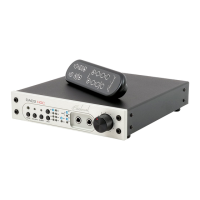
DAC2 HGC
The DAC2 HGC maintains the familiar ½-wide
DAC1 form factor, but the entire product was
redesigned from the ground up.
The DAC2 HGC features:
• Four 32-bit converters per channel
• Native 24-bit/192kHz PCM conversion
• Native 64X DSD conversion
• High-headroom digital processing
• UltraLock2™ jitter attenuation
• Multi-mode asynchronous USB audio
input
• Sample rate and word length displays
• Polarity control
• Home theater bypass
• Digital pass-through
• Bi-directional 12V trigger
• Two stereo analog inputs
• Three stereo analog outputs
• Two optical inputs
• High-efficiency low-noise power
supplies


 To Next Page