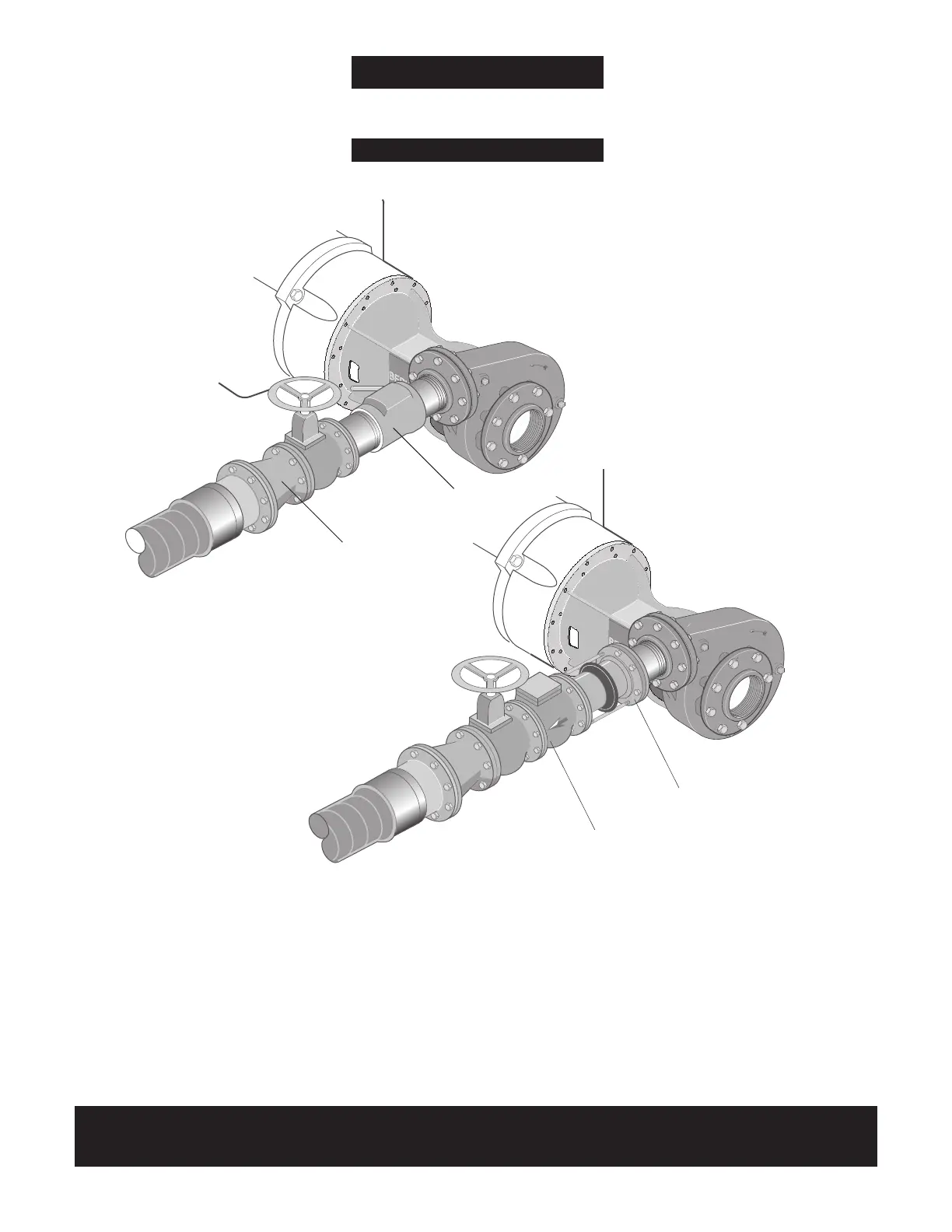
• Use pipe, tubing or reinforced hose to make discharge
connection. Hose must have sufficient strength to contain
the pump discharge pressure.
• Discharge pipe diameter should be at least one nominal
pipe size larger than discharge opening in pump and sized
so that flow velocity is below 8 ft./sec.
• Use only non-slamming check valves to prevent hydraulic
shock (water hammer).
• Use gate, ball or butterfly valve for isolation. Valve should
be full open during operation.
• Maintain proper size throughout discharge system, using as
few elbows and tees as possible to keep friction loss to a
minimum.
• Install pressure gauge after reducer to check operating
pressure.
Page 12 F00636
Discharge Connection
Installation
Recommended
air tight.
rods.
to minimize friction losses.
as required.


 To Next Page