44
Practical stitches
Reverse pattern foot/sole No. 1
Zig-zag No. 2
for all fabrics
for finishing raw edges
elastic seams
decorate sewing
Finishing edges
█
guide edge of fabric into the center of the presser foot
█
do not select too wide a stitch
█
do not select too long a stitch
█
needle goes into fabric on one side and over the edge into the air on the
other side
the edge of the fabric should lie flat and not roll
use a fine darning thread for lightweight fabric
Satin stitch
dense, short zig-zag (stitch length 0.5-0.7mm)
use satin stitch for appliqué, embroidery, etc.A Zig-zag with altered stitch width
B Zig-zag with altered stitch length
C Finishing edges with zig-zag
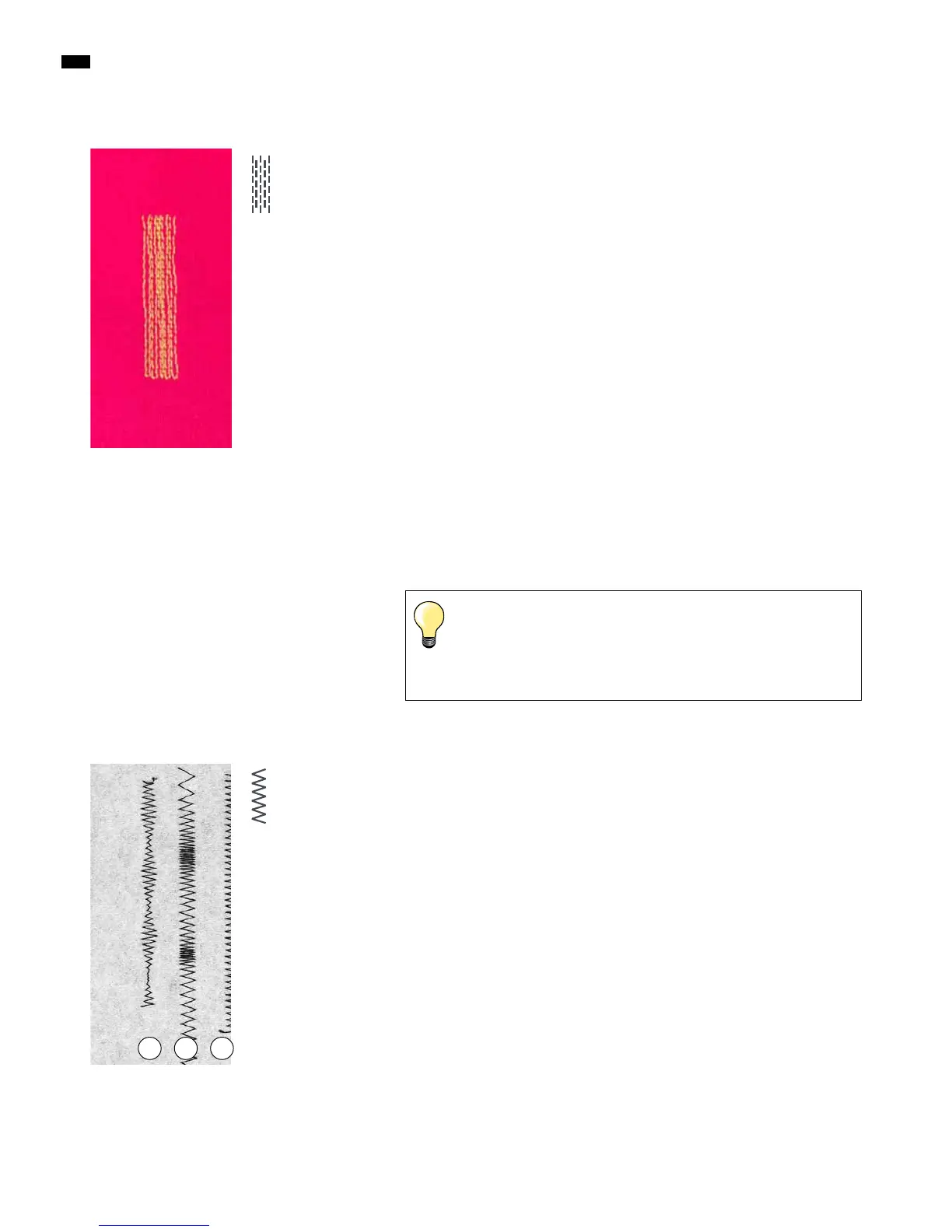
Automatic darning
Zig-zag
Reverse pattern foot/sole No. 1
Automatic Buttonhole foot with slide No. 3A
Darning program No. 22
Quick darning of holes or worn areas
Replaces threads along the lengthwise grain in all materials.
Preparation
█
hoop light-weight materials in the darning hoop (optional accessory)
►
the darning area stays evenly taut and cannot be distorted
Darning with reverse pattern foot/sole No. 1
█
insert the needle in the top left of the worn area
█
sew first row
█
stop sewing computer
█
press «Quick reverse»-button
►
the length is programmed
█
finish sewing the darning program
►
the sewing computer stops automatically
█
press the «clr»-button
►
the program is cleared
Darning with the automatic buttonhole foot with slide No. 3A
for darning worn and damaged areas
Darning length max. 3cm
same procedure as with foot No. 1
Reinforcement
Use fine material or (adhesive) interlining as a backing.
Darning area becomes distored
Correct with the Balance function (see Balance-Function page 36).
BA C



 To Next Page