15
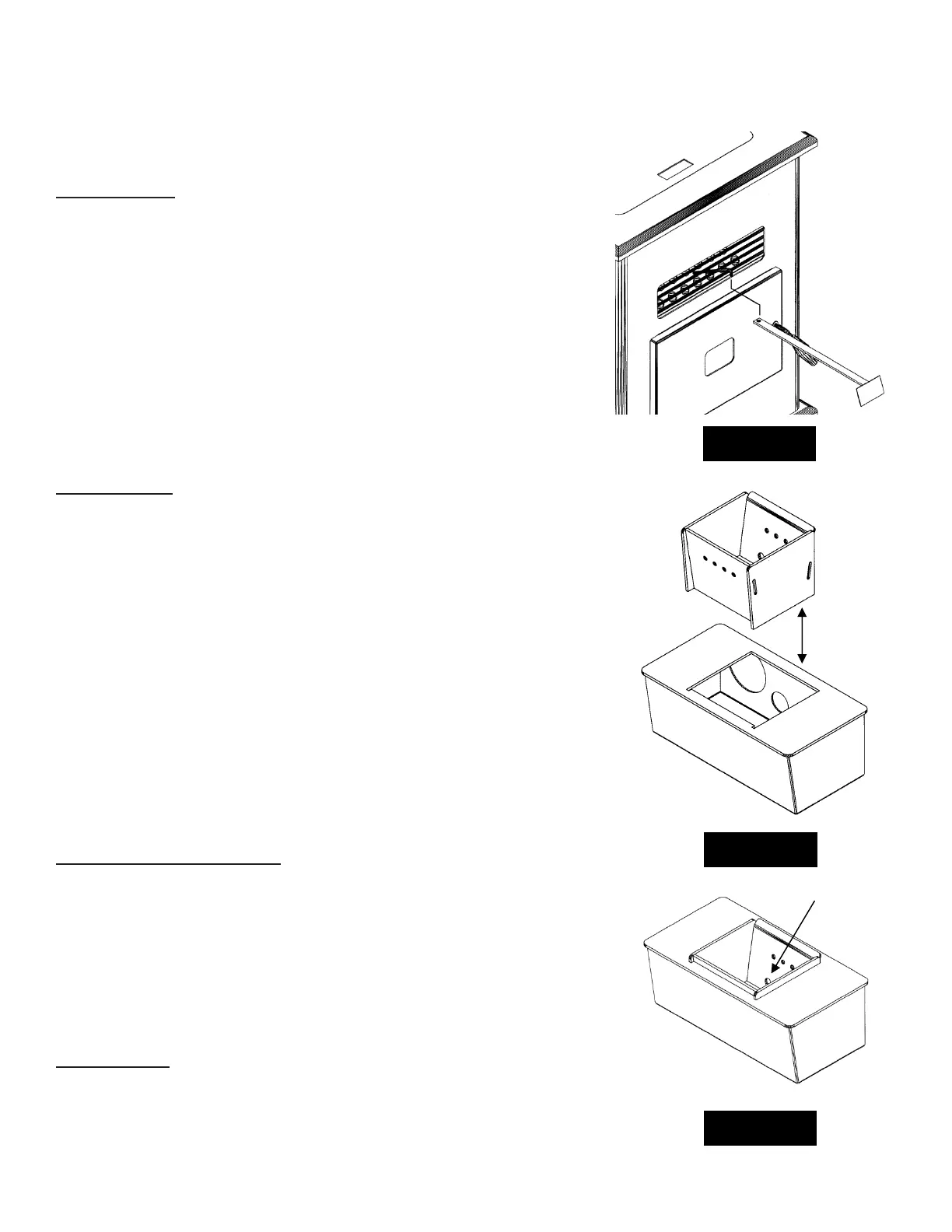
FIGURE 15
FIGURE 16
FIGURE 17
Igniter Hole
FAILURE TO CLEAN AND MAINTAIN THIS UNIT AS INDICATED CAN RESULT IN
POOR PERFORMANCE AND SAFETY HAZARDS. NEVER CLEAN WHEN HOT.
NOTE: Inspect burn pot periodically to see that holes have not become
plugged, if so, clean thoroughly.
ASH REMOVAL
Disposal Of Ashes - Ashes Should Be Placed In A Metal Container With
A Tight Fitting Lit. The Closed Container Of Ashes Should Be Placed On A
Noncombustible Floor Or On The Ground, Well Away From All Combustible
Materials, Pending Final Disposal. If The Ashes Are Disposed Of By Burial
In Soil Or Otherwise Locally Dispersed, They Should Be Retained In The
Closed Container Until All Cinders Have Been Toughly Cooled.
Soot and yash: Formation and Need for Removal - The products of
combustion will contain small particles of yash. The yash will collect
in the exhaust venting system and restrict the ow of the ue gases.
Incomplete combustion, such as occurs during startup, shutdown, or
incorrect operation of the room heater will lead to some soot formation
which will collect in the exhaust venting system,. The exhaust venting
system should be inspected at least once every year to determine if
cleaning is necessary.
ASH DISPOSAL
To remove ashes:
a. Make sure re is out and rebox is cool.
b. Clean heat exchanger tubes (see “CLEANING” and Figure 15).
c. Remove the burnpots inner section by grasping it and pulling straight
up (see Figure 16).
d. Empty ashes from the inner section and scrape with cleaning tool;
make sure holes are not plugged.
e. Vacuum to remove ashes from the burn chamber interior and the
burnpot shell.
WARNING: Make sure ashes are cool to the touch before using a
vacuum (see “VACUUM USE.”
f. Dispose of ashes properly (see “ASH REMOVAL” above).
g. Replace inner section into burnpot; make sure it is level and pushed
all the way back down and that the igniter hole is to the rear when
it is reinstalled (see Figure 17).
h. Make sure the burnpot is level and pushed all the way in. If the collar
on the burnpot, attached to the fresh air tube, is not pushed back to
meet the rebox wall. the Hot Rod will not work properly.
SMOKE AND CO MONITORS
Burning wood naturally produces smoke and carbon monoxide(CO)
emissions. CO is a poisonous gas when exposed to elevated concentrations
for extended periods of time. While the modern combustion systems in
heaters drastically reduce the amount of CO emitted out the chimney,
exposure to the gases in closed or conned areas can be dangerous.
Make sure you stove gaskets and chimney joints are in good working order
and sealing properly to ensure unintended exposure. It is recommended
that you use both smoke and CO monitors in areas having the potential
to generate CO.
VACUUM USE
We suggest using a vacuum designed for ashes.
(We recommend US Stoves’ Ash Vac part # AV15).
Some regular vacuums and shop vacs leak ash into the room. Your
vacuum or shop vac may have a special lter or bag available to
eliminate this leakage.
Maintenance


 To Next Page