1716
The autonomy of the watch depends on how it is used. The main consumers of
energy are the LCD display lighting, the vibration function, followed to a lesser
degree by the audible alarm and the BLE connection. The more these elements
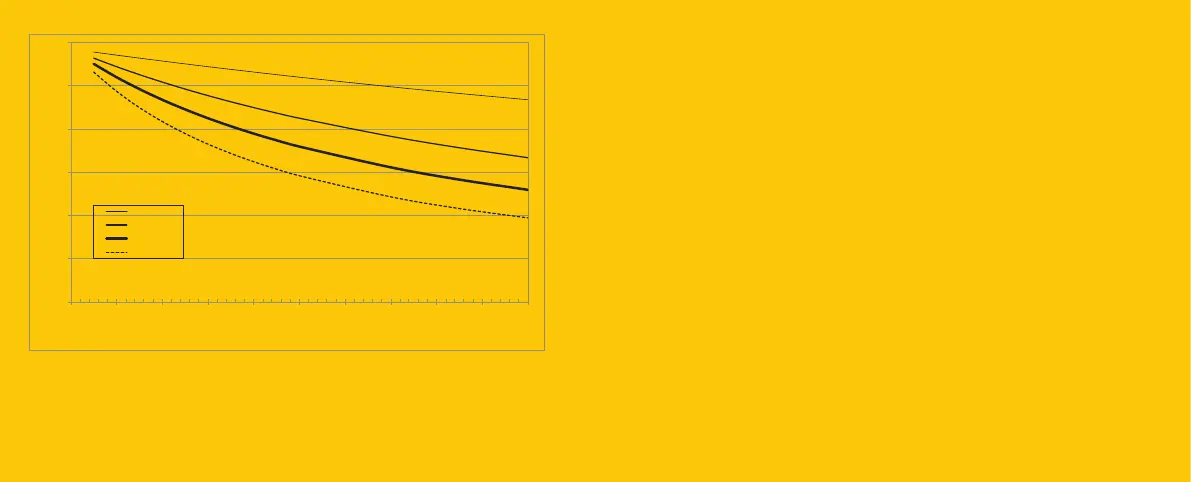
are used, the less autonomy the watch will have. The graphs 1 & 2 provide typical
autonomy values according to light usage.
b) Power management
The watch is equipped with an intelligent power management system serving
to optimize its autonomy. The ultimate aim is to avoid having to re-adjust it
once again after a “stop”. Depending on the status of the battery charge, the
watch will inform the user of the need to charge. Parallel to this it will deactivate
high-consumption functions little by little as the battery is used up. The sequence
includes three successive levels:
1.
1
st
level: The seconds hand moves forward in 4-second increments every 4
seconds. The analog and digital times are correctly shown, and the digital func-
tions and alarms are operational.
2.
2
nd
level: The seconds hand is stopped at 12 o’clock, the high-consumption
functions (light, vibrate, «beeps» function and BLE connection) are deactiva-
ted. With each press on the crown, the
LoW BAT
indicator appears on the upper
screen instead of and in place of the light. If the watch is configured in
DISPoFF
mode (display only with the light – see chapter 7.d), it automatically goes to
DISP oN
mode. The analog time (without the seconds) and the digital time are
Graph 2: Typical autonomy in days (connection ON with 20 notifications per day) according to
the use of light in minutes per day (for the four intensity settings).
0
5
10
15
20
25
30
0 2 4 6 8 10 12 14 16 18 20
Daily light use (minutes)
Connexion ON + 20 Notications
Autonomy (days)
intensity 1
intensity 2
intensity 3
intensity 4


 To Next Page