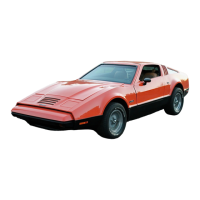
Bricklin EV-1 Owner's Manual
statement and a move toward cleaner air and less dependence on foreign energy sources. Plus,
electric vehicles are a tremendous amount of fun to drive. As it so happens, they are also much less
expensive to own and operate.
The Bricklin EV-1 features a 27,648 Wh battery pack, of which we will limit use to about 22,000 Wh.
The vehicle should average ~250 Wh per mile and there are some losses of efficiency in the charging
process.
As a result, it can take 23+ kWh from the wall to fully charge the car. Your electric bill is based on the
number of kWh (kilowatt hours) used through your electric meter. The actual cost is based on your
local electric utility rate. The national average for electricity at this writing is 11.75 cents per kWh. At
that rate, if you drove the vehicle to full discharge, it will cost about $2.70 to recharge it. At 75 miles,
this works out to about 3.6 cents per mile. If you get 100 miles per charge, it is 2..70 cents per mile.
At $3.75 per gallon and 20 miles range to the gallon, gasoline costs by comparison would be about
18.75 cents per mile.
This is NOT the reason electric vehicle owners seem to be smiling all the time. But they rarely
apologize for it either.
Fast Charging
The PulsaR charger is located in the rear compartment behind the drivers seat. It is connected to the
battery system through an Anderson connector on the left side of the vehicle as you face this from the
front.
It is possible to charge from electric vehicle to electric vehicle with this charger and the proper
cabling. It is also possible to charge from a standalone battery pack directly to the Bricklin EV-1
battery pack through the PulsaR PDU.
Adapters are also available to utilize other proprietary high-power charging stations as well. The
Bricklin EV-1 boasts the most flexible and high power charger currently available.
In NO CASE should the system ever be charged above ~175.2 Volts DC.
Cooling System
One of the more expensive components of an electric vehicle is the electric motor controller. This
device translates your throttle input into drive current to the electric motor and it is a central
component of the drive system.
As a very high power semiconductor electronic device, in this case controlling up to 1,400 amperes of
current to the drive motor, this is the most failure prone device in the car. Over the years, it has been
our observation that heat causes controllers to fail, and that in the absence of heat, they last
essentially forever.
The problem is that in switching ~170 Volts DC from the battery pack to the series wound, brushed
DC motor, the motor controllers generate heat internally. The better this heat can be dissipated, the
longer the controller will last.
DRAFT Page 24 of 31 DRAFT



 To Next Page