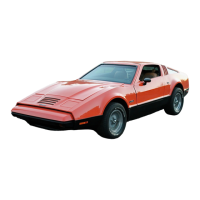
Bricklin EV-1 Owner's Manual
Tire Pressure
Maintaining tire pressure is a key technique to efficiency in ALL vehicles but critically so in an electric
vehicle. Tire pressure should never exceed the maximum manufacturer rated tire pressure, but it is
critical to maintain the maximum rated pressure for greatest efficiency. High tire pressure will greatly
reduce rolling resistance and extend range.
If you prefer a softer ride, you may reduce the tire pressure to comfort, but this will also decrease the
range of the vehicle.
Maintenance
For most experienced owners of electric vehicles, one of the most treasured aspects of these
vehicles is the lack of routine maintenance. You do not have tune-ups, oil changes, spark plugs, or
filters to deal with.
Tires do of course wear and the higher weights and pressures in an electric vehicle can cause them
to wear at a modestly faster rate.
You do have a cooling system and it should be checked occasionally and kept charged with a 50%
glycol solution.
The batteries actually require NO maintenance at all. But terminal connections, can over time, loosen
from vibration and temperature. It is advisable to check these connections monthly to ensure they
are clean and tight, with no visible corrosion or buildup. A poor connection can develop heat and pose
a hazard.
One of the problems with electric vehicles at this time is finding service facilities to perform
maintenance in the event of a true systems failure. Relays and fuses are potential failure items,
although we’ve used the finest available components.
Fortunately, system failures are very rare. And, the number of EV conversion specialty shops is
increasing all the time. The NetGain Motors, Inc website ( http://www.go-ev.com ) lists approximately
150 EV conversion facilities worldwide that may offer assistance should the need arise.
The usual problem with conversions is a lack of information as to how a particular vehicle is wired.
We’ve included some detailed wiring diagrams in this manual to assist anyone attempting to
troubleshoot the vehicle, and the pictorial nature of these diagrams serves as an aid to identifying
components.
We’ve also made a conscious effort to use commonly available parts from noted producers to ensure
spares availability. This is a very different approach to that of most OEM automotive manufacturers
who’s business model is based on a continuing stream of revenue from owners who MUST purchase
proprietary parts and components from the manufacturer.
The result is a vehicle, that by any comparison to an internal combustion vehicle, can be thought of
as maintenance free. And, in the event of malfunction, the use of generic parts should make any
necessary repairs both inexpensive and easy for anyone to accomplish.
Most EV owners are concerned about battery life. This is a central issue with electric cars and we’ve
DRAFT Page 26 of 31 DRAFT



 To Next Page