Need help?
Do you have a question about the Brigade Backeye 360 HD and is the answer not in the manual?
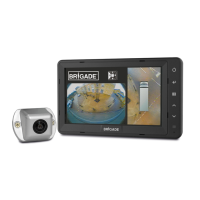
Lists the key features of the BN360-300 system, including 360° view, camera specs, and customisable views.
Details the default display screen layout, identifying key elements like single camera view and 360° surround view.
Details the 10 different view modes the system can store per configuration (Landscape or Portrait).
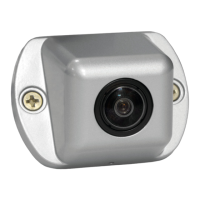
Lists all components supplied with the BN360-300 system, including ECU, cameras, and harnesses.
Details the necessary files on the SD Card for capturing images, calibration, and uploading data.
Explains the importance and structure of the 'Backeye360HD' folder on the SD Card for calibration.
Describes the function of the CMD file within the 'cmd' folder and lists various file names and their functions.
Provides a detailed connection diagram for the system components, including camera and monitor connections.
Guidance on mounting cameras symmetrically around the vehicle for optimal 360° image quality.
Details the correct mounting angle for cameras to achieve the desired 10% vehicle body in the image.
Explains the importance of camera mounting height for 360° image quality and potential effects of incorrect height.
Provides guidelines for routing camera cables safely and preventing interference or damage.
Recommends a suitable location for mounting the ECU, avoiding moisture and excessive heat.
Advises referring to manufacturer guidelines for installation and power/ignition connections.
Specifies the requirements for fixing the monitor location and orientation for optimal viewing.
Guides on powering up the system for the first time, checking image output and initial warnings.
Defines the necessary environment for calibration, requiring a 2m perimeter and a flat surface.
Details placement of calibration mats and vehicle alignment for accurate camera calibration.
Explains how to capture vehicle images using the SD Card and Calibration Tool for calibration.
Provides an overview of the calibration software interface, including the system status bar and tool bar.
Guides on loading the correct configuration file (.bin) from the SD Card into the calibration software.
Explains how to load captured vehicle images from the SD Card into the calibration software for processing.
Details how to accurately set and adjust calibration control points within the software for precise image alignment.
Describes how to use the preview window to check and adjust the surround view image during calibration.
Explains how to adjust vehicle dimensions, position, and properties for the surround view image.
Details how to configure parking line assistance properties, including lines and colours.
Explains how to apply custom guide lines to single camera views for enhanced guidance.
Describes the use of LUT version for identifying calibration versions.
Guides on saving the completed calibration data using the 'SAVE LUT' button.
Instructions on how to start and configure the system settings using the dedicated configuration tool.
Defines the criteria for a good calibration, including object visibility and lack of blind spots.
Describes common issues and visual indicators of a bad calibration, requiring re-calibration.
Explains the 'Mask Type' dropdown menu and its options for blending camera images.
Details the 'Blending Auto' option, recommended for typical installations, providing a gradual blend.
Explains the 'Blending FOV' option for more control over blend start and hardness, allowing FOV adjustments.
Describes the 'Line 1' mask type creating a hard join between images with a customizable line.
 General
| Category | Digital Camera |
|---|---|
| Field of View | 360 degrees |
| Sensor Type | CMOS |
| Frame Rate | 30 fps |
| Night Vision | Yes |
| Waterproof | IP69K |
| Storage Temperature | -40°C to +85°C |
| Type | Surround View Camera |
| Resolution | HD |

 To Next Page