Fiskars Boats, Inha Works Ltd 2010
15 (31)
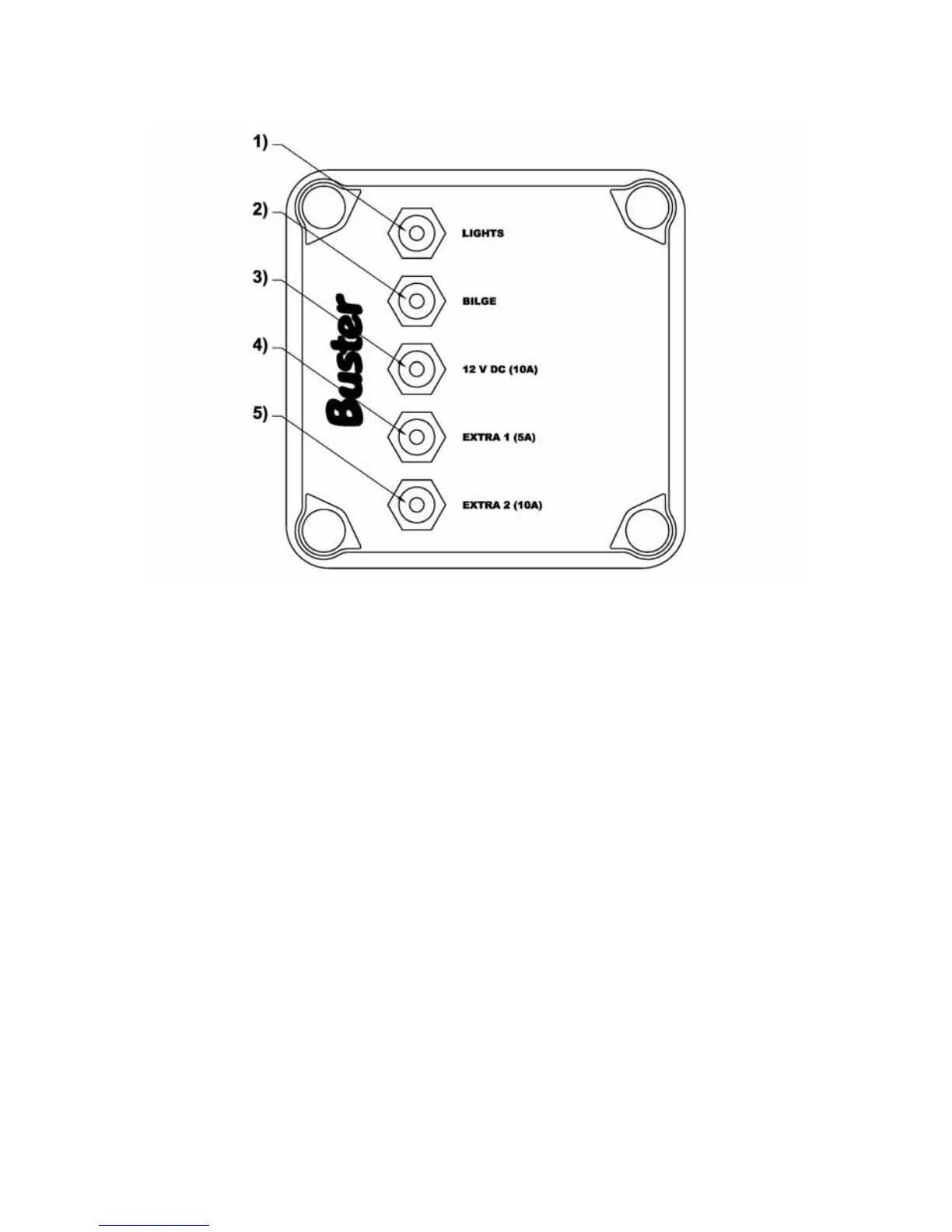
Diagram 6. Fuse box: 1) Navigation lights 5A (A++), 2) Bilge pump 5A (C++), 3)
Power outlet 10A (12V+), 4) Extra circuit 5A (X1), 5) Extra circuit 10A
(X2).
When leaving the boat unattended for a long period, switch the current off at the main
switch. Also switch off the power when carrying out electrical installations. However,
the boat’s automatic bilge pump remains functional and can be switched off only by
detaching the lead from the battery terminal (+).
To remove the battery, open the knurled-head screws that fasten the rear seat and
pull the seat out for a distance equalling the length of its mounting place. Next, open
the battery housing's fastening strap and pull out the battery housing from under the
rear left platform. If the rear seat must be removed from the boat entirely, detach the
fuse box and main switch from the seat by unscrewing the surrounding 4 knurled-
head screws. When you connect or disconnect the battery, take care not to
simultaneously touch both terminals of the accumulator or the aluminium surfaces of
the boat with a metal tool such as, for example, a spanner.
Charge the batteries only with the engine or with a battery charger. Charging with too
high a current can lead to an explosion.
N.B.! Never switch the power off at the main switch while the
engine is running.
Do not alter the boat’s electrical system or any diagrams associated with it. Changes
and service must be carried out by qualified electricians specialised in marine
electrical systems.


 To Next Page