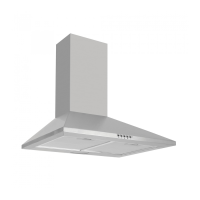
Instruction manual INCH
Please keep this instruction manual for future reference
14
METHODS OF EXTRACTING
Extraction Via Ducting
The very best method of cleaning the kitchen of
unwanted odours is by connecting the appliance to an
exhaust duct and venting to the outside atmosphere via
exterior wall (suitable 150mm diameter ducting kits may
be purchased from the retailer where you purchased
your extractor, alternatively www.caple.co.uk.) Ducting
your extractor negates the need for charcoal filters.
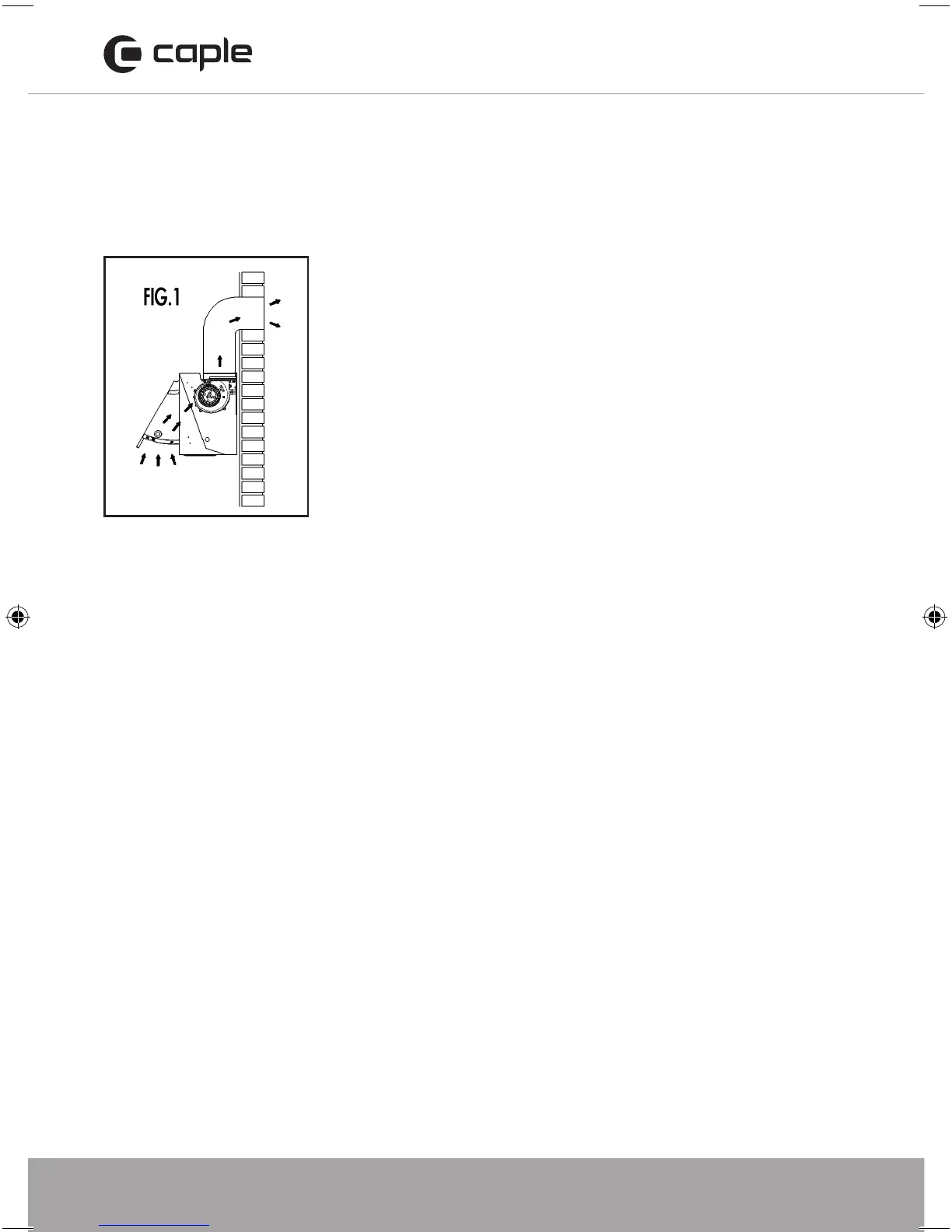
(Fig.1)
For Your Safety
In order to protect your appliance and minimize the risk of fire, do not prepare flambé dishes under
the extractor. Your extractor is designed to draw cooking fumes and vapours up and away from your
hob. This means that exposed flames may behave unpredictably in the vicinity of the appliance
while it is switch on. When frying take particular care to prevent the oil from catching fire and never
leave unattended.
Cleaning
IMPORTANT: Before attempting any cleaning or maintenance, ensure your extractor is
disconnected from the power source.
GENERAL CLEANING: Regular cleaning guarantees correct and long lasting operation.
Wipe the external surface of the appliance regularly using warm and a mild detergent, never use
products containing abrasive cleaners.
Particular care must be paid to the grease filtering panels which must be periodically cleaned in
relation to use (at least once every two months). These can be cleaned in warm soapy water or
placed in the dishwasher (using the dishwasher may cause some slight discoloration, this is normal
and not as fault with the product).
Alternative Methods of Extracting
1. Extraction Via Ducting (fig.1)
The very best method of cleaning the kitchen of unwanted odours is by connecting the appliance
to an exhaust duct and venting to the outside atmosphere via exterior wall (suitable 150mm
diameter ducting kits may be purchased from the retailer where you purchased your extractor,
alternatively www.caple.co.uk.) Ducting your extractor negates the need for charco
al
filters.(Fig.1)
Remember: Before drilling or chiseling the wall, check for the pipes and power cables.
NOTE: 150mm diameter ducting must be used to vent this extractor.
1. Ensure the ducting tube is kept as short as possible and with minimum of bends to ensure a
smooth airflow movement. (Maximum length 3M)
4
Remember:
Before drilling or chiseling the wall, check for the pipes and power cables.
NOTE:
150mm diameter ducting must be used to vent this extractor.
1. Ensure the ducting tube is kept as short as possible and with minimum of bends to
ensure a smooth airflow movement. (Maximum length 3M)
2. Ducted air must not be discharged into a flue which is used for exhausting fumes
from appliances supplied with energy other than electricity.
3. Ensure the requirement of the local authorities and building regulations are
adhered to concerning the discharged of exhaust air.
4. Ensure adequate room ventilation is provided when the extractor is used on the
same room as appliances supplied with energy other than electricity.
5. Never duct into a hot air flow such as a central heating duct.
We strongly advise that all exterior outlets be fitted with a non return valve with
louvered slots.
INCH Instruction manual.indd 14 06/07/2017 14:45


 To Next Page