EasyManua.ls Logo

CCL 216B - User Manual

CCL 216B
12 pages
Print Icon
To Next Page IconTo Next Page
Loading...
Operating / Programming Manual & Warranty Document
PBX Model: 216B / 224B / 232B
We extend a warm welcome to you on becoming a part of the Copper Connections family.
Our service support Engineers shall be working hard through our channel partners to ensure your satisfaction
with the product and after sales services.
We welcome your feedback / query at CCLSERVICECCL@GMAIL.COM
. Contents
.
Introduction
Installation
Terminologies Used
Programming the PBX
Allowed Table
Auto Attendant Settings
Auto Call Back
Auto Call Disconnection
Barge-In
Call Forward
Call Pick-Up
Checking Extension Number
CLI (Calling Line Identification)
CLI Transferable / Internal
CLI Digits addition
CLI Receiving Mode (DTMF / FSK)
CLI Transmitting Mode (DTMF)
Conference with 1 Junction & 1 Ext
Conference with 2 Junctions
Day / Night Mode
Denied Table A
Denied Table B
Do Not Disturb (DND)
Door Phone
Emergency Call
Extension to Extension call
Flash Time setting
Flexible Numbering
Hot Line to Junction
Hot Line to Extension
Junction Access during Power Failure
Junction Access Control
Junction Line Ring Assignment
Junction Line- Enable / Disable
Question and Answer IconNeed help?

Do you have a question about the CCL 216B and is the answer not in the manual?

Summary

Installation

Cabling

Guidelines for installing EPABX and extension cables, ensuring proper separation from electrical sources.

Earthing

Instructions on proper earthing of the EPABX system for safety and performance, including voltage checks.

Location

Recommendations for placing the PBX in a well-ventilated area away from moisture and direct sunlight.

Front Panel Indications

Connections

Precautions

Terminologies Used

Programming the PBX

Allowed Table

Auto Attendant Operations

Auto Attendant Enable; Disable

Commands to enable or disable the auto attendant feature for junction lines.

Message Recording; Listening

Procedures for recording and listening to auto attendant messages.

Auto Call Back

From Busy Junction Lines

Procedure to get a callback from a busy junction line after hanging up.

From Busy Extensions

Procedure to get a callback from a busy extension after hanging up.

Auto Call Disconnection

Barge-In

Call Forward

Call Forward Always

Configuration for unconditionally forwarding calls to another extension or number.

Call Forward When Busy; No Answer

Setting up call diversion when an extension is busy or does not answer.

Call Pick-Up

Checking Extension Number

CLI (Calling Line Identification)

CLI Transferable; Internal CLI

How caller ID information is displayed when calls are transferred internally or externally.

CLI - Digits addition

Method to add dummy zeros for CLI compatibility with certain phone sets.

CLI Receiving Mode (DTMF; FSK)

CLI Transmitting Mode (FSK)

Conference

Conference with 1 Junction & 1 Ext

How to establish a conference call involving one extension and one junction line.

Conference with 2 Junctions

Procedure to create a conference call with two junction lines.

Day; Night Mode

Denied Table

Denied Table - A

Setting disallowed numbers for extensions based on L=4 parameter.

Denied Table - B

Setting disallowed numbers for extensions based on L=5 parameter.

Do Not Disturb (DND)

Door Phone

Emergency Call

Extension to Extension call

Flash Time setting

Flexible Numbering

Hot Line

Hot Line to Junction

Setting up direct connection to a junction line when the handset is lifted.

Hot Line to Extension

Setting up direct connection to another extension when the handset is lifted.

Junction Access During Power Failure

Junction Access Codes; Change

Junction Access in Circular; Sequential Mode

Junction Access Control

Junction Dialing Controls

Junction Call Hold + Transfer

Junction Dialing Delay Time

Junction Line Ring Assignment

Round Robin Ring

Setting up sequential ringing for incoming junction calls among extensions.

Junction Line - Enable; Disable

Junction Grouping

Junction to Junction Forwarding

Memory Dialing

Operator Extension Setting

Password

PBX Version

Redial

Resetting the PBX programming

Ring Time Settings

Troubleshooting

Technical Specifications

Warranty claim details

Overview

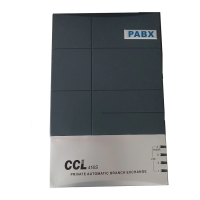
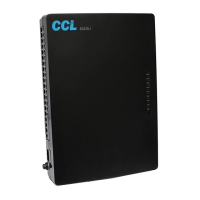
This document serves as the Operating / Programming Manual & Warranty Document for the CCL PBX Models 216B, 224B, and 232B. These PBX systems are designed to manage telephone communications within an organization, offering a range of features for efficient call handling and management.

Function Description

The CCL PBX system acts as a central hub for managing internal and external telephone calls. It connects multiple extension lines to a limited number of external junction lines (CO lines), allowing users to make and receive calls, transfer calls, set up conferences, and utilize various call management features. The system supports flexible numbering, auto attendant, call forwarding, call pick-up, and detailed call logging.
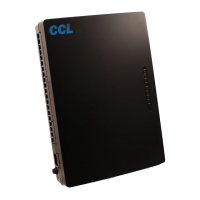
Key Features:

  • Junction Lines: The PBX models come with 2 CO lines.
    • Model 216B: 16 Extensions
    • Model 224B: 24 Extensions
    • Model 232B: 32 Extensions
  • Flexible Numbering: Extension numbers can be customized to 2, 3, or 4 digits (from 11-6999), allowing for a tailored numbering plan. The numbering cannot begin with digits 0, 7, 8, and 9.
  • Auto Attendant: Provides a welcome message to incoming callers and directs them to specific extensions or departments. It supports welcome, busy, and no-answer messages, each with configurable durations. Callers can be transferred to an operator, a defined junction landing, or the call can be disconnected if no extension is dialed or if the called extension is busy/unanswered.
  • Call Forwarding: Allows users to divert calls to another extension or an external telephone/cell number, either always, or when busy/no answer.
  • Call Pick-Up: Enables users to answer an incoming call ringing on another extension by dialing a specific code.
  • CLI (Calling Line Identification): Displays the incoming external telephone number on CLI-enabled phones. It also supports internal CLI, showing the extension number during internal calls. The system can add dummy zeros for CLI display on phones that require 4-digit numbers.
  • Conference: Supports conferencing with one junction line and one extension, or with two junction lines.
  • Day / Night Mode: The PBX can be configured with two sets of programming for day and night modes, allowing different call handling rules based on the time of day.
  • Denied Table: Allows administrators to restrict extensions from dialing specific numbers or types of calls (e.g., ISD, STD, numbers starting with digits defined in Denied Table-A or Denied Table-B). There are two denied tables, A and B, each with 16 locations for storing up to 4-digit numbers.
  • Allowed Table: Defines numbers that extensions with restricted dialing (L=0) are permitted to dial. This table also has 16 locations.
  • Do Not Disturb (DND): Prevents incoming calls to a specific extension when activated.
  • Door Phone: Supports connection of one door phone to any extension port, allowing extensions to answer door phone calls.
  • Emergency Call: When activated, all extensions ring and connect to the extension that dialed the emergency code, enabling a conference.
  • Hot Line: Extensions can be programmed to automatically connect to a junction line or another extension upon lifting the handset.
  • Junction Access Control: Allows programming access to junction lines for each extension, separately for day and night modes.
  • Junction Access Modes: Supports circular and sequential modes for accessing junction lines when dialing '0'.
  • Junction Line Ring Assignment: Incoming junction lines can be set to ring in direct, simultaneous, or round robin modes, with separate configurations for day and night.
  • Junction Line Enable / Disable: Junction lines are disabled by default and can be enabled/disabled through programming.
  • Junction Grouping: Two sets of junction groups can be created, accessible by dialing '0' or '8'.
  • Junction to Junction Forwarding: Allows incoming junction calls to be transferred to another telephone/cell number, or enables two junction lines to talk to each other while the extension remains out of the conversation.
  • Memory Dialing: Stores up to 48 telephone numbers that can be dialed using 2-digit codes from extensions.
  • Operator Extension Setting: Defines a specific extension as the operator, which can be changed by the user.
  • Password Protection: The PBX programming is protected by a password, which can be changed from the default.
  • Redial: Allows users to redial the last dialed number after an engaged tone.
  • Ring Time Settings: Configurable ring time for internal calls and for junction calls when sensed as disconnected.
  • Flash Time Setting: Configurable flash time for the PBX.
  • Junction Dialing Delay Time: Configurable delay time after the last two digits dialed on a junction line.

Important Technical Specifications:

  • Switching: Space Division Multiplexing
  • Power Supply: Transformer type
  • Input: AC 180V to 260V
  • Wattage at 220V: 18 W
  • Extension Loop Resistance: Less than 600 Ohms
  • Ambient Temperature: +5°C to +45°C
  • Ambient Humidity: 95% Maximum
  • Telephone Sets: Tone Dialing Phones
  • Cabling: 2 Core from every Telephone set to the PBX
  • Maximum Extension Wire Length: 400 mtr with 0.5mm Copper conductor cable.

Usage Features:

  • Programming: Most features are programmed from extensions 601, 602, 603, or 604 by entering a password and specific commands.
  • Error Handling: The PBX provides a single acceptance tone for correct input and three tones for wrong input.
  • Call Transfer: Use Hook-Flash and dial the extension number to transfer a junction line.
  • Barge-In: Extensions 601 and 602 can barge into any extension or junction line for overhearing or conference.
  • Resetting PBX Programming: A command is available to reset all programming to default values, except flexible numbering and junction enable/disable settings.
  • Password Change: The default programming password can be changed by the user.

Maintenance Features:

  • Troubleshooting Guide: Provides solutions for common issues like no dial tone or no run LED, including checking power cable, fuse, MOV, and transformer connector.
  • Installation Guidelines:
    • Cabling: All EPABX cables should be at least 6 inches away from electrical cables and 12 inches away from high-frequency areas (e.g., tube light chokes, electric motors). Shielded cables and proper earthing are recommended if avoidance is not possible.
    • Earthing: Earth connected to the EPABX should not have more than 5 volts. A voltmeter reading between Neutral and Earth must be more than 100mV and less than 5V. If it's more than 5V, the system should not be run.
    • Location: The PBX should be installed in a well-ventilated area, at least 2 ft from the floor, and away from direct sunlight, liquid spills, or moisture.
    • Power Connection: The Mains AC socket for the PBX should be a direct connection from the MCB Box, with no other electrical appliances connected.
  • Front Panel Indications: A blinking POWER LED indicates the PBX is working on Mains AC or Battery.
  • Warranty: The product comes with a 12-month warranty from the date of purchase or 15 months from the date of manufacture, whichever is earlier. The warranty covers defects in material and workmanship. It is void if the product has been subjected to abnormal use, unauthorized modifications, improper installation, or damage due to lightning, spikes, surges, or high voltages from the AC main supply. The warranty is non-transferable.
  • Service Support: Copper Connections provides service support through channel partners and welcomes feedback/queries at CCLSERVICECCL@GMAIL.COM.

CCL 216B Specifications

General IconGeneral
BrandCCL
Model216B
CategoryPBX
LanguageEnglish

Related product manuals