© CEDES | V 2.2 15
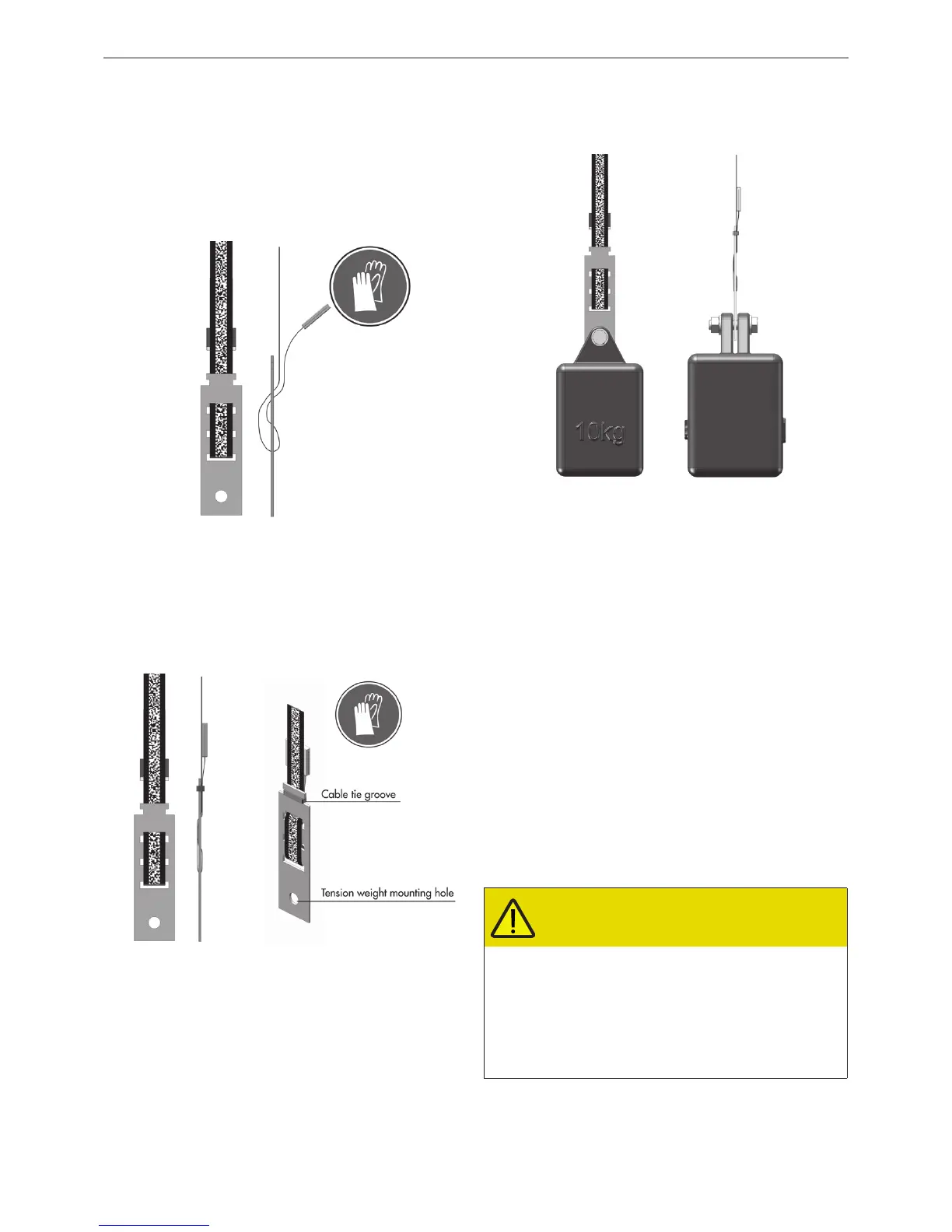
1. Cut the code tape to the final operational length
including code tape end loop. Use a tinsnip which
can cut a minimum of 0.7 mm of stainless steel.
Apply a code tape end cover to the remaining code
tape in the box; otherwise the code tape could be
damaged by penetrating dust and humidity.
2. Thread the code tape into the bottom tension lock
(Figure 30).
Figure 30: Bottom tension lock threading
3. Straighten the code tape. Fasten it with a cable tie
around the tension lock (Figure 31).
4. Cover the end piece with the second provided code
tape end cover in order to avoid injury on the sharp
edge (Figure 27).
Figure 31: Bottom tension lock
6.2.6 Mounting the tension weight
1. Mount the tension weight (10 kg) to the bottom
tension lock using the screws and bolts provided.
Figure 32: APS tension weight
2. Make sure the tension weight does not touch the
ground and fulfills the criteria mentioned in the
previous before.
3. Let the code tape hang freely.
4. Safety advice:
Ensure no part of the elevator comes into contact with
the code tape at any time.
5. Safety advice:
For safety and adjustment reasons, protect the
code tape against swing and vibrations e.g. use a
bucket filled with water as a vibration damper; refer
to Figure 20. Ensure the pre-installed code tape
does not cause any hazard at any point during the
installation process.
6. The code tape is now ready for final installation (clip,
tension weight holder, ...) and adjustment.
6.3 Installation of the APS sensor
CAUTION
Possible health risks
It is the system integrator’s responsibility to
define the exact location for, and the correct
way to install, the code tape. The installer
must strictly follow the system integrator’s
instructions, because the correct installation
is part of the system's safety (depending on
system integration, it can be SIL 3 level).


 To Next Page