1. INTRODUCTION AND INDICATIONS FOR USE
For 2D machine only
:
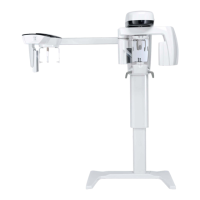
NewTom GO is an extraoral X-ray system for digital panoramic exams. It is intended to produce orthopanoramic
images of the maxillofacial region and to carry out diagnostic examination on teeth, dental arches and other
structures in the oral cavity.
For 3D machine only
:
NewTom GO is an extraoral X-ray system for digital panoramic exams and tomographies, intended to:
(i) produce orthopanoramic images of the maxillofacial region and carry out diagnostic examination on teeth, dental
arches and other structures in the oral cavity;
(ii) produce tomographic images of the oral cavity and maxillofacial structures and carry out diagnostic examination
on teeth, dental arches, structures of the oral cavity and some cranial bones.
The system performs tomographic exams with the acquisition of X-ray images through a rotating sequence and the
reconstruction of a three-dimensional matrix of the examined volume, thus producing two- and three-dimensional
views of the volume itself. This technique is known as CBCT.
NewTom GO is a digital X-ray device, suitable for expert professionals, which allows to obtain dental images in a
simple and automatic way. The image is acquired by means of an X-ray detector and a constant potential X-ray
source, powered by a high-voltage and high-frequency generator. The image is then transmitted to a computer in real
time.
USA federal law restricts this device to sale by or on the order of a licensed healthcare practitioner.
NewTom GO allows the following 2D projections:
- standard or panoramic views for paediatric patients (PAN);
- complete or partial views of the teeth, selected by the user (DENT);
- front and side views of maxillary sinuses (SIN);
- side and posteroanterior views of the temporomandibular joints (TMJ), from different angles.
Furthermore, the 3D version machine also allows to acquire tomographic images.
NewTom GO is intended for use in dentistry, in the following fields:
- endodontics;
- periodontology;
- dental prosthesis;
- functional diagnosis and therapy of craniomandibular dysfunctions;
- dental surgery;
- dental implants;
- maxillofacial surgery;
- orthodontics.
Do not use on patients (children) less than approximately 104 cm in height and less than 19 kg in weight.
These height and weight measurements approximately correspond to that of an average 4 year old.
Use of equipment and exposure settings designed for adults of average size can result in excessive
radiation exposure for a smaller patient. Studies have shown that pediatric patients may be more
radiosensitive than adults (i.e., the cancer risk per unit dose of ionizing radiation is higher), and so
unnecessary radiation exposure is of particular concern for pediatric patients.
Not for use with patients not vigilant and cooperative, since the patient must be able to understand and
follow the operator's instructions for a correct positioning.



 To Next Page